RedKalion
BLACK WHITE YELLOW 1926 - Anni Albers 70x100 cm / 28x40 inches Framed Art Print – Black Wooden Frame
BLACK WHITE YELLOW 1926 - Anni Albers 70x100 cm / 28x40 inches Framed Art Print – Black Wooden Frame
Couldn't load pickup availability
Elevate Your Space with the Geometric Precision of Anni Albers
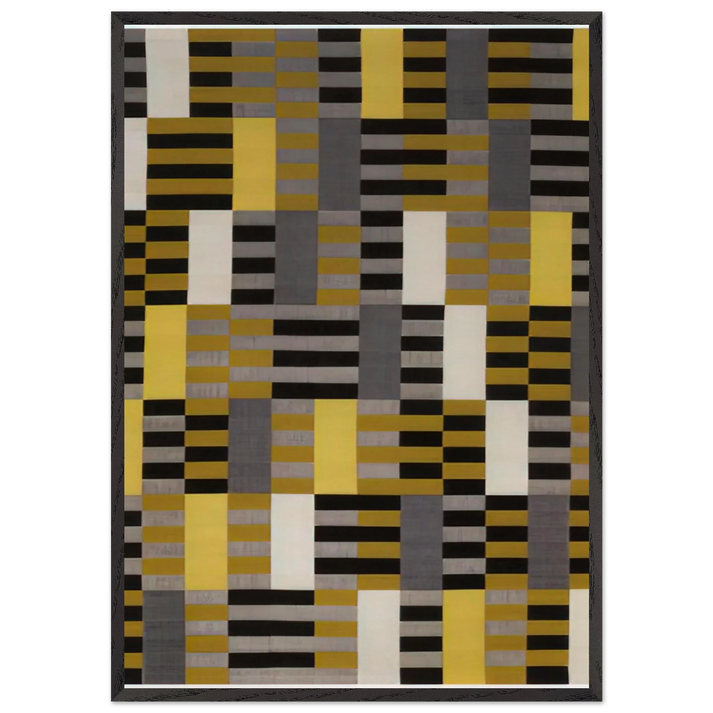
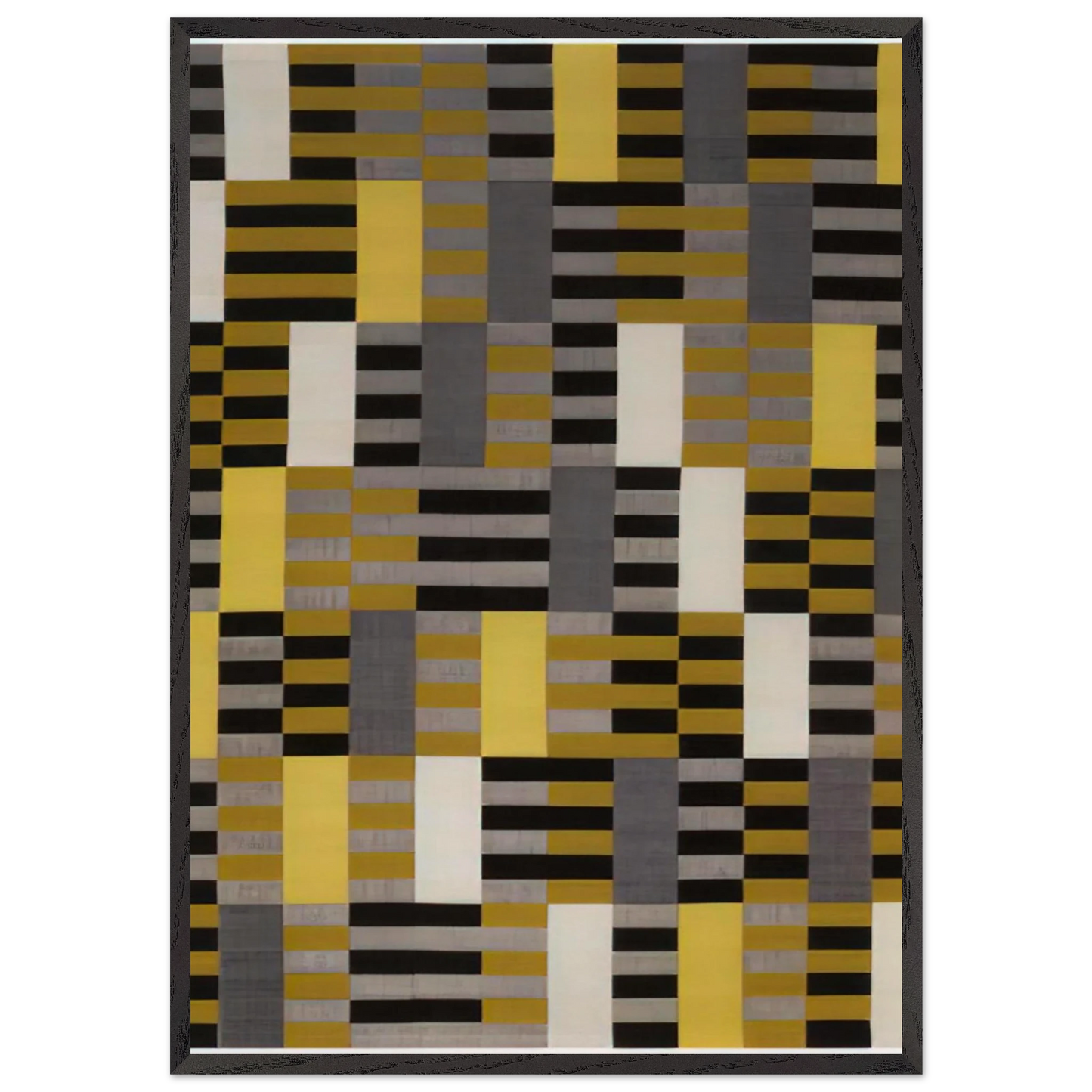
Experience the rhythmic sophistication of the BLACK WHITE YELLOW 1926 art print by the legendary Anni Albers. As a pioneer of the Bauhaus movement, Albers redefined the relationship between craft and fine art. This museum-quality reproduction captures the essence of her 1926 masterpiece, where rigorous geometric logic meets a balanced palette of striking ochre, deep black, and crisp white.
The Artistry of the Bauhaus Era
Anni Albers was instrumental in elevating textile design into the realm of modern abstraction. In Black White Yellow, she employs a grid-based composition that echoes the structural constraints of the loom while achieving a dynamic visual flow. This piece is not merely a design; it is a historical dialogue between form and function, making it an essential acquisition for collectors of Bauhaus art prints and modernist history.
Museum-Grade Materials and Craftsmanship
At RedKalion, we curate our prints to meet the exacting standards of galleries. This 70x100 cm (28x40 inches) framed art print is produced on 250 gsm (110 lb) museum-quality paper. The natural white, uncoated matte finish ensures the colors remain vibrant and true to Albers' original vision without the distraction of glare. Each print is housed in a premium black wooden frame, meticulously crafted from responsibly sourced ash or oak. Our frames feature a sophisticated 20mm profile—wider and more robust than standard frames—providing a substantial presence on your wall.
Excellence in Every Detail
- Archival Longevity: Acid-free, FSC-certified paper ensures your masterpiece endures for generations.
- Premium Protection: Shatterproof, transparent plexiglass protects the delicate surface while maintaining clarity.
- Seamless Installation: Arrives ready-to-hang with a high-quality hanging kit included.
- Sustainable Luxury: We utilize ethically sourced materials that honor both the artist's legacy and the environment.
Transform your interior with an archival piece that embodies the intellectual rigor of 20th-century modernism. This Anni Albers reproduction is more than a print; it is a testament to the enduring power of disciplined design.
Discover Unlimited Art Possibilities
At RedKalion, you can find virtually any artwork from any artist, available in a wide range of sizes to perfectly match your space.
If you didn’t find what you’re looking for, contact us at support@redkalion.com . We will source any artwork and produce it in any size and format you need, including art prints, posters, canvas, framed pieces, framed canvas, and more.
For dedicated art enthusiasts, we also offer handcrafted replicas of any artwork, carefully painted by highly skilled artists using traditional techniques.
For custom requests, contact us at support@redkalion.com .
What materials are used for the BLACK WHITE YELLOW 1926 print?
We use 250 gsm (110 lb) archival museum-quality paper with a matte, uncoated finish. This natural white paper is FSC-certified, ensuring both aesthetic beauty and environmental responsibility.
What are the specifications of the black wooden frame?
The print is housed in a 20mm (0.79") thick frame made from responsibly sourced ash and oak. It features a sleek black finish and shatterproof plexiglass for ultimate protection.
How is the artwork prepared for shipping and hanging?
Your Anni Albers print arrives fully assembled and ready-to-hang. We include a professional hanging kit and use secure, protective packaging to ensure it reaches you in pristine condition.
Is this an archival-grade reproduction?
Yes, RedKalion prints use acid-free, 250 gsm paper and museum-quality inks. This combination ensures long-term color stability and prevents yellowing or degradation over time.
Is the paper finish glossy or matte?
The print features a premium matte finish. This non-reflective surface is ideal for fine art, as it allows the viewer to appreciate the texture and depth of the geometric design without glare.
What is the significance of the 1926 date in this Anni Albers piece?
1926 represents a peak period at the Bauhaus, where Albers explored the 'alphabet' of weaving. This design reflects her transition from functional textiles to pure abstract art.
How does the color palette represent Albers' philosophy?
Albers used Black, White, and Yellow to explore contrast and rhythm. By limiting her palette, she emphasized the structural relationship between geometric shapes, a hallmark of modernist theory.