RedKalion
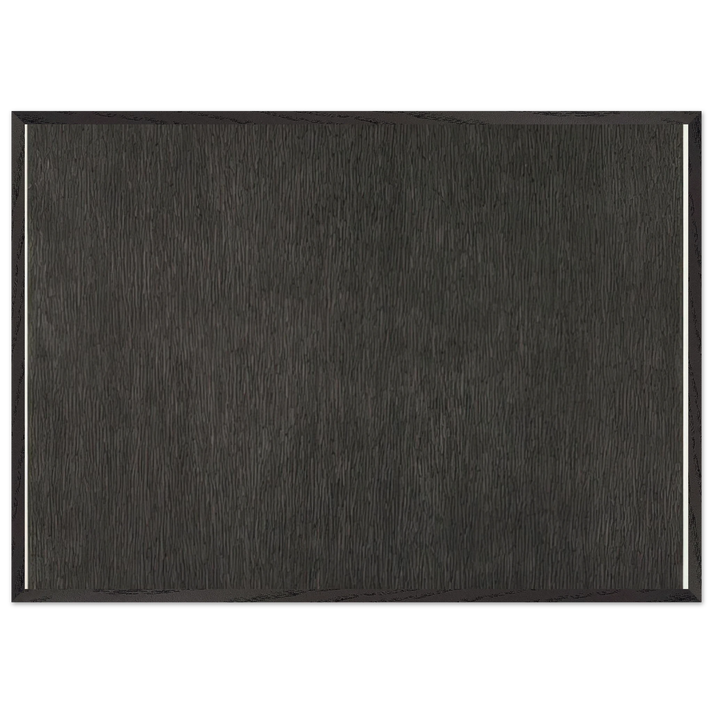
Black with White Lines Vertical Not Touching - Sol LeWitt 70x100 cm / 28x40 inches Framed Art Print – Black Wooden Frame
Black with White Lines Vertical Not Touching - Sol LeWitt 70x100 cm / 28x40 inches Framed Art Print – Black Wooden Frame
Couldn't load pickup availability
Elevate Your Space with Sol LeWitt's Conceptual Mastery
Experience the profound simplicity of Sol LeWitt's "Black with White Lines Vertical Not Touching", a cornerstone of minimalist and conceptual art. This museum-quality reproduction captures the rhythmic precision and intellectual rigor that defined LeWitt’s career. By focusing on the fundamental element of the line, this piece creates a meditative visual experience, transforming any room into a gallery of modern sophistication. At RedKalion, we curate these masterpieces to ensure they serve as enduring focal points in your home or office.
Artistic Context: The Idea as Art
Sol LeWitt famously asserted that "the idea becomes a machine that makes the art." In this particular work, the deliberate placement of vertical lines—meticulously spaced to remain independent—explores the relationship between intervals and the void. This exploration of minimalist geometry challenges the viewer to find harmony in separation. Our print honors this legacy, presenting the sharp contrast of white on black with absolute clarity, mirroring the artist's original vision of mathematical beauty and structural logic.
Archival Craftsmanship and Premium Materials
To do justice to LeWitt’s exacting standards, RedKalion utilizes archival-grade 250 gsm (110 lb) natural white paper. This heavy-weight, matte-finished paper eliminates glare, allowing the deep blacks and crisp white lines to resonate without distraction. The print is housed in a responsibly sourced black wooden frame (oak and ash), measuring a substantial 20mm (0.79") in width and thickness. This profile provides a bolder, more luxurious aesthetic than standard frames, ensuring your artwork commands the attention it deserves.
- Dimensions: 70x100 cm (28x40 inches), a statement size for modern interiors.
- Museum-Quality Paper: FSC-certified, 0.29 mm thick archival paper for lifelong durability.
- Superior Protection: Shatterproof plexiglass preserves the integrity of the print against dust and damage.
- Ready-to-Hang: Includes a premium hanging kit for effortless installation.
- Sustainable Excellence: Framed in FSC-certified wood, reflecting our commitment to the environment.

Discover Unlimited Art Possibilities
At RedKalion, you can find virtually any artwork from any artist, available in a wide range of sizes to perfectly match your space.
If you didn’t find what you’re looking for, contact us at support@redkalion.com . We will source any artwork and produce it in any size and format you need, including art prints, posters, canvas, framed pieces, framed canvas, and more.
For dedicated art enthusiasts, we also offer handcrafted replicas of any artwork, carefully painted by highly skilled artists using traditional techniques.
For custom requests, contact us at support@redkalion.com .
What are the specific details of the paper used for this Sol LeWitt print?
We use museum-quality, 250 gsm (110 lb) natural white paper. It is archival, uncoated, and matte-finished with a thickness of 0.29 mm, ensuring high-contrast detail and long-term durability for your fine art reproduction.
How is the artwork framed and protected?
The print is mounted in a 20mm (0.79") thick black frame made from responsibly sourced oak and ash. It is protected by shatterproof, transparent plexiglass, providing a safe and sophisticated finish.
Is this Sol LeWitt art print ready to hang upon arrival?
Yes, your framed 70x100 cm print arrives ready-to-hang. We include a dedicated hanging kit compatible with both horizontal and vertical orientations, allowing for immediate installation in your space.
How does RedKalion ensure the sustainability of its products?
RedKalion prioritizes the planet by using FSC-certified wood for our frames and paper. This ensures that your museum-quality art print is produced using responsibly managed forest resources.
Will the colors of the print fade over time?
No. By using archival-grade, acid-free paper and protective plexiglass, our prints are designed to resist yellowing and fading, preserving the deep blacks and stark whites of LeWitt’s work for decades.
What is the significance of the title "Vertical Not Touching"?
This title reflects Sol LeWitt’s conceptual approach, where the instructions for the piece define its form. It emphasizes the importance of the interval and the space between lines, a core tenet of Minimalist theory.
Why is Sol LeWitt considered a pioneer of Conceptual Art?
LeWitt shifted the focus from the artist's hand to the artist's mind. He believed the concept or idea was the most important aspect of the work, paving the way for modern geometric and systemic art.