

RedKalion
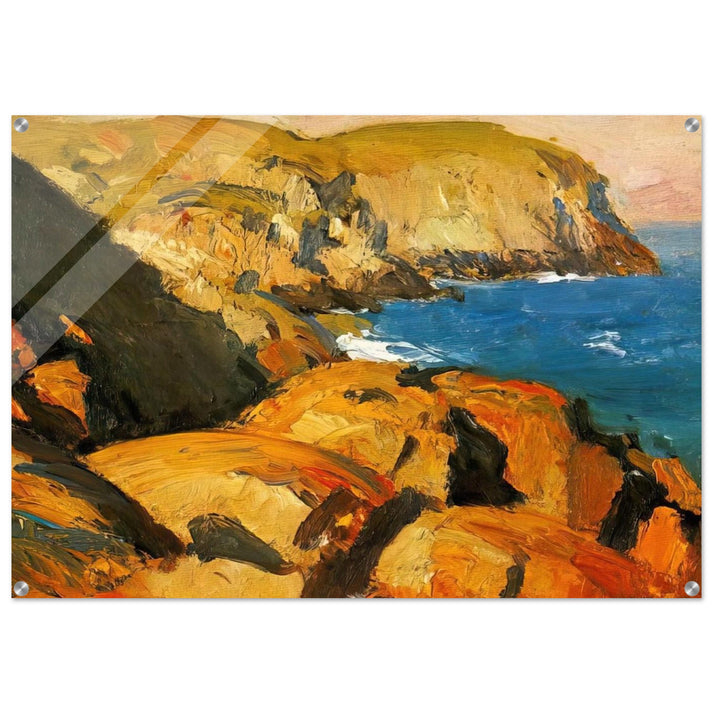
Blackhead, Monhegan - Edward Hopper Acrylic Print - 70x100 cm / 28x40″ inches
Blackhead, Monhegan - Edward Hopper Acrylic Print - 70x100 cm / 28x40″ inches
Couldn't load pickup availability
Immerse Yourself in the Rugged Majesty of Edward Hopper’s Monhegan
Experience the raw, architectural power of the Maine coast with our museum-quality reproduction of Blackhead, Monhegan by Edward Hopper. Painted during the formative summers Hopper spent on the island between 1916 and 1919, this piece captures the imposing rock formations of Monhegan’s headlands. Unlike his later, more introspective urban scenes, this seascape reveals a fascination with the heavy, permanent geometry of nature. Each brushstroke is rendered with clarity on our premium acrylic fine art print, allowing the interplay of light and shadow on the jagged cliffs to take center stage in your home or office.
The RedKalion Acrylic Advantage
At RedKalion, we transform historical masterpieces into contemporary focal points. This Edward Hopper acrylic print is crafted using a 4mm (0.15") acrylic panel that provides a sleek, high-gloss finish, enhancing the depth and color saturation of Hopper’s palette. The result is a vibrant, luminous presentation that protects the artwork while offering a modern, frameless aesthetic. Our commitment to archival quality ensures that this museum-quality reproduction will remain a centerpiece of your collection for generations.
Precision Crafting and Modern Design
- Visual Depth: The 4mm acrylic thickness creates a stunning 3D effect, making the Atlantic waves and Maine cliffs appear to come alive.
- Clean Aesthetic: Featuring straight-cut corners, this print offers a minimalist silhouette that complements both traditional and modern interiors.
- Ready to Display: Each piece includes a professional hanging kit with screws and pre-drilled holes at each corner (14mm from the edge) for a secure, floating appearance.
- Archival Durability: Our process ensures the print is resistant to fading and environmental wear, maintaining the integrity of Hopper’s vision.
By choosing a RedKalion reproduction, you are not simply purchasing a print; you are investing in a sophisticated piece of art history, meticulously presented through the lens of modern craftsmanship.


Discover Unlimited Art Possibilities
At RedKalion, you can find virtually any artwork from any artist, available in a wide range of sizes to perfectly match your space.
If you didn’t find what you’re looking for, contact us at support@redkalion.com . We will source any artwork and produce it in any size and format you need, including art prints, posters, canvas, framed pieces, framed canvas, and more.
For dedicated art enthusiasts, we also offer handcrafted replicas of any artwork, carefully painted by highly skilled artists using traditional techniques.
For custom requests, contact us at support@redkalion.com .
Why choose an acrylic print for Hopper’s "Blackhead, Monhegan"?
Acrylic prints offer superior color depth and a luminous quality that highlights Edward Hopper's use of light. The 4mm acrylic protects the image while providing a sleek, modern finish that enhances the rugged textures of the Monhegan cliffs.
What are the specific dimensions and materials?
This print measures 70x100 cm (28x40") and is crafted from 4mm (0.15") high-grade acrylic. It features straight-cut corners and a transparent background that defaults to white for optimal image clarity and vibrancy.
How is the acrylic print mounted?
Each print includes a premium hanging kit with four screws. There are pre-drilled holes at each corner, positioned 14mm from the edge with an 8mm diameter, ensuring a secure and professional installation.
How does RedKalion ensure the longevity of the artwork?
We use archival-grade inks and high-quality acrylic that resists UV damage and moisture. This ensures your Edward Hopper reproduction maintains its color integrity and physical durability for decades to come.
Is shipping secure for large-format acrylic pieces?
Yes, RedKalion employs specialized protective packaging designed for large-format acrylic. We ensure your artwork is cushioned and reinforced to arrive in pristine, gallery-ready condition, ready for immediate display.
What was Edward Hopper's relationship with Monhegan Island?
Hopper visited Monhegan Island between 1916 and 1919. It was here he moved away from his earlier illustrational style, focusing on the powerful, simplified forms of the coastline that would later inform his famous American Realism.
What technique did Hopper use in this specific seascape?
In Blackhead, Monhegan, Hopper used bold, thick paint applications and a high-contrast palette to define the rocky geometry. He focused on the weight of the land against the movement of the sea, prioritizing structure over detail.