

RedKalion
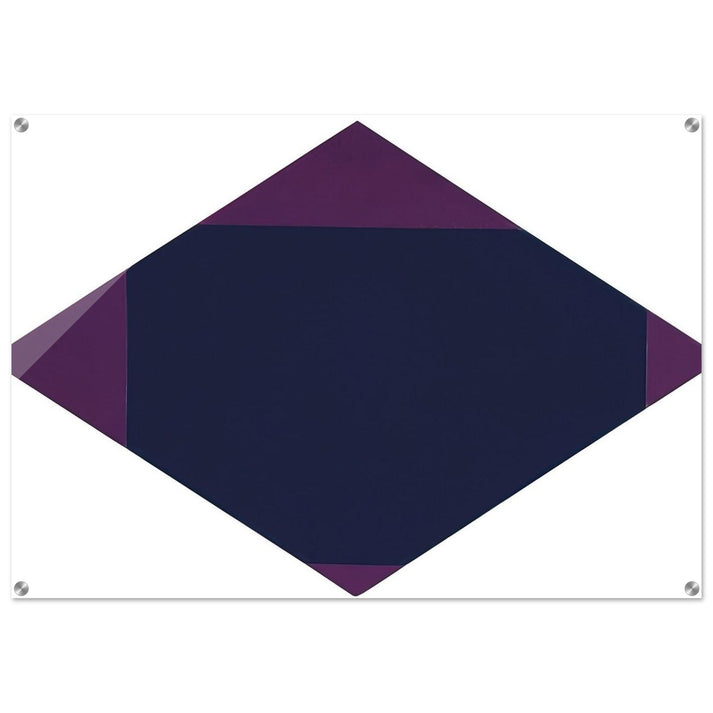
Blau-violettes horizontal-vertikal-quadrat - 1968 - Max Bill Acrylic Print - 70x100 cm / 28x40″ inches
Blau-violettes horizontal-vertikal-quadrat - 1968 - Max Bill Acrylic Print - 70x100 cm / 28x40″ inches
Couldn't load pickup availability
Elevate Your Space with Max Bill’s Concrete Art Masterpiece
RedKalion is proud to present a museum-quality reproduction of Max Bill’s 'Blau-violettes horizontal-vertikal-quadrat' (1968). As a central figure in the Concrete Art movement and a former student of the Bauhaus, Max Bill utilized mathematical precision to explore the infinite possibilities of color and form. This piece, a rhythmic intersection of horizontal and vertical geometry, represents the pinnacle of Bill’s dedication to clarity and structural logic.
The Intersection of Art and Mathematics
In this 1968 composition, Bill employs a sophisticated palette of blue and violet hues to create a sense of balanced tension. The acrylic print medium enhances this visual experience by providing depth and a glass-like finish that makes the colors vibrate with intensity. Unlike traditional canvas, our 4mm (0.15") acrylic prints offer a sleek, modern aesthetic that perfectly complements the minimalist and geometric nature of the artwork.
Museum-Grade Construction for Contemporary Interiors
To honor the legacy of Max Bill, RedKalion utilizes high-performance printing technology and premium materials. Each piece is crafted with:
- High-Clarity Acrylic: A 4mm (0.15") thick acrylic surface that provides a vibrant, durable, and shatter-resistant finish.
- Precise Finishing: Straight-cut corners that echo the geometric rigor of the artwork itself.
- Integrated Hanging System: Every print comes with a specialized hardware kit, including screws and pre-drilled holes at each corner for a secure, professional installation.
By choosing this archival masterpiece, you are not merely purchasing a print; you are investing in a legacy of 20th-century design that will maintain its brilliance for generations.


Discover Unlimited Art Possibilities
At RedKalion, you can find virtually any artwork from any artist, available in a wide range of sizes to perfectly match your space.
If you didn’t find what you’re looking for, contact us at support@redkalion.com . We will source any artwork and produce it in any size and format you need, including art prints, posters, canvas, framed pieces, framed canvas, and more.
For dedicated art enthusiasts, we also offer handcrafted replicas of any artwork, carefully painted by highly skilled artists using traditional techniques.
For custom requests, contact us at support@redkalion.com .
What is the material and thickness of this Max Bill print?
This print is crafted from premium 4mm (0.15") acrylic, providing a sleek, vibrant finish that enhances color depth and ensures long-term durability for modern interiors.
Is the mounting hardware included with the artwork?
Yes, each acrylic print includes a full hanging kit with screws and pre-drilled corner holes located 14mm from the edge for a secure and easy installation.
How does RedKalion handle transparent backgrounds in the art?
For optimal color presentation and clarity, any transparent backgrounds in the original artwork are defaulted to a crisp white during the printing process.
Is the print resistant to damage during shipping?
We use archival-grade packaging and high-durability 4mm acrylic to ensure your museum-quality reproduction arrives in pristine condition, ready for immediate display.
How should I clean my acrylic art print?
To maintain the archival quality of your 4mm acrylic print, gently wipe the surface with a soft, non-abrasive microfiber cloth to remove dust without scratching.
What artistic movement does 'Blau-violettes horizontal-vertikal-quadrat' belong to?
This 1968 work is a definitive example of Concrete Art (Konkrete Kunst), a movement Max Bill championed that focuses on mathematical logic and geometric purity.
Why is Max Bill significant in 20th-century art history?
A Bauhaus alumnus, Max Bill was a polymath whose work in architecture, typography, and painting bridged the gap between scientific theory and aesthetic beauty.