RedKalion
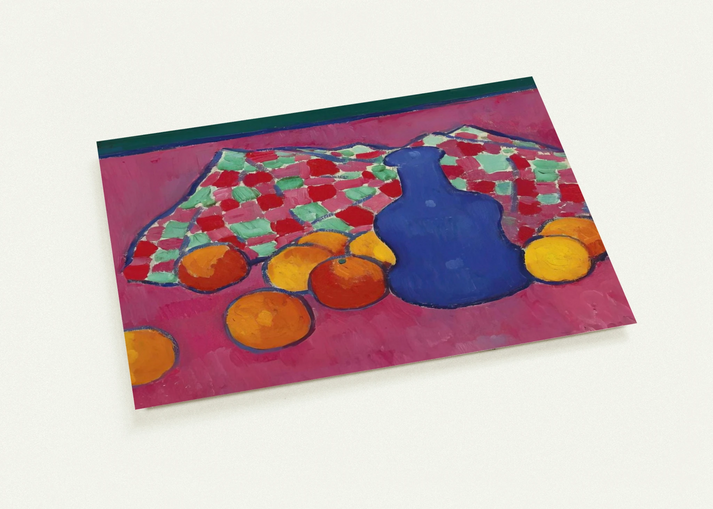
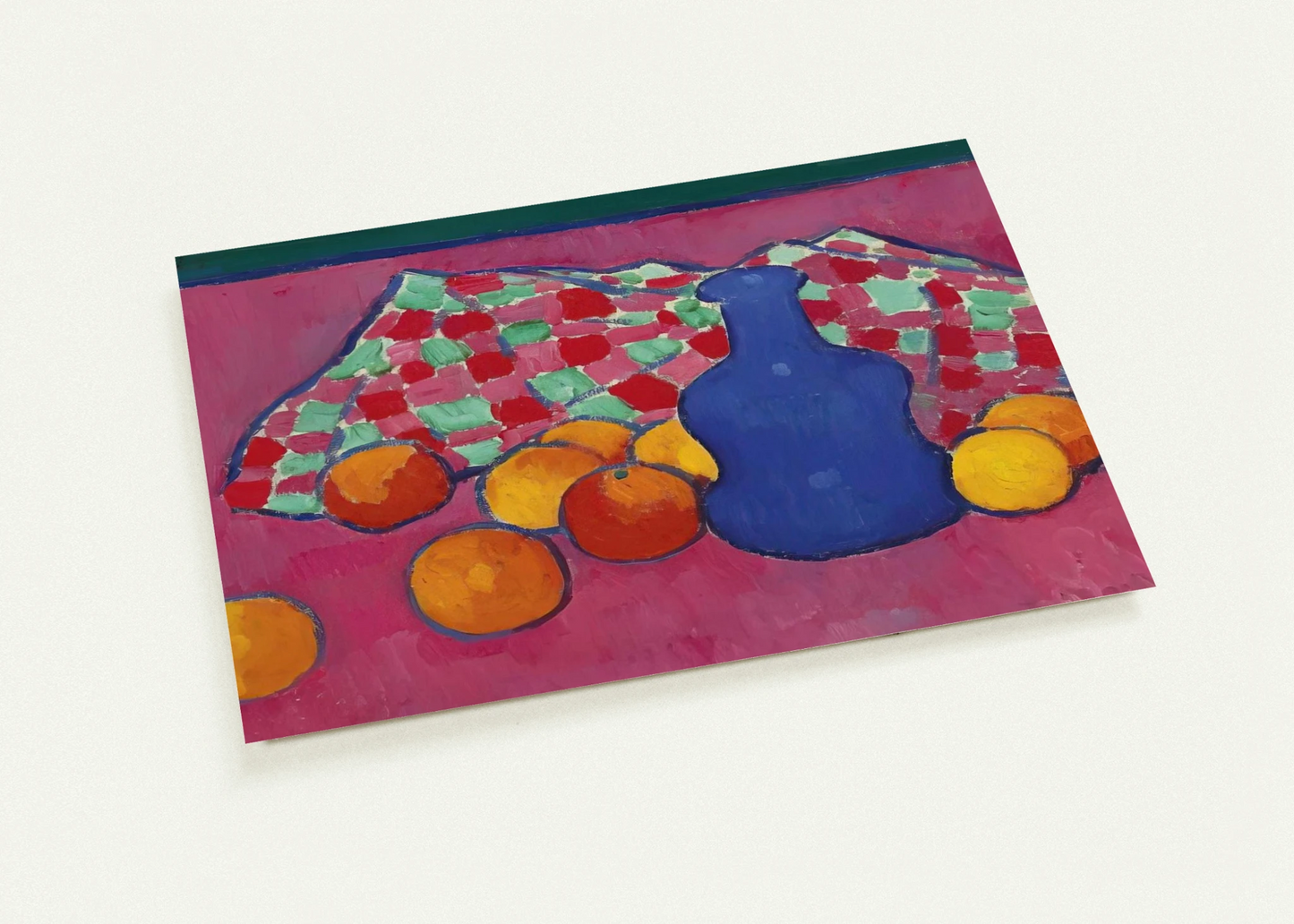
BLAUE VASE MIT ORANGEN 1908 By Alexej von Jawlensky Pack of 10 Post Cards | Alexej von Jawlensky Post Cards | A6 (10.5 x 14.8 cm) - 4.1 x 5.8 inches
BLAUE VASE MIT ORANGEN 1908 By Alexej von Jawlensky Pack of 10 Post Cards | Alexej von Jawlensky Post Cards | A6 (10.5 x 14.8 cm) - 4.1 x 5.8 inches
Couldn't load pickup availability
Elevate Your Correspondence with Jawlensky’s Expressionist Masterpiece
Experience the vibrant energy of early 20th-century modernism with this exquisite pack of 10 postcards featuring Alexej von Jawlensky's 'Blaue Vase mit Orangen' (1908). As a pivotal figure in the Der Blaue Reiter movement, Jawlensky utilized bold, saturated colors and heavy outlines to transcend mere representation, aiming instead to capture the spiritual essence of his subjects. This specific work, created during his most influential period, showcases a stunning dialogue between the deep cobalt of the vase and the radiant warmth of the oranges, a hallmark of the Expressionist and Fauvist traditions.
Museum-Quality Reproductions for the Discerning Collector
At RedKalion, we believe fine art should be accessible without compromising on technical excellence. These fine art postcards are produced using our proprietary 12-color fine art printing technology. Unlike standard 4-color commercial prints, our process ensures every brushstroke and color nuance of Jawlensky’s original oil painting is captured with breathtaking accuracy and depth. The 200 gsm (80 lb) paper provides a substantial, premium feel, while the smooth matte finish eliminates glare, allowing the artwork’s emotional intensity to take center stage.
Sustainable Artistry and Specifications
- Color Fidelity: 12-color pigment-based inks for unparalleled vibrancy.
- Paper Weight: 200 gsm (80 lb) with a thickness of 0.26 mm (10.3 mils).
- Eco-Conscious: Printed on FSC-certified paper from responsibly managed forests.
- Format: Pack of 10 flat postcards, A6 size (10.5 x 14.8 cm).
- Craftsmanship: Archival-grade materials designed for longevity and display.
Whether used for personal messages or displayed as a curated set of mini-prints, these reproductions bring a touch of museum-quality heritage to your daily life. Elevate your space or gift a piece of art history with an archival masterpiece that endures.
Discover Unlimited Art Possibilities
At RedKalion, you can find virtually any artwork from any artist, available in a wide range of sizes to perfectly match your space.
If you didn’t find what you’re looking for, contact us at support@redkalion.com . We will source any artwork and produce it in any size and format you need, including art prints, posters, canvas, framed pieces, framed canvas, and more.
For dedicated art enthusiasts, we also offer handcrafted replicas of any artwork, carefully painted by highly skilled artists using traditional techniques.
For custom requests, contact us at support@redkalion.com .
What printing technology is used for these Jawlensky postcards?
We utilize advanced 12-color fine art printing technology, which offers superior color vibrancy and depth compared to standard 4-color inkjet processes, ensuring a museum-quality reproduction of the original artwork.
What are the specific paper qualities of the Blaue Vase mit Orangen set?
Each postcard is printed on 200 gsm (80 lb) FSC-certified paper with a thickness of 0.26 mm. It features a smooth matte finish for a sophisticated, glare-free display.
How durable are these fine art reproductions?
These postcards are archival-grade, using high-quality pigment inks and heavy-weight paper designed to resist fading and maintain their integrity over time when kept away from direct moisture.
What size are the Alexej von Jawlensky postcards?
The postcards are A6 format, measuring exactly 10.5 x 14.8 cm (4.1 x 5.8 inches), making them perfect for standard mailing or framing in small desk frames.
Are the materials used in production environmentally sustainable?
Yes, RedKalion is committed to sustainability. These postcards are printed on demand using FSC-certified paper, ensuring the materials come from responsibly managed forests.
What is the significance of the year 1908 in Jawlensky’s 'Blaue Vase mit Orangen'?
1908 was a transformative year for Jawlensky, marking his move toward simplified forms and intense color usage, influenced by his collaboration with Kandinsky and the Fauvist movement.
How does Jawlensky’s use of color define this specific artwork?
Jawlensky uses color as an emotional vehicle rather than a descriptive one. The contrast between the cool blue vase and warm oranges exemplifies his pursuit of spiritual expression through palette.