RedKalion
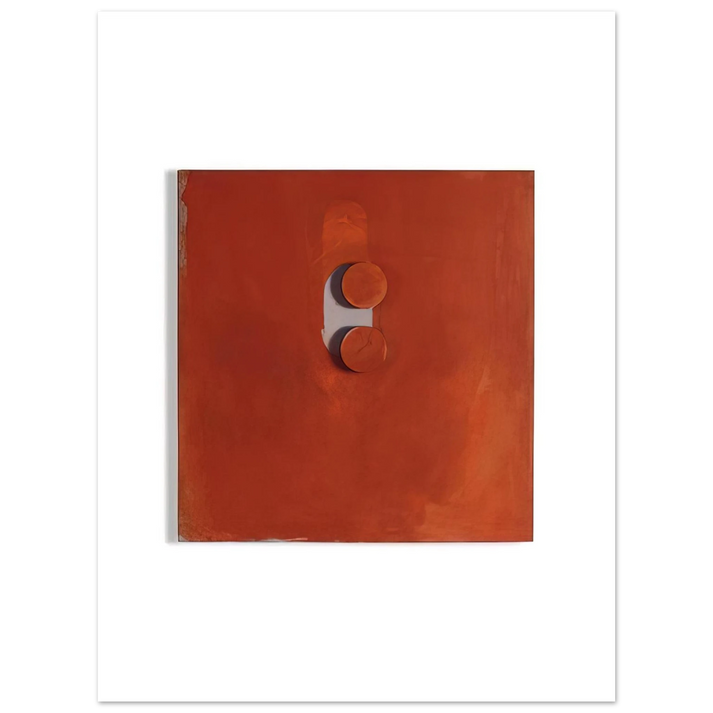
Blinky Palermo - TABLETTENBILD 1966 75x100 cm / 30x40inches Fine Art Poster
Blinky Palermo - TABLETTENBILD 1966 75x100 cm / 30x40inches Fine Art Poster
Couldn't load pickup availability
Elevate Your Collection with Blinky Palermo’s Tablettenbild (1966)
Blinky Palermo, a student of Joseph Beuys and a titan of the German postwar avant-garde, redefined the relationship between color, form, and space. His 1966 masterpiece, Tablettenbild (Tablet Picture), serves as a quintessential example of his transition from traditional canvas toward the object-based abstraction that would define his career. This museum-quality fine art print captures the subtle tension and geometric poise of the original, offering a sophisticated focal point for modern interiors.
As a premier curator of archival masterpieces, RedKalion offers this 75x100 cm (30x40 inches) reproduction on Master's Edition archival paper. Palermo’s work is characterized by a unique 'spatial sensitivity,' where the composition interacts with the surrounding environment. Our print preserves this intent through a luxurious matte finish, which eliminates glare and allows the natural white texture of the paper to enhance the visual depth of the colors.
Technical Excellence & Archival Quality
At RedKalion, we bridge the gap between historical significance and contemporary material science. Every print is produced using acid-free (pH above 7) materials, ensuring your investment is protected against yellowing or degradation over time. Our commitment to excellence includes:
- Weight & Thickness: A robust 250 gsm (110 lb) paper with a thickness of 0.29 mm (11.4 mils) for a premium, tactile feel.
- Museum-Grade Finish: An uncoated, off-white natural surface that mirrors the aesthetic of historical gallery pieces.
- Sustainable Sourcing: Printed on FSC-certified paper, reflecting a commitment to environmental responsibility.
- Archival Longevity: Designed to endure for generations without losing its structural or chromatic integrity.
This Tablettenbild 1966 reproduction is more than a poster; it is a testament to the minimalist movement. Elevate your space with an archival masterpiece that endures, curated specifically for the discerning eye of the contemporary collector.
Discover Unlimited Art Possibilities
At RedKalion, you can find virtually any artwork from any artist, available in a wide range of sizes to perfectly match your space.
If you didn’t find what you’re looking for, contact us at support@redkalion.com . We will source any artwork and produce it in any size and format you need, including art prints, posters, canvas, framed pieces, framed canvas, and more.
For dedicated art enthusiasts, we also offer handcrafted replicas of any artwork, carefully painted by highly skilled artists using traditional techniques.
For custom requests, contact us at support@redkalion.com .
What are the specifications of the paper used for this Blinky Palermo print?
We use Master's Edition archival paper, which is 250 gsm (110 lb) and 0.29 mm thick. It features a matte, uncoated finish and a natural white tone for a premium, museum-quality texture.
How does RedKalion ensure the longevity of the Tablettenbild reproduction?
The print is produced on acid-free paper with a pH level above 7. This archival standard prevents yellowing and ensures the artwork remains vibrant for generations.
Is the paper used for this fine art poster sustainable?
Yes, we exclusively use FSC-certified paper (Forest Stewardship Council), ensuring that the materials are sourced from responsibly managed forests that provide environmental and social benefits.
How is the shipping and fulfillment handled for large format prints?
Each order is printed and shipped on demand with no minimum order requirements. We use specialized protective packaging to ensure your 75x100 cm print arrives in gallery condition.
What is the finish of the Tablettenbild 1966 print?
The print has a luxurious matte, uncoated finish. This off-white, non-reflective surface is ideal for high-end interiors, as it minimizes glare and highlights the subtle nuances of Palermo’s palette.
What does the title 'Tablettenbild' signify in Palermo's oeuvre?
In German, 'Tablettenbild' translates to 'Tablet Picture.' It reflects Palermo’s interest in the artwork as a physical object or 'tablet' rather than just a flat image, a core concept in 1960s Minimalism.
Who was Blinky Palermo and why is his 1966 work significant?
Blinky Palermo was a key figure in German abstraction and a student of Joseph Beuys. 1966 marked a pivotal year where he experimented with the physical boundaries of painting, influencing decades of conceptual art.