RedKalion
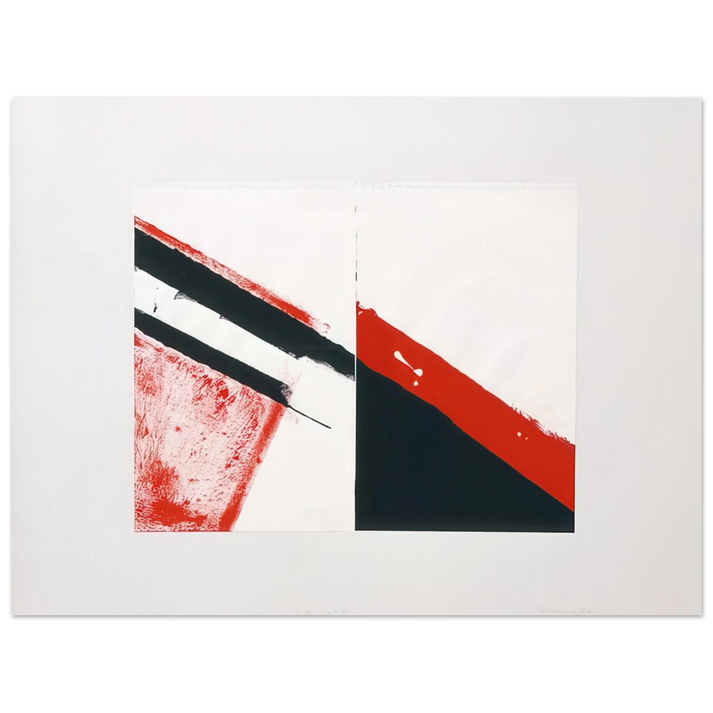
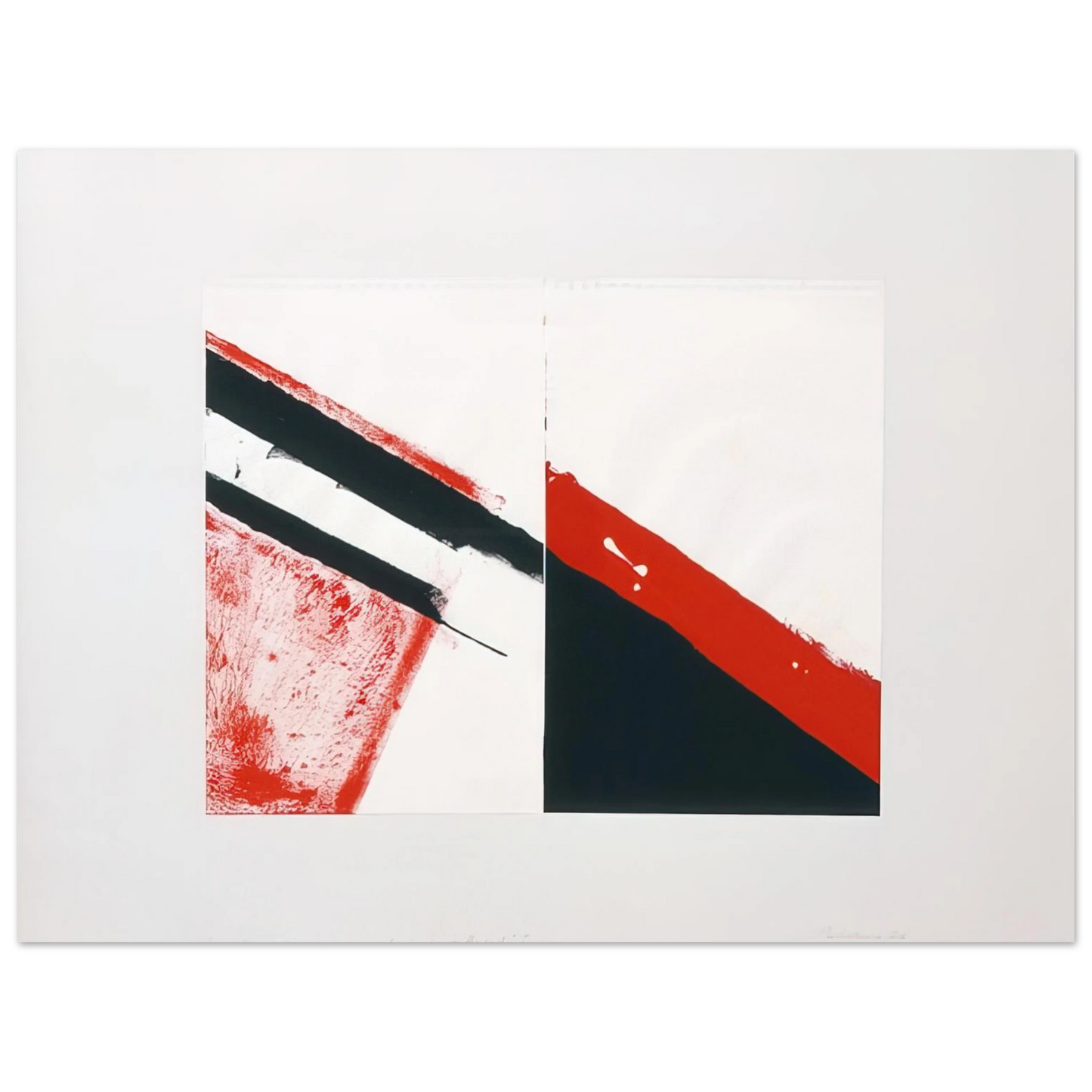
Blinky Palermo - WHO KNOWS THE BEGINNING AND WHO KNOWS THE END I 1976 75x100 cm / 30x40inches Fine Art Poster
Blinky Palermo - WHO KNOWS THE BEGINNING AND WHO KNOWS THE END I 1976 75x100 cm / 30x40inches Fine Art Poster
Couldn't load pickup availability
Blinky Palermo: A Philosophical Pursuit of Form
In his 1976 masterpiece, WHO KNOWS THE BEGINNING AND WHO KNOWS THE END I, Blinky Palermo transcends the boundaries of traditional painting, offering a profound exploration of spatial relationships and minimalist philosophy. As a student of Joseph Beuys, Palermo (born Peter Heisterkamp) rejected the heavy expressionism of his era in favor of a quiet, intellectual abstraction. This work, created in the year before his untimely death, represents the pinnacle of his late period, where composition becomes a meditation on the finite and the infinite.
RedKalion is proud to offer this museum-quality reproduction, curated for the discerning collector. This fine art print captures the subtle nuances of Palermo’s palette, preserving the intentionality of every line and void. It is more than a decorative piece; it is an archival testament to a pivotal moment in German post-war art history.
Premium Materiality and Archival Excellence
To honor Palermo’s legacy, our reproductions are crafted using the Master's Edition archival paper. This choice ensures that the sophisticated, off-white background and precise geometries remain as vivid as the original intent. The physical specifications reflect RedKalion’s commitment to gallery standards:
- Paper Weight: A substantial 250 gsm (110 lb) for a premium, heavy-duty feel.
- Surface Finish: A luxurious matte, uncoated texture that eliminates glare and enhances depth.
- Archival Longevity: Acid-free (pH above 7) chemistry ensures your investment will not yellow or degrade over time.
- Substantial Thickness: 0.29 mm (11.4 mils) provides the structural integrity required for professional framing.
- Ethical Standards: Printed on FSC-certified paper, supporting responsible forest management.
Elevate your environment with a piece that balances conceptual complexity with minimalist serenity. Our prints are fulfilled on-demand with no minimum order requirements, ensuring that each Blinky Palermo print is handled with the precision and care it deserves.
Discover Unlimited Art Possibilities
At RedKalion, you can find virtually any artwork from any artist, available in a wide range of sizes to perfectly match your space.
If you didn’t find what you’re looking for, contact us at support@redkalion.com . We will source any artwork and produce it in any size and format you need, including art prints, posters, canvas, framed pieces, framed canvas, and more.
For dedicated art enthusiasts, we also offer handcrafted replicas of any artwork, carefully painted by highly skilled artists using traditional techniques.
For custom requests, contact us at support@redkalion.com .
What defines the quality of this Blinky Palermo print?
RedKalion utilizes Master's Edition archival paper, specifically chosen for its 250 gsm weight and museum-quality finish. This ensures a premium, heavy-duty feel that authentically replicates the aesthetic of a high-end gallery exhibition.
What paper is used for the reproduction?
We use archival-grade, natural white (off-white) matte paper. This uncoated surface provides a sophisticated, non-reflective texture that emphasizes the subtle color transitions in Blinky Palermo’s 1976 minimalist compositions.
How does RedKalion ensure the longevity of the artwork?
Each print is produced on acid-free paper with a pH level above 7. This prevents the yellowing or brittleness associated with standard prints, ensuring the artwork remains in pristine condition for decades.
What is the significance of the title in Palermo's work?
The title 'WHO KNOWS THE BEGINNING AND WHO KNOWS THE END' reflects Palermo's late-career interest in philosophical inquiry and the rhythmic, almost musical nature of geometric forms and their placement in space.
Is the paper used for this print environmentally friendly?
Yes, all prints are produced on FSC-certified paper. This certification guarantees that the materials are sourced from responsibly managed forests that provide environmental, social, and economic benefits.
How is the print shipped?
To maintain quality, prints are produced on-demand and shipped in protective, archival-safe packaging. There are no minimum orders, allowing for personalized fulfillment for every collector.
Why is this specific 1976 work considered a minimalist masterpiece?
Created just before his death, this piece showcases Palermo's mastery of 'Stoffbilder' principles applied to paper, using minimal shapes to create a complex dialogue between the viewer and the surrounding architectural space.