
RedKalion
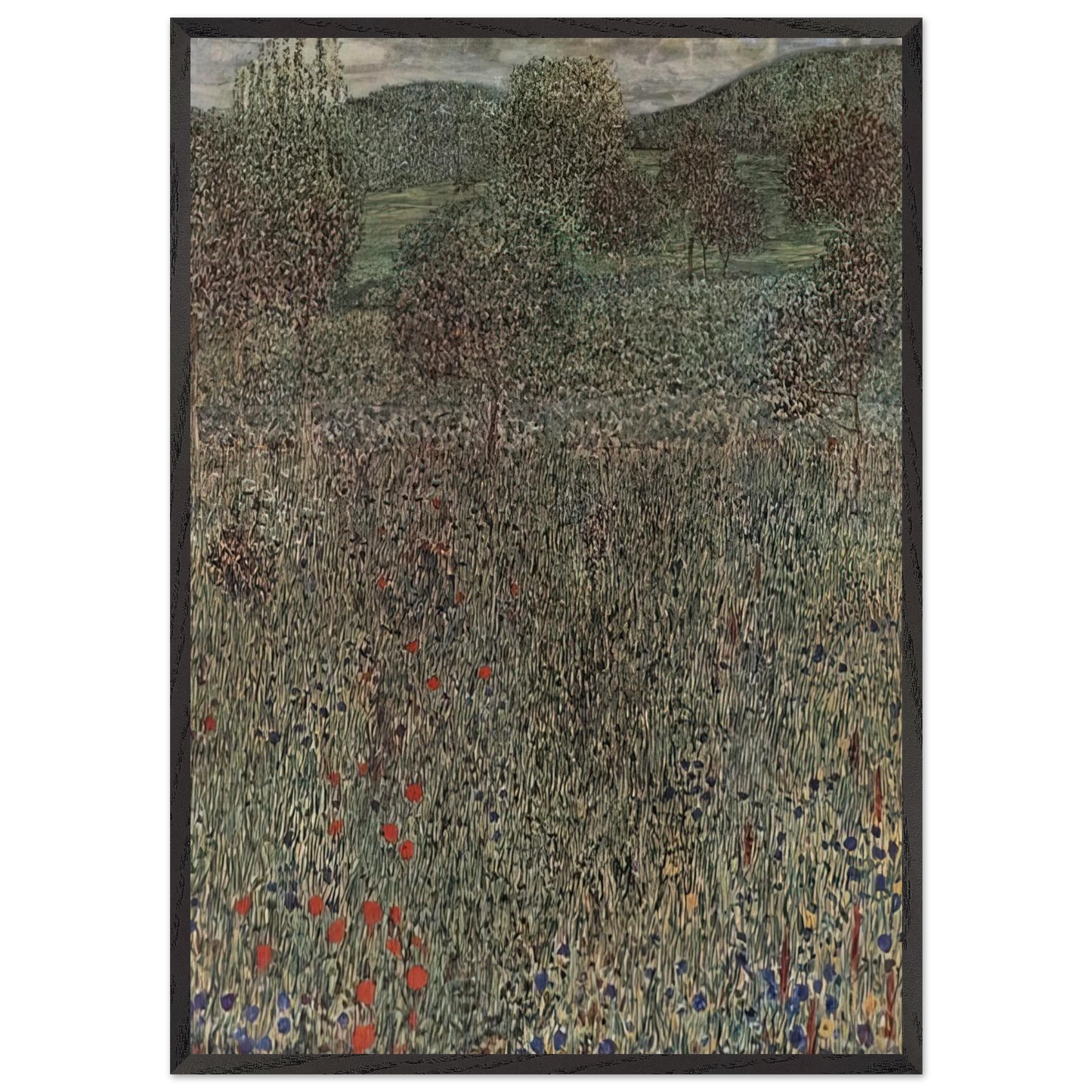
BLOOMING FIELD - Gustav Klimt 70x100 cm / 28x40 inches Framed Art Print – Black Wooden Frame
BLOOMING FIELD - Gustav Klimt 70x100 cm / 28x40 inches Framed Art Print – Black Wooden Frame
Couldn't load pickup availability
Elevate Your Space with the Ethereal Vibrancy of Klimt’s Blooming Field
Experience the mesmerizing allure of Gustav Klimt’s Blooming Field, a masterpiece of the Vienna Secession that transforms a simple meadow into a mosaic of jewel-like colors. This museum-quality fine art print captures Klimt’s unique approach to landscape painting, where he abandoned traditional perspective in favor of a dense, tapestried effect. Each floral element is rendered with a rhythmic intensity that borders on the spiritual, characteristic of Klimt’s later works during his summers at Attersee.
The RedKalion Archival Standard
At RedKalion, we believe a masterpiece deserves a presentation that honors its legacy. This 70x100 cm (28x40 inches) framed reproduction is printed on 250 gsm (110 lb) archival museum-quality paper. The natural white, uncoated matte finish ensures that the vibrant greens and floral hues of Klimt’s palette are displayed with depth and clarity, free from distracting glares. This FSC-certified paper is chosen for its exceptional thickness (0.29 mm), providing a substantial tactile feel that ensures longevity for generations.
Premium Craftsmanship and Sustainable Elegance
Your Blooming Field print is housed in a sophisticated black frame crafted from responsibly sourced ash wood. While standard frames often settle for a 14mm profile, RedKalion utilizes a more robust 20mm (0.79") thick and wide frame, providing a contemporary, authoritative presence on your wall. The artwork is protected by shatterproof, transparent plexiglass, ensuring the print remains pristine while maintaining perfect clarity. Arriving ready-to-hang with a pre-installed hanging kit, this piece allows you to instantly introduce a sense of Viennese elegance into your home or office.
The Artist’s Vision: A Sanctuary of Color
Gustav Klimt’s landscapes were often a private meditation, a departure from his more famous gold-leaf portraits. In Blooming Field, we see his fascination with the 'horror vacui'—a desire to fill the entire canvas with detail. By weaving together Impressionist light and Pointillist precision, Klimt created a sanctuary of color that transcends the boundaries of the natural world. Choosing this RedKalion reproduction means investing in a piece of art history, meticulously crafted to serve as an enduring focal point in your collection.
Discover Unlimited Art Possibilities
At RedKalion, you can find virtually any artwork from any artist, available in a wide range of sizes to perfectly match your space.
If you didn’t find what you’re looking for, contact us at support@redkalion.com . We will source any artwork and produce it in any size and format you need, including art prints, posters, canvas, framed pieces, framed canvas, and more.
For dedicated art enthusiasts, we also offer handcrafted replicas of any artwork, carefully painted by highly skilled artists using traditional techniques.
For custom requests, contact us at support@redkalion.com .
What materials are used for the Blooming Field print?
We use 250 gsm (110 lb) archival museum-quality paper. The paper is natural white, uncoated, and matte-finished, ensuring the vibrant colors of Klimt's work remain rich and fade-resistant over time.
Is the frame durable and sustainably sourced?
Yes, our frames are made from FSC-certified ash and oak wood. We use a premium 20mm (0.79") thick profile, which is wider and sturdier than standard 14mm gallery frames.
Does the framed art print arrive ready to hang?
Absolutely. Every RedKalion framed art print includes a pre-installed hanging kit. Your artwork is ready to be mounted on your wall the moment it arrives.
How is the artwork protected during shipping and display?
We protect the print with shatterproof plexiglass, which offers superior clarity and safety compared to standard glass. All items are shipped in specialized protective packaging to ensure safe delivery.
What is the archival life of this museum-quality reproduction?
Using 250 gsm archival paper and museum-grade inks, our prints are designed to last for decades without yellowing or fading, maintaining their aesthetic value as a true heirloom piece.
Why did Gustav Klimt choose to paint landscapes like Blooming Field?
Klimt turned to landscapes during his summer retreats to Attersee. They served as an experimental space where he could explore rhythmic patterns and color theory away from his portrait commissions.
What art movement does Blooming Field belong to?
It is a hallmark of the Vienna Secession. This piece showcases Klimt’s transition toward Symbolism and a decorative, mosaic-like style that emphasizes the surface texture over realistic depth.