RedKalion
Blossom Out - 1986 - Wu Guanzhong 70x100 cm / 28x40 inches Framed Art Print – Black Wooden Frame
Blossom Out - 1986 - Wu Guanzhong 70x100 cm / 28x40 inches Framed Art Print – Black Wooden Frame
Couldn't load pickup availability
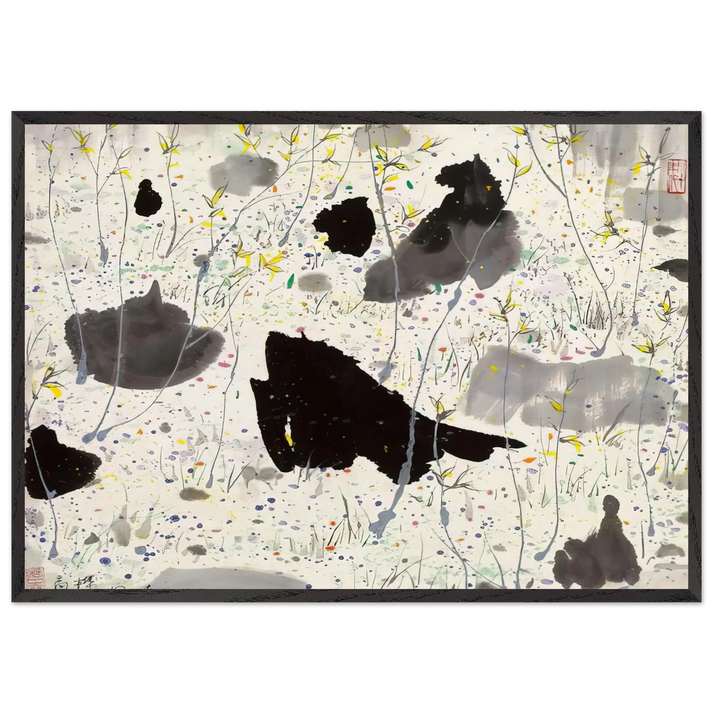
The Rhythmic Pulse of Nature: Wu Guanzhong’s 'Blossom Out'
Experience the profound synthesis of Eastern ink traditions and Western modernism with this 1986 masterpiece, 'Blossom Out' by Wu Guanzhong. A pioneer of 20th-century Chinese art, Wu Guanzhong captures the ephemeral beauty of spring through a sophisticated interplay of rhythmic lines and vibrant 'dots' of color. This museum-quality fine art print brings the artist's vision of 'formal beauty' into your home, offering a serene yet dynamic focal point for any sophisticated interior.
Authentic Artistic Legacy
In 1986, Wu Guanzhong was at the height of his creative powers, refining his signature style that bridged the gap between abstraction and representation. Blossom Out exemplifies his mastery of composition, where branches twist with calligraphic energy and blossoms appear as spontaneous bursts of life. By choosing this reproduction, you are celebrating an era of Chinese art history that redefined global perspectives on landscape and flora.
Uncompromising RedKalion Quality
At RedKalion, we curate archival-grade reproductions that honor the original artist's intent. This 70x100 cm print is meticulously produced on 250 gsm (110 lb) museum-quality paper. The natural white, matte, and uncoated finish ensures a non-reflective surface that preserves the delicate nuances of Wu’s ink-wash aesthetic. Each piece is framed in a responsibly sourced black wooden frame, crafted from oak or ash, measuring 20mm (0.79") in width for a premium, substantial presence compared to standard alternatives.
Elegance and Longevity
- Ready-to-Hang: Your artwork arrives with a professional hanging kit included, ensuring an effortless installation.
- Archival Protection: Shatterproof, transparent plexiglass protects the print from environmental wear while maintaining crystal clarity.
- Sustainability: We utilize FSC-certified materials, aligning luxury with environmental responsibility.
- Heirloom Quality: The archival paper (0.29 mm thickness) is designed to endure, preventing yellowing and preserving the vibrant palette for generations.

Discover Unlimited Art Possibilities
At RedKalion, you can find virtually any artwork from any artist, available in a wide range of sizes to perfectly match your space.
If you didn’t find what you’re looking for, contact us at support@redkalion.com . We will source any artwork and produce it in any size and format you need, including art prints, posters, canvas, framed pieces, framed canvas, and more.
For dedicated art enthusiasts, we also offer handcrafted replicas of any artwork, carefully painted by highly skilled artists using traditional techniques.
For custom requests, contact us at support@redkalion.com .
What materials are used for the print and frame?
We use 250 gsm (110 lb) archival, museum-quality matte paper. The frame is constructed from responsibly sourced black oak or ash wood, measuring 20mm in thickness for a premium look.
Is the artwork ready to hang upon arrival?
Yes, each framed Wu Guanzhong print includes a specialized hanging kit. The artwork is delivered ready to hang directly on your wall out of the box.
How is the print protected from damage?
Every print is shielded by shatterproof plexiglass, providing superior protection and clarity while ensuring the piece remains safe during transit and display.
Is the paper used for this print sustainable?
Absolutely. RedKalion uses FSC-certified paper or equivalent sustainable materials, ensuring that your fine art reproduction supports responsible forest management.
What is the significance of the 1986 'Blossom Out'?
Created in 1986, this piece represents Wu Guanzhong's mature style, where he utilized Western oil painting techniques and Chinese ink-wash concepts to achieve 'rhythmic abstraction' and formal beauty.
How does RedKalion ensure archival longevity?
By utilizing acid-free, 0.29 mm thick natural white paper and UV-resistant plexiglass, we ensure that the print resists aging and color fading over time.
What defines Wu Guanzhong's artistic technique in this piece?
Wu Guanzhong employs a unique 'dots and lines' technique, using calligraphic strokes to represent structure and colorful dots to symbolize the vitality of blooming nature.