RedKalion
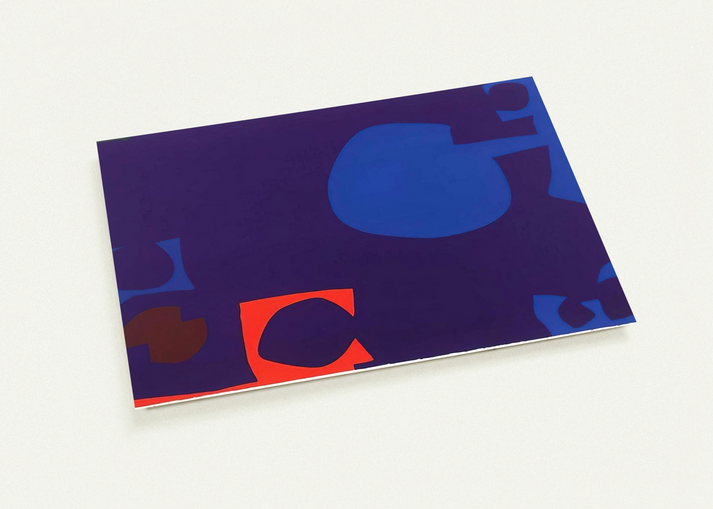
Blue and Deep Violet with Orange, Brown and Green - 1970 By Patrick Heron Pack of 10 Post Cards | Patrick Heron Post Cards | A6 (10.5 x 14.8 cm) - 4.1 x 5.8 inches
Blue and Deep Violet with Orange, Brown and Green - 1970 By Patrick Heron Pack of 10 Post Cards | Patrick Heron Post Cards | A6 (10.5 x 14.8 cm) - 4.1 x 5.8 inches
Couldn't load pickup availability
Elevate Your Correspondence with Patrick Heron’s Colorist Masterpiece
Experience the profound spatial depth and chromatic intensity of Patrick Heron's 'Blue and Deep Violet with Orange, Brown and Green - 1970'. This set of 10 premium postcards transforms an iconic piece of British abstract art into a tactile, shareable experience. Heron, a central figure in the St Ives School, was renowned for his exploration of how color defines space. In this 1970 composition, the vibrant dialogue between the deep violets and cool blues is punctuated by organic shapes of orange and green, creating a visual rhythm that is both calming and energetic.
Museum-Quality Precision in a Miniature Format
At RedKalion, we believe that fine art deserves the highest fidelity, regardless of size. These postcards utilize our advanced 12-color fine art printing technology. Unlike standard 4-color commercial prints, our process captures the nuanced transitions and saturation of Heron’s palette with stunning accuracy. The result is a miniature reproduction that maintains the integrity of the original artwork's emotional impact.
Premium Specifications for the Discerning Collector
Every card in this pack of 10 is crafted to archival standards, ensuring that your messages or displays endure:
- Exceptional Material: Printed on heavy 200 gsm (80 lb) FSC-certified paper with a thickness of 0.26 mm (10.3 mils).
- Refined Finish: A smooth matte coating provides a clean, glare-free surface that highlights color vibrancy without distracting reflections.
- Sustainability: We utilize environmentally conscious materials and a print-on-demand model to minimize waste.
- Size: Classic A6 (10.5 x 14.8 cm / 4.1 x 5.8 inches), perfect for standard mailing or framing as a small-scale gallery wall.
Whether used for sophisticated personal notes or as a curated set of mini prints for your home or office, these Patrick Heron postcards represent the pinnacle of archival-grade stationery. Surround yourself with the enduring brilliance of 20th-century abstraction.

Discover Unlimited Art Possibilities
At RedKalion, you can find virtually any artwork from any artist, available in a wide range of sizes to perfectly match your space.
If you didn’t find what you’re looking for, contact us at support@redkalion.com . We will source any artwork and produce it in any size and format you need, including art prints, posters, canvas, framed pieces, framed canvas, and more.
For dedicated art enthusiasts, we also offer handcrafted replicas of any artwork, carefully painted by highly skilled artists using traditional techniques.
For custom requests, contact us at support@redkalion.com .
What makes RedKalion's 12-color printing unique?
Our 12-color fine art printing technology uses a wider spectrum of pigments than standard 4-color printers, resulting in superior color vibrancy, smoother gradients, and museum-quality depth for every Patrick Heron reproduction.
What is the weight and feel of the postcard paper?
Each postcard is printed on premium 200 gsm (80 lb) paper with a thickness of 0.26 mm. The smooth matte finish provides a professional, glare-free feel that is substantial and durable.
Are these postcards environmentally friendly?
Yes. We use FSC-certified paper from responsibly managed forests and employ a print-on-demand model to ensure no excess inventory or unnecessary waste is created.
How are orders fulfilled?
Every order is printed on demand with no minimum requirements. This ensures your Patrick Heron postcards are freshly produced and inspected for quality before being shipped directly to you.
Can these be used as mini art prints?
Absolutely. Given the high-resolution 12-color printing and archival paper quality, these postcards are frequently used as small-scale art prints for framing or creative wall displays.
What influenced Patrick Heron's use of color in 1970?
By 1970, Heron was deeply influenced by the interaction of color and space, moving toward "wobbly" soft-edged shapes that allowed colors to bleed into one another's visual territory, creating a sense of depth.
What is the significance of the "soft-edge" shapes in this piece?
The soft edges in Heron's 1970 work allow for a fluid transition between colors, illustrating his theory that color is the primary carrier of form and space in painting.