
RedKalion
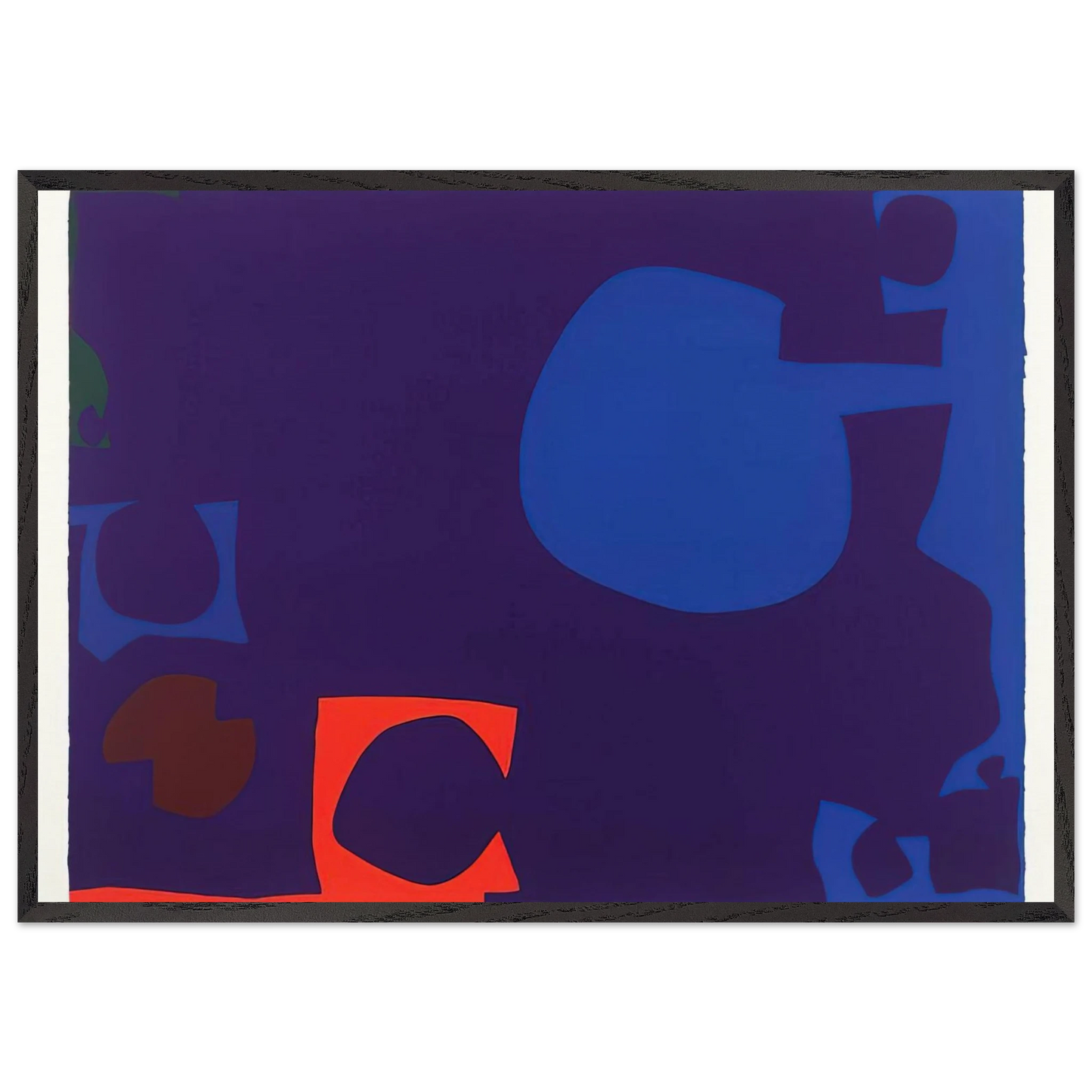
Blue and Deep Violet with Orange Brown and Green - 1970 - Patrick Heron 70x100 cm / 28x40 inches Framed Art Print – Black Wooden Frame
Blue and Deep Violet with Orange Brown and Green - 1970 - Patrick Heron 70x100 cm / 28x40 inches Framed Art Print – Black Wooden Frame
Couldn't load pickup availability
Elevate Your Space with Patrick Heron’s Mastery of Color
Experience the vibrant interplay of form and hue with this museum-quality reproduction of Blue and Deep Violet with Orange Brown and Green (1970) by the celebrated British abstract artist, Patrick Heron. As a central figure of the St Ives School, Heron’s work from the 1970s represents a pinnacle of lyrical abstraction, where color is not merely a subject but the very architecture of the piece. This specific work exemplifies his shift toward larger, flatter planes of color that vibrate against one another, creating a sense of 'space through color' that is both meditative and energetic.
Authentic Artistry and Historical Context
In 1970, Heron was deeply engaged in exploring the boundaries between shapes. His technique involved a meticulous application of paint to ensure that the 'edge' where two colors meet became a source of visual tension. By choosing this fine art print, you are bringing a piece of late 20th-century modernism into your home. The deep violets and oranges are not just aesthetic choices; they are a study in light and perception, influenced by the unique coastal atmosphere of Cornwall where Heron lived and worked.
Archival Excellence and Sustainable Craftsmanship
At RedKalion, we curate our prints to meet the exacting standards of the world’s finest galleries. This Patrick Heron reproduction is printed on 250 gsm (110 lb) archival museum-quality paper, featuring a natural white, matte, and uncoated finish that preserves the integrity of Heron’s palette without distracting glare. Each 70x100 cm print is encased in a premium black wooden frame made from responsibly sourced oak or ash. With a robust 20mm (0.79") thickness, the frame offers a sophisticated profile that surpasses standard commercial offerings, ensuring your investment remains a centerpiece for decades.
The RedKalion Guarantee
Your artwork arrives ready-to-hang, complete with a professional hanging kit. To ensure the longevity of the print, we utilize shatrerproof plexiglass, providing crystal-clear visibility while protecting the pigments from environmental wear. Every material used, from the FSC-certified paper to the sustainably harvested wood, reflects our commitment to environmental responsibility and archival excellence.
Discover Unlimited Art Possibilities
At RedKalion, you can find virtually any artwork from any artist, available in a wide range of sizes to perfectly match your space.
If you didn’t find what you’re looking for, contact us at support@redkalion.com . We will source any artwork and produce it in any size and format you need, including art prints, posters, canvas, framed pieces, framed canvas, and more.
For dedicated art enthusiasts, we also offer handcrafted replicas of any artwork, carefully painted by highly skilled artists using traditional techniques.
For custom requests, contact us at support@redkalion.com .
What defines the quality of this Patrick Heron print?
Our Patrick Heron prints are produced on 250 gsm archival museum-quality paper. This natural white, matte paper ensures long-term color stability and a glare-free viewing experience, meeting the highest standards for fine art reproductions.
Is the frame included with this 70x100 cm artwork?
Yes, this artwork comes professionally framed in a 20mm thick black wooden frame made from responsibly sourced oak or ash. It arrives ready-to-hang with a pre-installed hanging kit for your convenience.
How is the print protected during shipping and display?
Each framed print is protected by shatterproof, transparent plexiglass. This ensures your artwork arrives in perfect condition and remains shielded from dust and physical damage while on display in your home or gallery.
Is the paper used for this reproduction sustainable?
Absolutely. RedKalion uses FSC-certified paper or equivalent sustainable materials. Our commitment to the environment ensures that your art collection supports responsible forestry practices and ecological longevity.
How long will this archival print last without fading?
This print is crafted using archival-grade materials and 250 gsm paper designed to resist yellowing and fading. When kept out of direct sunlight, these museum-quality reproductions are designed to endure for generations.
What is the significance of the year 1970 in Patrick Heron’s career?
1970 marked a period where Heron refined his 'wobbly' edge technique. His compositions became more expansive, focusing on how primary and secondary colors could create a spatial depth without using traditional perspective.
How does Heron use color to create a sense of depth in this piece?
Heron utilizes 'color-space' theory, where certain hues like orange appear to advance while deep violets recede. This creates a rhythmic, three-dimensional vibration on a flat surface, a hallmark of his abstract mastery.