

RedKalion
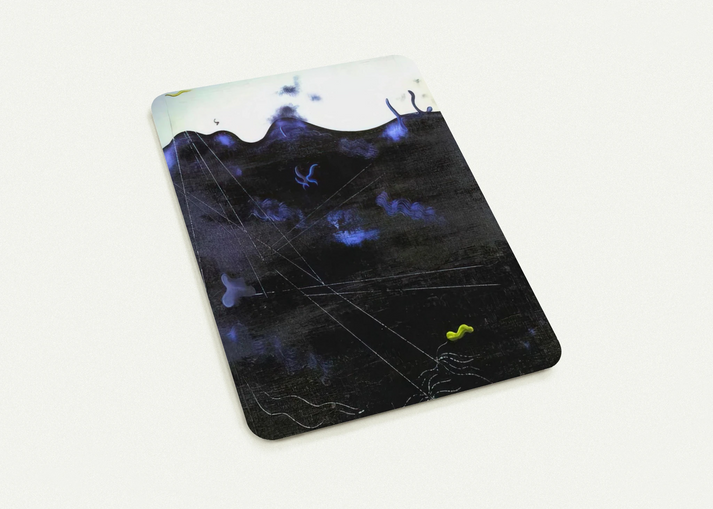
Blue Bed By Yves Tanguy Pack of 10 Post Cards | Yves Tanguy Post Cards | A6 (10.5 x 14.8 cm) - 4.1 x 5.8 inches
Blue Bed By Yves Tanguy Pack of 10 Post Cards | Yves Tanguy Post Cards | A6 (10.5 x 14.8 cm) - 4.1 x 5.8 inches
Couldn't load pickup availability
Invoke the Surreal with Yves Tanguy's 'Blue Bed'
Step into the metaphysical landscapes of the subconscious with this exquisite pack of 10 postcards featuring Blue Bed (Le Lit bleu) by the renowned French Surrealist, Yves Tanguy. Known for his self-taught precision and vast, haunting horizons, Tanguy's work captures a world that feels both alien and deeply organic. This particular piece showcases his mastery of biomorphic forms and atmospheric depth, now meticulously reproduced for the discerning collector by RedKalion.
Museum-Quality Fine Art in a Postcard Format
At RedKalion, we believe that even the smallest prints should carry the weight of an original masterpiece. These postcards are not standard stationery; they are museum-quality reproductions crafted using state-of-the-art 12-color fine art printing technology. Unlike standard 4-color inkjet prints, our process ensures incredible color vibrancy and captures the subtle gradients of Tanguy's iconic blue palettes with stunning accuracy.
Premium Material Specifications
- Paper Quality: Each card is printed on 200 gsm (80 lb) FSC-certified paper, offering a substantial, premium feel.
- Smooth Matte Finish: A clean, glare-free display that enhances the depth of the Surrealist imagery without distracting reflections.
- Precision Thickness: At 0.26 mm (10.3 mils), these cards are durable enough for mailing yet refined enough for framing.
- Eco-Conscious Production: Printed on demand using environmentally responsible materials to minimize waste.
Whether used to share a sophisticated sentiment or kept as a curated set for your private gallery, these Yves Tanguy postcards serve as an enduring tribute to one of the 20th century's most enigmatic artists. Elevate your collection with an archival-grade reproduction that honors the integrity of the original vision.


Discover Unlimited Art Possibilities
At RedKalion, you can find virtually any artwork from any artist, available in a wide range of sizes to perfectly match your space.
If you didn’t find what you’re looking for, contact us at support@redkalion.com . We will source any artwork and produce it in any size and format you need, including art prints, posters, canvas, framed pieces, framed canvas, and more.
For dedicated art enthusiasts, we also offer handcrafted replicas of any artwork, carefully painted by highly skilled artists using traditional techniques.
For custom requests, contact us at support@redkalion.com .
What makes the 12-color printing process superior for Tanguy's work?
Our 12-color technology captures a wider gamut of hues than standard printing, ensuring the subtle atmospheric shifts and unique pigments in Yves Tanguy's Blue Bed are reproduced with archival precision and museum-level depth.
What is the weight and texture of the postcard paper?
These cards are printed on 200 gsm (80 lb) paper with a thickness of 0.26 mm. The smooth matte finish provides a sophisticated, glare-free surface that highlights the fine details of the artwork.
How long will these archival postcards last without fading?
Printed with high-quality pigment inks on FSC-certified paper, these fine art reproductions are designed for longevity. When kept away from direct sunlight, they will maintain their color vibrancy for decades.
Are the materials used for these postcards environmentally friendly?
Yes. We use FSC-certified paper and print on demand to reduce overproduction. This commitment to sustainability ensures that your art collection has a minimal environmental footprint.
Do these postcards come in different sizes?
This specific pack features A6 dimensions (10.5 x 14.8 cm / 4.1 x 5.8 inches). However, RedKalion offers a variety of sizes for other prints to fit any framing requirement.
What is the historical significance of Blue Bed?
Painted during the height of the Surrealist movement, Blue Bed reflects Tanguy's transition into more complex, non-representational dreamscapes, emphasizing his signature biomorphic shapes and infinite horizons.
Why is Yves Tanguy's style described as 'biomorphic'?
Tanguy's forms appear organic—resembling stones, bones, or cells—yet they represent no known living creature. This 'biomorphic' style bridges the gap between the natural world and the abstract unconscious.