

RedKalion
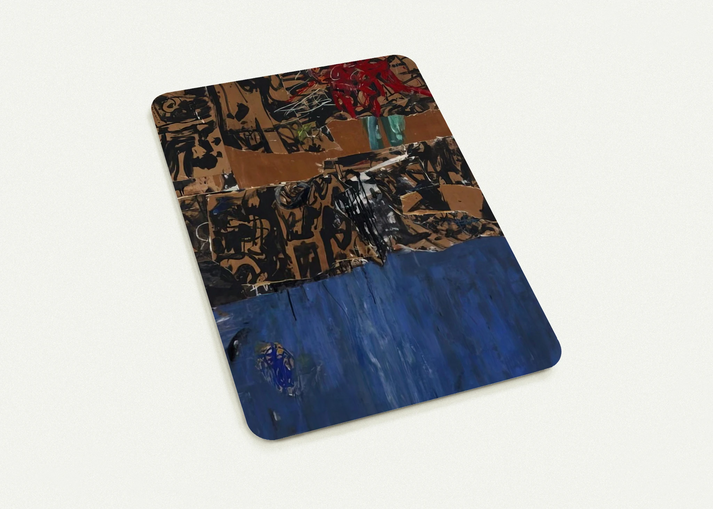
Blue Blue Blue By Allan Kaprow Pack of 10 Post Cards | Allan Kaprow Post Cards | A6 (10.5 x 14.8 cm) - 4.1 x 5.8 inches
Blue Blue Blue By Allan Kaprow Pack of 10 Post Cards | Allan Kaprow Post Cards | A6 (10.5 x 14.8 cm) - 4.1 x 5.8 inches
Couldn't load pickup availability
The Avant-Garde Legacy: Blue Blue Blue by Allan Kaprow
Step into the conceptual world of Allan Kaprow, the visionary pioneer of 'Happenings' and a central figure in 20th-century avant-garde art. This exclusive pack of 10 postcards features Blue Blue Blue, a work that captures the rhythmic, experimental energy Kaprow brought to the modern art movement. These are not merely stationery; they are museum-quality reproductions designed for the discerning collector who appreciates the intersection of art and life.
At RedKalion, we honor the intellectual depth of Kaprow’s work by utilizing 12-color fine art printing technology. Unlike standard 4-color inkjet processes, our method ensures that every nuanced shade is rendered with stunning vibrancy and historical accuracy, preserving the artist's original intent. Each card serves as a portable archive of the Fluxus era.
Technical Excellence & Material Sophistication
- Archival Material: Each card is printed on 200 gsm (80 lb) paper, providing a substantial, premium feel that resists the passage of time.
- Sophisticated Finish: A smooth matte finish ensures a clean, glare-free display, highlighting the artwork's minimalist beauty.
- Eco-Conscious Curation: Printed on FSC-certified paper, our postcards reflect a commitment to sustainable excellence.
- Versatile Sizing: These A6 cards (10.5 x 14.8 cm) are perfectly proportioned for sophisticated personal correspondence or as a curated gallery wall set.
By choosing RedKalion, you are investing in an archival-grade reproduction that respects both the environment and the artist's legacy. Elevate your space or share a piece of art history with these meticulously crafted postcards, designed to endure as an archival masterpiece.


Discover Unlimited Art Possibilities
At RedKalion, you can find virtually any artwork from any artist, available in a wide range of sizes to perfectly match your space.
If you didn’t find what you’re looking for, contact us at support@redkalion.com . We will source any artwork and produce it in any size and format you need, including art prints, posters, canvas, framed pieces, framed canvas, and more.
For dedicated art enthusiasts, we also offer handcrafted replicas of any artwork, carefully painted by highly skilled artists using traditional techniques.
For custom requests, contact us at support@redkalion.com .
What printing technology is used for these Allan Kaprow postcards?
We use advanced 12-color fine art printing technology, which offers superior color vibrancy and depth compared to standard 4-color methods, ensuring your Allan Kaprow prints are museum-quality.
What are the paper specifications for this set?
The postcards are printed on 200 gsm (80 lb) FSC-certified paper with a thickness of 0.26 mm, featuring a smooth matte finish for an elegant, glare-free aesthetic.
Is the packaging and paper environmentally friendly?
Yes, RedKalion uses environmentally conscious, FSC-certified paper. Our print-on-demand model also reduces waste by eliminating overproduction and unnecessary inventory.
How are the postcards shipped to ensure they aren't damaged?
Our postcards are securely packaged and shipped on demand with no minimum order, ensuring they arrive at your door in pristine, gallery-ready condition.
Will the colors of 'Blue Blue Blue' fade over time?
No, our archival-grade inks and high-quality 200 gsm paper are designed for longevity, maintaining the vibrancy of Kaprow's work for years to come.
What is the significance of 'Blue Blue Blue' in Allan Kaprow's career?
Blue Blue Blue reflects Kaprow's interest in the repetition and sensory experience of art, moving away from static objects toward the conceptual 'Happenings' he pioneered.
Who was Allan Kaprow and why is he important?
Allan Kaprow was an American painter and performance artist who developed 'Happenings' in the 1950s, radically changing how audiences interact with art and environments.