

RedKalion
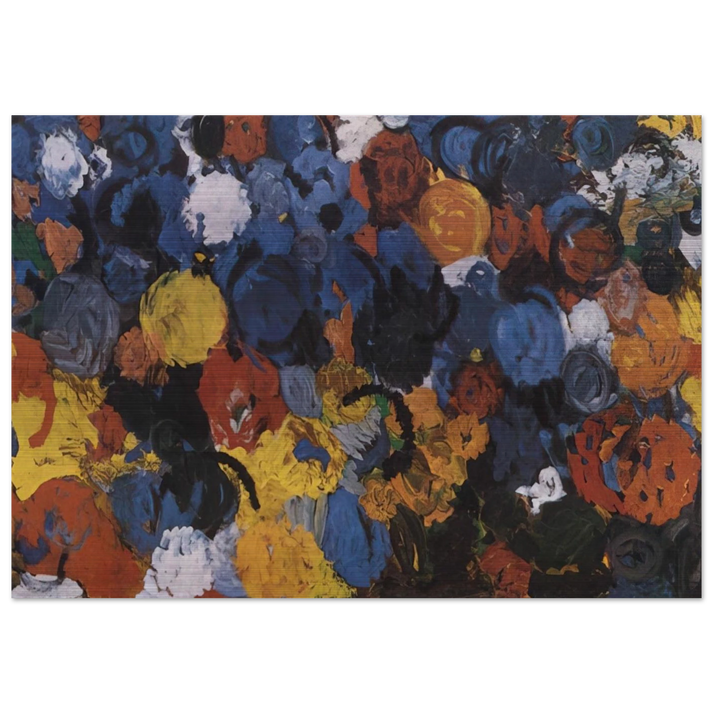
Blue Flood - 1960 - Ernst Wilhelm Nay Brushed Aluminum Print - 70x100 cm / 28x40 inches | Ernst Wilhelm Nay Aluminum Print | Ernst Wilhelm Nay Prints
Blue Flood - 1960 - Ernst Wilhelm Nay Brushed Aluminum Print - 70x100 cm / 28x40 inches | Ernst Wilhelm Nay Aluminum Print | Ernst Wilhelm Nay Prints
Couldn't load pickup availability
The Rhythmic Power of Blue Flood (1960) by Ernst Wilhelm Nay
Experience the profound dynamism of Ernst Wilhelm Nay’s late-period abstraction with this museum-quality reproduction of Blue Flood (1960). As a titan of German post-war modernism, Nay’s work in the 1960s reached a pinnacle of rhythmic intensity. This piece, characterized by its fluid, gestural sweeps and harmonic blue palette, represents a bridge between his iconic 'Disk Paintings' and the more expansive 'Eye Paintings' that defined his final decade.
At RedKalion, we elevate this historical masterpiece by presenting it on brushed silver Aluminum DIBOND®. This medium is uniquely suited for Blue Flood; the horizontal grain of the aluminum interacts with the light, mirroring the movement and 'flow' inherent in Nay’s brushwork. The 3mm (0.12") thick rigid base ensures a contemporary, gallery-standard presence that transcends traditional framing.
Technical Sophistication & Material Integrity
Our commitment to archival excellence is reflected in the specialized printing process used for this fine art print. Utilizing direct-to-substrate UV printing, the colors remain matte and glare-free, allowing the viewer to appreciate the tonal complexity without distraction. Crucially, any white or light-toned areas in Nay’s composition are left unprinted, revealing the striking brushed metallic silver effect of the aluminum grain beneath.
- Material: 3mm Brushed Aluminum DIBOND® for a sleek, industrial elegance.
- Visual Depth: Matte finish with a metallic horizontal grain that shifts with ambient light.
- Durability: Highly rigid and lightweight, designed to endure for generations without warping.
- Ready to Exhibit: A specialized hanging kit is included, tailored to your fulfillment region for seamless installation.
By choosing a RedKalion reproduction, you are acquiring more than a decorative piece; you are investing in a sophisticated archival artifact that honors the legacy of Ernst Wilhelm Nay while utilizing the cutting edge of modern material science.


Discover Unlimited Art Possibilities
At RedKalion, you can find virtually any artwork from any artist, available in a wide range of sizes to perfectly match your space.
If you didn’t find what you’re looking for, contact us at support@redkalion.com . We will source any artwork and produce it in any size and format you need, including art prints, posters, canvas, framed pieces, framed canvas, and more.
For dedicated art enthusiasts, we also offer handcrafted replicas of any artwork, carefully painted by highly skilled artists using traditional techniques.
For custom requests, contact us at support@redkalion.com .
What defines the quality of this Ernst Wilhelm Nay aluminum print?
RedKalion utilizes museum-grade Aluminum DIBOND® and advanced UV-direct printing to ensure high color fidelity and archival longevity. Our process captures the nuanced textures of Nay's 1960 masterpiece with professional-grade precision.
How does the brushed aluminum finish affect the appearance of 'Blue Flood'?
The brushed silver finish adds a dynamic, metallic depth. Unprinted areas reveal the horizontal grain, allowing the light to interact with the blue tones in a way that mimics the fluid energy of the original painting.
Is the hanging hardware included with my purchase?
Yes, every 70x100 cm print includes a professional hanging kit. The specific hardware provided is optimized based on your shipping location to ensure a secure and elegant display.
How does RedKalion ensure the archival longevity of this piece?
Our 3mm aluminum prints are constructed from a rigid composite core and UV-resistant inks. This combination prevents fading, warping, and environmental degradation, ensuring the artwork remains a centerpiece for decades.
What are the shipping expectations for this 70x100 cm print?
We use specialized protective packaging to ensure your museum-quality reproduction arrives in pristine condition. All orders are tracked and handled by premium carriers to guarantee safe global delivery.
What is the historical significance of Nay’s 1960 period?
By 1960, Ernst Wilhelm Nay was exploring 'fluid abstraction.' This era moved away from rigid geometry toward organic, rhythmic forms, making 'Blue Flood' a pivotal example of his mature color theory.
Why is 'Blue Flood' considered a masterpiece of German abstraction?
It exemplifies Nay's ability to create 'surface rhythm.' The piece avoids a single focal point, instead inviting the viewer's eye to move across the composition, embodying the post-war shift toward expressive, non-representational art.