

RedKalion
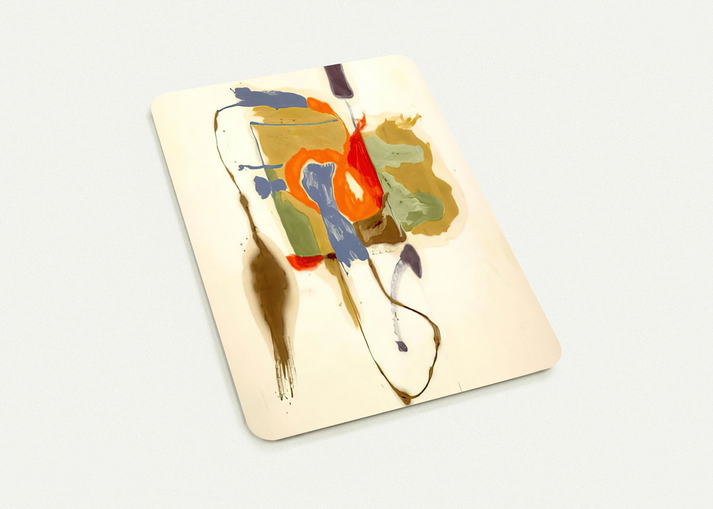
Blue Form in a Scene - 1961 By Helen Frankenthaler Pack of 10 Post Cards | Helen Frankenthaler Post Cards | A6 (10.5 x 14.8 cm) - 4.1 x 5.8 inches
Blue Form in a Scene - 1961 By Helen Frankenthaler Pack of 10 Post Cards | Helen Frankenthaler Post Cards | A6 (10.5 x 14.8 cm) - 4.1 x 5.8 inches
Couldn't load pickup availability
Abstract Expressionism in Your Hands: Helen Frankenthaler's 1961 Masterpiece
Experience the ethereal beauty of Helen Frankenthaler's "Blue Form in a Scene" (1961) with this exclusive pack of 10 museum-quality post cards. As a central figure in the Second Generation of Abstract Expressionists, Frankenthaler redefined the possibilities of the medium. This specific work, created during a pivotal era of her career, showcases her transition toward the expansive, fluid color fields that would come to define Color Field painting.
These are not standard reproductions. Each card is produced using advanced 12-color fine art printing technology, ensuring that the subtle shifts in blue hues and the delicate spatial relationships of the original canvas are captured with absolute fidelity. The smooth matte finish eliminates glare, allowing the viewer to appreciate the depth and texture of Frankenthaler's visionary composition.
The RedKalion Archival Standard
At RedKalion, we believe fine art should be accessible without compromising on physical integrity. These postcards are printed on 200 gsm (80 lb) FSC-certified paper, offering a substantial, premium feel that honors the artist's legacy. Whether used for sophisticated correspondence or as a curated mini-gallery for your home or office, these archival-grade prints embody the intersection of historical significance and modern craftsmanship.
- Artist: Helen Frankenthaler
- Title: Blue Form in a Scene (1961)
- Format: Flat Post Card (Pack of 10)
- Paper: 200 gsm (80 lb) matte finish, 0.26 mm thickness
- Sustainability: FSC-certified, environmentally conscious materials
- Print Method: Giclée-quality 12-color archival ink


Discover Unlimited Art Possibilities
At RedKalion, you can find virtually any artwork from any artist, available in a wide range of sizes to perfectly match your space.
If you didn’t find what you’re looking for, contact us at support@redkalion.com . We will source any artwork and produce it in any size and format you need, including art prints, posters, canvas, framed pieces, framed canvas, and more.
For dedicated art enthusiasts, we also offer handcrafted replicas of any artwork, carefully painted by highly skilled artists using traditional techniques.
For custom requests, contact us at support@redkalion.com .
What printing technology is used for these postcards?
We use sophisticated 12-color fine art printing technology. This provides superior color vibrancy and accuracy compared to standard 4-color inkjet processes, capturing the true essence of Frankenthaler's palette.
What is the weight and finish of the paper?
The cards are printed on premium 200 gsm (80 lb) paper with a thickness of 0.26 mm. They feature a smooth matte finish for a sophisticated, glare-free aesthetic.
Are the materials used in these cards sustainable?
Yes. RedKalion is committed to sustainability. These postcards are printed on FSC-certified paper, ensuring the materials are sourced from responsibly managed forests.
How are these items produced and shipped?
Every order is printed on demand to ensure the highest quality control and reduce waste. There are no minimum order requirements, and each pack is handled with archival care.
What are the exact dimensions of these postcards?
Each card is A6 size, measuring 10.5 x 14.8 cm (approximately 4.1 x 5.8 inches), making them perfect for standard mailing or framing.
What was Helen Frankenthaler's 'soak-stain' technique?
Frankenthaler pioneered the soak-stain technique by thinning oil paint with turpentine and pouring it onto unprimed canvas, creating translucent washes of color that integrated with the fabric, as seen in the fluidity of Blue Form in a Scene.
Why is 'Blue Form in a Scene' (1961) historically significant?
Painted in 1961, this work represents Frankenthaler's mastery of the Color Field movement. It demonstrates her ability to evoke landscape and emotion through pure abstraction and spatial depth rather than literal representation.