

RedKalion
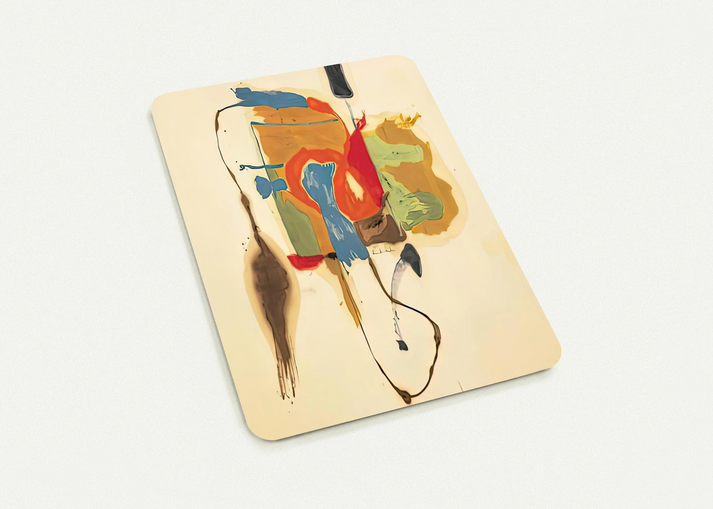
Blue Form in a Scene, 1961- By Helen Frankenthaler Pack of 10 Post Cards | Helen Frankenthaler Post Cards | A6 (10.5 x 14.8 cm) - 4.1 x 5.8 inches
Blue Form in a Scene, 1961- By Helen Frankenthaler Pack of 10 Post Cards | Helen Frankenthaler Post Cards | A6 (10.5 x 14.8 cm) - 4.1 x 5.8 inches
Couldn't load pickup availability
Immerse Yourself in the Lyrical Abstraction of Helen Frankenthaler
Elevate your correspondence and your collection with this curated pack of 10 postcards featuring Blue Form in a Scene, 1961 by the legendary Helen Frankenthaler. A pivotal figure in the transition from Abstract Expressionism to Color Field painting, Frankenthaler redefined the possibilities of the canvas. In this 1961 masterpiece, she employs her revolutionary 'soak-stain' technique, allowing thinned oil paint to saturate the fibers of the support, creating a translucent, ethereal quality that feels both spontaneous and profoundly intentional.
Museum-Quality Reproductions by RedKalion
At RedKalion, we believe that fine art should be accessible without compromising on integrity. These museum-quality reproductions are crafted using our advanced 12-color fine art printing technology. Unlike standard 4-color inkjet processes, our method captures the nuanced gradients and the vibrant intensity of Frankenthaler’s palette, ensuring each 4.1 x 5.8-inch postcard serves as a faithful miniature of the original work. The smooth matte finish eliminates glare, allowing the depth of the 'Blue Form' to resonate clearly in any light.
Superior Materiality and Sustainability
Every card in this 10-pack is printed on premium 200 gsm (80 lb) FSC-certified paper, offering a substantial weight and professional feel. With a thickness of 0.26 mm, these cards are designed to endure, whether they are traveling through the mail or displayed in a curated frame. Our commitment to eco-friendly materials and print-on-demand production ensures that your appreciation for art history aligns with a modern dedication to environmental consciousness.
- Artist: Helen Frankenthaler (1928–2011)
- Title: Blue Form in a Scene, 1961
- Format: A6 Postcard (10.5 x 14.8 cm / 4.1 x 5.8 inches)
- Printing: Archival 12-color pigment-based process
- Paper: 200 gsm matte, FSC-certified
- Quantity: Pack of 10 identical cards
Whether you are a seasoned collector or seeking a sophisticated gift, these postcards invite the viewer to explore the boundary between landscape and abstraction through the eyes of a 20th-century visionary.


Discover Unlimited Art Possibilities
At RedKalion, you can find virtually any artwork from any artist, available in a wide range of sizes to perfectly match your space.
If you didn’t find what you’re looking for, contact us at support@redkalion.com . We will source any artwork and produce it in any size and format you need, including art prints, posters, canvas, framed pieces, framed canvas, and more.
For dedicated art enthusiasts, we also offer handcrafted replicas of any artwork, carefully painted by highly skilled artists using traditional techniques.
For custom requests, contact us at support@redkalion.com .
What printing technology is used for these Helen Frankenthaler postcards?
We use state-of-the-art 12-color fine art printing technology. This archival process provides significantly better color accuracy and depth than standard inkjet printing, capturing every subtle nuance of Frankenthaler’s original 1961 composition.
What are the material specifications of the paper?
The postcards are printed on premium 200 gsm (80 lb) FSC-certified paper with a 0.26 mm thickness. The smooth matte finish ensures a clean, glare-free display, making them feel like true museum-quality reproductions.
Are these postcards suitable for framing as miniature art prints?
Absolutely. Given the 12-color archival printing and the high-grade matte paper, these cards are designed to satisfy the aesthetic standards of art collectors and can be displayed as small-scale fine art prints.
What is RedKalion’s environmental commitment?
RedKalion prioritizes sustainability by using FSC-certified paper from responsibly managed forests. Additionally, our print-on-demand model reduces waste by ensuring we only produce what is ordered, avoiding unnecessary inventory overhead.
How are the colors of Blue Form in a Scene preserved?
We utilize archival-grade pigments that are resistant to fading. When kept out of direct sunlight, these 12-color prints maintain their vibrancy for decades, preserving the integrity of Frankenthaler’s color palette.
What was the significance of 1961 in Helen Frankenthaler’s career?
In 1961, Frankenthaler was refining her soak-stain technique, moving toward more defined shapes while maintaining fluidity. 'Blue Form in a Scene' represents this evolution, showcasing her mastery over color as a structural element.
What does the 'soak-stain' technique bring to Blue Form in a Scene?
The soak-stain technique involves thinning paint so it merges with the paper rather than sitting on top. This creates the translucent, atmospheric effect seen in 'Blue Form in a Scene,' a hallmark of Frankenthaler's genius.