RedKalion
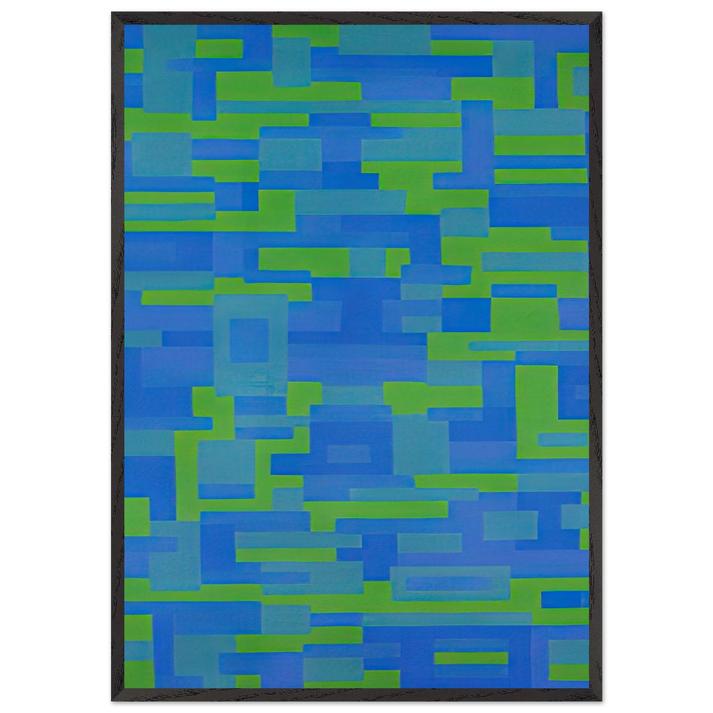
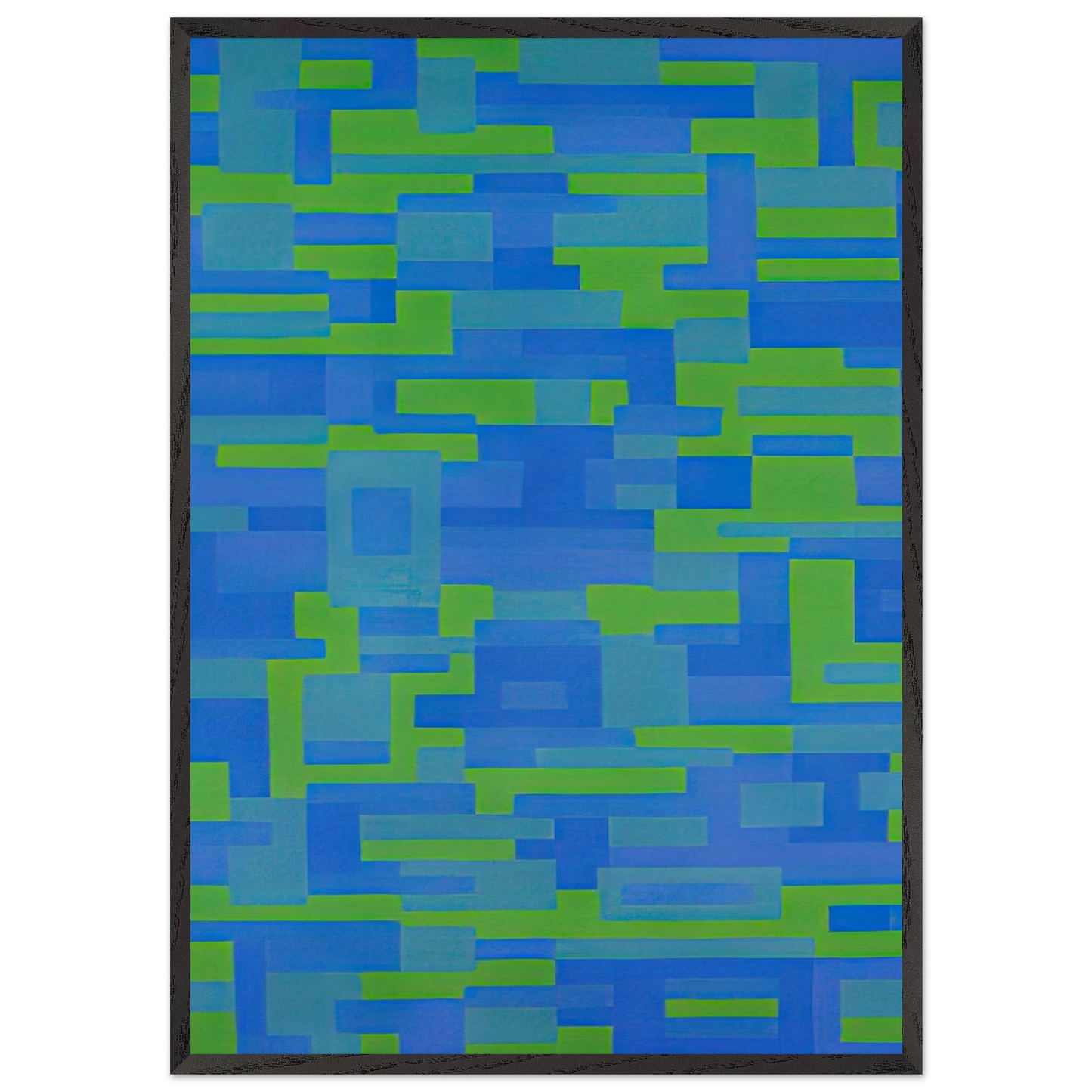
Blue-Green Painting - 1948 - Ad Reinhardt 70x100 cm / 28x40 inches Framed Art Print – Black Wooden Frame
Blue-Green Painting - 1948 - Ad Reinhardt 70x100 cm / 28x40 inches Framed Art Print – Black Wooden Frame
Couldn't load pickup availability
Ad Reinhardt's Blue-Green Painting (1948): A Masterpiece of Abstract Harmony
Elevate your space with a museum-quality reproduction of Ad Reinhardt’s Blue-Green Painting (1948). This 70x100 cm framed art print captures a pivotal moment in the career of a master of American abstraction. In the late 1940s, Reinhardt began stripping away the gestural chaos of Abstract Expressionism in favor of a structured, rhythmic exploration of color and form. This piece is a sophisticated study of interlocking shapes, where the subtle tension between deep blues and forest greens creates a meditative depth that transforms any modern interior.
As a premier curator of fine art prints, RedKalion ensures that every detail of Reinhardt’s vision is preserved. This archival-grade reproduction is printed on 250 gsm (110 lb) natural white museum-quality paper. The matte, uncoated finish eliminates glare, allowing the viewer to appreciate the delicate color relationships and the 'Art-as-Art' philosophy that Reinhardt championed throughout his career. This is not merely a decorative piece; it is an enduring investment in historical artistic excellence.
Premium Specifications for the Discerning Collector
- Archival Longevity: Printed on FSC-certified, acid-free paper with a thickness of 0.29 mm (11.4 mils) to prevent yellowing over time.
- Exquisite Framing: Encased in a professional black frame crafted from responsibly sourced oak and ash wood, measuring a substantial 20mm (0.79") in thickness and width.
- Museum-Grade Protection: Each print is shielded by shatterproof, transparent plexiglass, ensuring your masterpiece remains pristine for generations.
- Ready to Hang: Your 28x40 inch framed print arrives with a pre-installed hanging kit, allowing for immediate installation.
By choosing RedKalion, you are acquiring a piece that bridges the gap between historical significance and contemporary luxury. Let the structured serenity of Ad Reinhardt’s 1948 vision redefine your environment with a sense of archival permanence.
Discover Unlimited Art Possibilities
At RedKalion, you can find virtually any artwork from any artist, available in a wide range of sizes to perfectly match your space.
If you didn’t find what you’re looking for, contact us at support@redkalion.com . We will source any artwork and produce it in any size and format you need, including art prints, posters, canvas, framed pieces, framed canvas, and more.
For dedicated art enthusiasts, we also offer handcrafted replicas of any artwork, carefully painted by highly skilled artists using traditional techniques.
For custom requests, contact us at support@redkalion.com .
What materials are used for this Ad Reinhardt fine art print?
We use 250 gsm (110 lb) museum-quality, natural white paper with a matte finish. This archival paper is 0.29 mm thick, ensuring the print remains flat and vibrant without the glare of traditional glossy finishes.
How is the artwork framed and delivered?
The print is mounted in a 20mm thick black frame made from responsibly sourced oak and ash. It includes shatterproof plexiglass for protection and arrives fully assembled with a hanging kit, ready to hang immediately.
Is the paper used for this reproduction sustainable?
Yes, RedKalion is committed to sustainability. We use FSC-certified materials or equivalent certifications to ensure the paper and wooden frames are sourced responsibly, supporting a lower environmental impact.
How do you ensure the print is protected during shipping?
Every framed art print is securely packaged with reinforced corners and specialized shipping materials. The use of shatterproof plexiglass ensures the artwork arrives in perfect condition, avoiding the risks associated with traditional glass.
Will the colors in this 1948 painting fade over time?
No. By utilizing archival-grade, acid-free museum paper and high-quality inks, we ensure maximum longevity. This reproduction is designed to resist yellowing and color degradation, maintaining its original depth for decades.
What was Ad Reinhardt's artistic intent in 1948?
In 1948, Reinhardt was transitioning toward his 'pure' abstraction phase. He sought to remove external references, focusing entirely on the internal logic of color and geometric structure, prefiguring the Minimalism movement.
Why is the 70x100 cm size ideal for this specific piece?
The 70x100 cm (28x40 inches) scale allows the subtle variations in the blue and green tones to breathe, creating an immersive experience that mirrors the presence of the original gallery-sized canvas.