

RedKalion
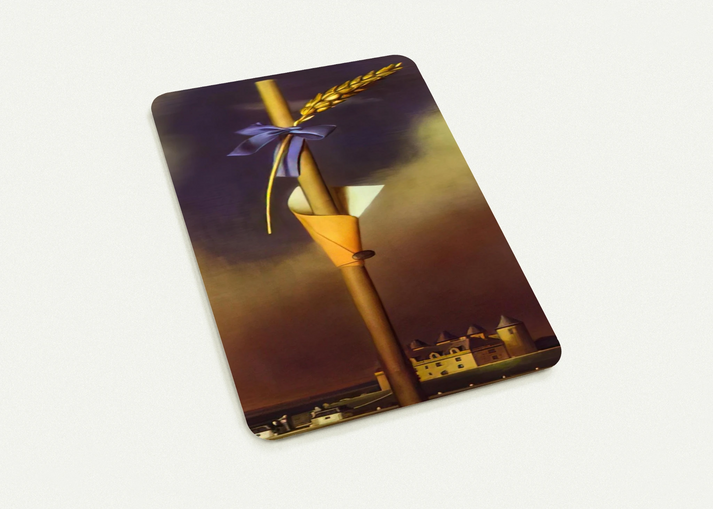
BLUE KNOT AND EAR OF WHEAT NEXT TO THE CASTLE By Salvador Dali Pack of 10 Post Cards | Salvador Dali Post Cards | A6 (10.5 x 14.8 cm) - 4.1 x 5.8 inches
BLUE KNOT AND EAR OF WHEAT NEXT TO THE CASTLE By Salvador Dali Pack of 10 Post Cards | Salvador Dali Post Cards | A6 (10.5 x 14.8 cm) - 4.1 x 5.8 inches
Couldn't load pickup availability
Elevate Your Correspondence with Salvador Dalí’s Surrealist Vision
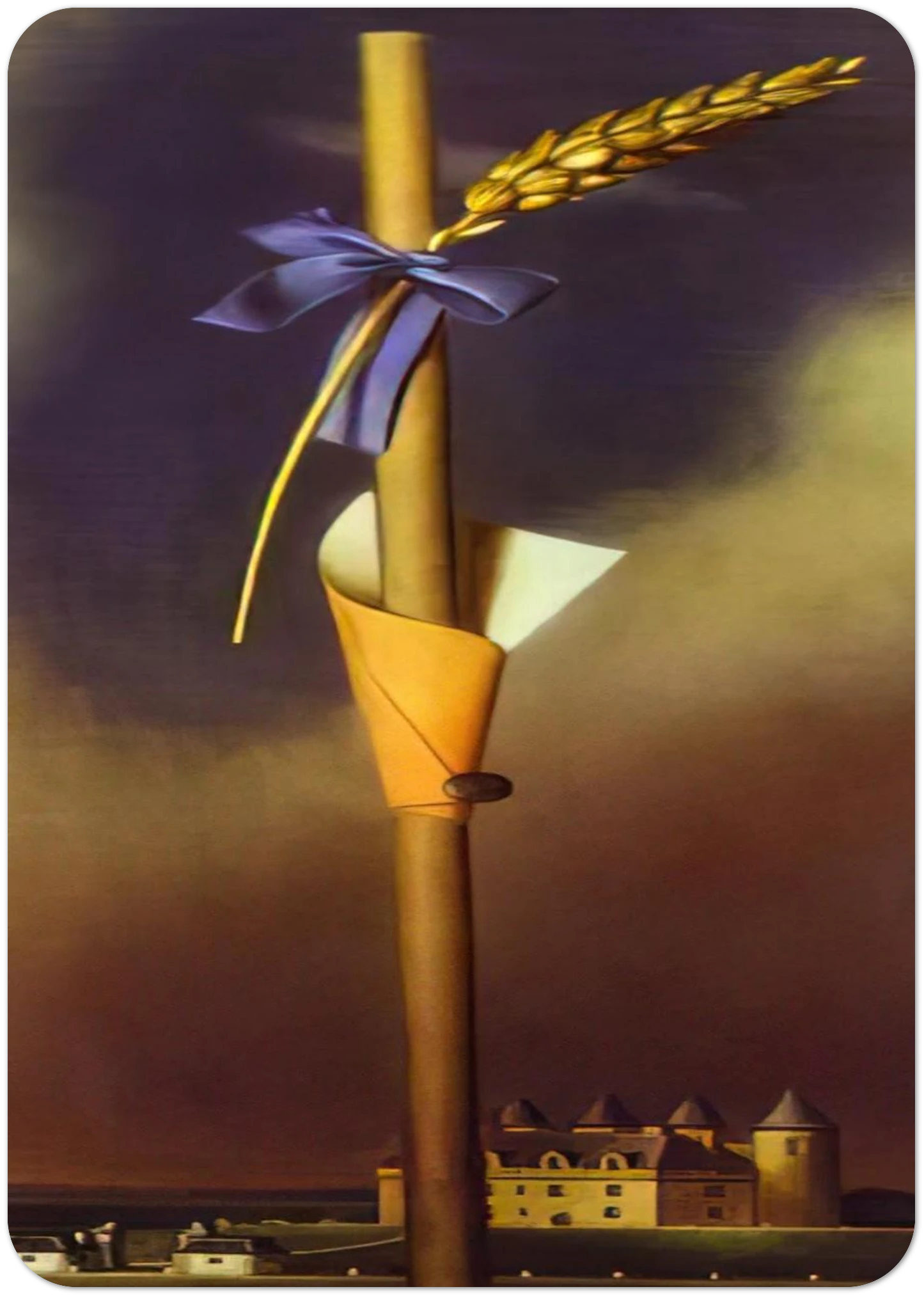
Experience the enigmatic brilliance of Salvador Dalí with this exclusive collection of ten fine art postcards. Featuring the intriguing work "Blue Knot and Ear of Wheat next to the Castle," these pieces capture the essence of Dalí’s mastery over the subconscious and the symbolic. The juxtaposition of organic elements like the ear of wheat against the rigid structure of the castle evokes a dream-like narrative, a hallmark of the Surrealist movement. At RedKalion, we curate these reproductions to ensure that the delicate nuances of Dalí’s original brushwork and his unique paranoiac-critical method are preserved for the discerning collector.
Our commitment to archival excellence is evident in every detail. Unlike standard mass-produced stationery, these postcards utilize 12-color fine art printing technology. This advanced process provides a spectrum of color vibrancy and depth that far exceeds traditional 4-color inkjet methods, ensuring that the ethereal blues and golden wheat tones remain true to the artist's original palette. Each card serves as a portable masterpiece, allowing you to share a touch of museum-quality art with friends or to display them as a curated set in your personal gallery.
Crafted for longevity and tactile pleasure, these cards are printed on 200 gsm (80 lb) FSC-certified paper with a thickness of 0.26 mm. The smooth matte finish provides a sophisticated, glare-free surface that is as durable as it is beautiful. By choosing RedKalion, you are supporting environmentally conscious production through our print-on-demand model, which reduces waste while delivering an archival-grade product that endures.
- Artistic Prestige: Featuring the iconic Surrealist style of Salvador Dalí.
- Superior Color: 12-color giclée printing for stunning accuracy and depth.
- Premium Weight: Heavyweight 200 gsm paper for a substantial, high-end feel.
- Eco-Conscious: FSC-certified materials from responsibly managed forests.
- Sophisticated Finish: Glare-free matte coating ideal for both writing and display.


Discover Unlimited Art Possibilities
At RedKalion, you can find virtually any artwork from any artist, available in a wide range of sizes to perfectly match your space.
If you didn’t find what you’re looking for, contact us at support@redkalion.com . We will source any artwork and produce it in any size and format you need, including art prints, posters, canvas, framed pieces, framed canvas, and more.
For dedicated art enthusiasts, we also offer handcrafted replicas of any artwork, carefully painted by highly skilled artists using traditional techniques.
For custom requests, contact us at support@redkalion.com .
What makes these Salvador Dalí postcards museum-quality?
RedKalion utilizes 12-color fine art printing technology, offering superior color accuracy and depth compared to standard 4-color printing. This archival-grade process ensures each Salvador Dalí reproduction maintains the integrity of the original artwork's hues and fine details.
What are the paper specifications for this postcard set?
These postcards are printed on 200 gsm (80 lb) FSC-certified paper with a thickness of 0.26 mm (10.3 mils). They feature a smooth matte finish that prevents glare and provides a premium feel for both sending and framing.
How many cards are included in a single order?
Each order contains a pack of 10 high-quality A6 postcards (10.5 x 14.8 cm). This set is perfect for personalized correspondence, small-scale wall art displays, or as a sophisticated gift for art enthusiasts.
Is the paper used for these prints environmentally friendly?
Yes, we prioritize sustainability. All postcards are printed on FSC-certified paper, which ensures the materials come from responsibly managed forests. Additionally, our print-on-demand model minimizes waste by producing only what is ordered.
How long will these archival prints last?
Thanks to our use of 12-color fine art printing and heavyweight 200 gsm paper, these postcards are designed for longevity. They resist fading significantly better than standard inkjet prints, maintaining their vibrancy for years to come.
What is the significance of the wheat and castle in Dalí’s work?
In Dalí’s iconography, the ear of wheat often symbolizes the sacred or the bread of life, while the castle represents a fortified subconscious or memory. This juxtaposition highlights the Surrealist tension between nature and man-made structures.
What is the 'Blue Knot' in this specific Dalí composition?
The blue knot is a recurring motif in Dalí's later surrealist explorations, representing the interconnectedness of thought and the binding of physical reality to the dream state, rendered with precise, mathematical detail characteristic of his technical mastery.