RedKalion
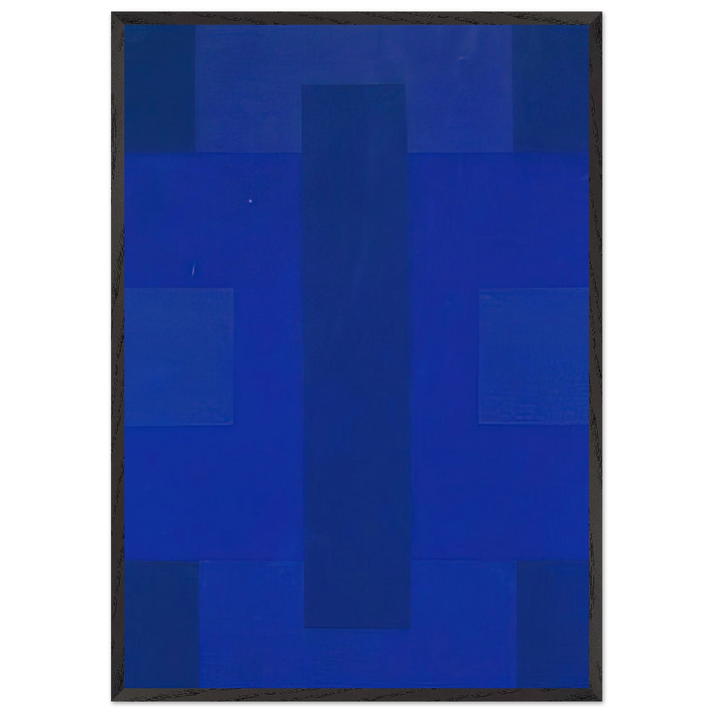
Blue Painting - 1953 - Ad Reinhardt 70x100 cm / 28x40 inches Framed Art Print – Black Wooden Frame
Blue Painting - 1953 - Ad Reinhardt 70x100 cm / 28x40 inches Framed Art Print – Black Wooden Frame
Couldn't load pickup availability
Elevate Your Space with Ad Reinhardt’s Minimalist Masterpiece: Blue Painting - 1953
Immerse yourself in the profound tranquility of Ad Reinhardt’s Blue Painting - 1953. As a precursor to the minimalist movement, Reinhardt sought to strip art of everything but its essence. This stunning fine art print captures the subtle, meditative shifts in hue that define his mid-century work, offering a sophisticated focal point for the modern interior.
Museum-Quality Artistry Meets Archival Excellence
At RedKalion, we believe a masterpiece deserves to be presented with absolute fidelity. This museum-quality reproduction is printed on 250 gsm (110 lb) natural white paper. The archival, uncoated matte finish ensures that the deep, monochromatic nuances of Reinhardt’s blues are rendered without distracting reflections, allowing the viewer to experience the painting’s intended depth and quietude.
Sophisticated Framing and Sustainable Craftsmanship
Your Blue Painting - 1953 framed art print arrives encased in a premium black wooden frame, meticulously crafted from responsibly sourced oak and ash. Measuring 20mm (0.79") in both thickness and width, our frames provide a more substantial and premium presence than standard alternatives. To ensure long-term preservation, the print is protected by shatterproof plexiglass, maintaining the artwork's integrity for generations.
- Ready-to-Hang: Includes a professional hanging kit for immediate installation.
- Archival Grade: 0.29 mm (11.4 mils) thick paper optimized for fine art longevity.
- Eco-Conscious: Produced using FSC-certified materials or equivalent regional standards.
- Expert Curation: A RedKalion exclusive that brings gallery-standard aesthetics to your private collection.
Experience the "Art as Art" philosophy of Ad Reinhardt with this 70x100 cm (28x40 inches) statement piece. This archival masterpiece is more than a decoration; it is an enduring investment in aesthetic excellence.

Discover Unlimited Art Possibilities
At RedKalion, you can find virtually any artwork from any artist, available in a wide range of sizes to perfectly match your space.
If you didn’t find what you’re looking for, contact us at support@redkalion.com . We will source any artwork and produce it in any size and format you need, including art prints, posters, canvas, framed pieces, framed canvas, and more.
For dedicated art enthusiasts, we also offer handcrafted replicas of any artwork, carefully painted by highly skilled artists using traditional techniques.
For custom requests, contact us at support@redkalion.com .
What are the specifications of the paper used for this Ad Reinhardt print?
We use 250 gsm (110 lb) natural white, museum-quality paper. This archival-grade, uncoated matte paper features a thickness of 0.29 mm (11.4 mils), ensuring a premium tactile feel and exceptional durability for your fine art reproduction.
How is the Ad Reinhardt 'Blue Painting' framed?
The artwork is professionally mounted in a black wooden frame made from responsibly sourced oak or ash. The frame is 20mm (0.79") thick and wide, providing a sturdier and more luxurious profile than standard gallery frames.
How is the artwork protected against damage?
Each print is shielded by high-quality, shatterproof plexiglass. This provides the clarity of glass while offering superior protection against breakage and UV exposure, preserving the rich blue tones of your Ad Reinhardt print.
Are the materials used for this print sustainable?
Yes. RedKalion is committed to sustainability. We use FSC-certified wood for our frames and paper, or equivalent local certifications, ensuring that your art print is produced with the highest environmental standards.
How is the framed art print shipped to ensure safety?
Your framed artwork is carefully packaged with reinforced edges and protective materials. It arrives fully assembled and ready-to-hang with a pre-installed hanging kit, ensuring a seamless experience from delivery to display.
What was Ad Reinhardt's intention with the 'Blue Painting' series in 1953?
Reinhardt aimed for "pure" art, removing external references. His 1953 blue series explored chromatic threshold, where subtle geometric patterns emerge only after prolonged viewing, encouraging a meditative and focused aesthetic experience.
Why does the 'Blue Painting' appear as a solid color at first glance?
This is intentional. Reinhardt used closely related tonal values of blue to challenge the viewer's perception. This technique, known as "low-contrast abstraction," requires the eye to adjust to see the underlying grid structure.