
RedKalion
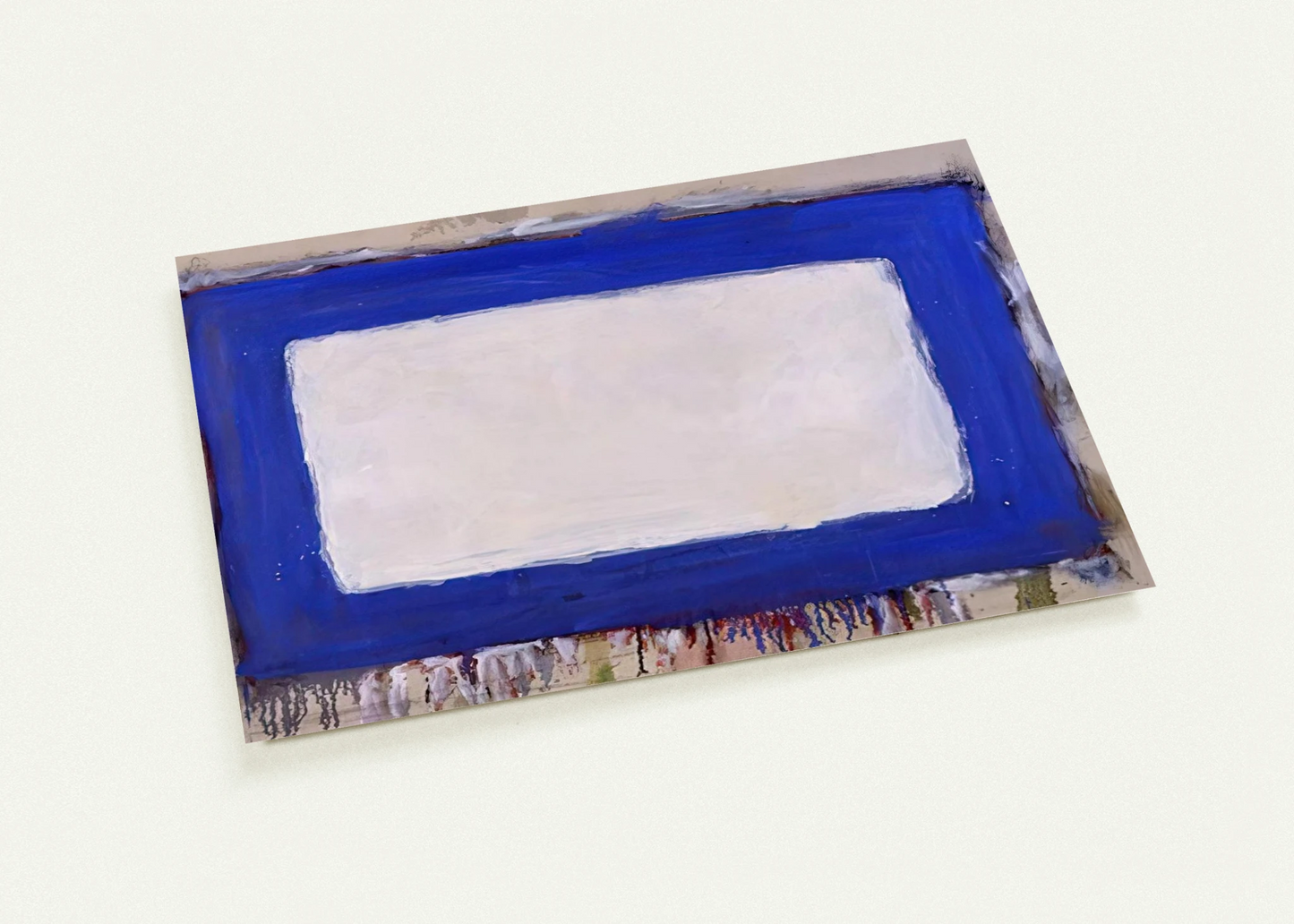
Blue Rectangle II - 1958 By Gene Davis Pack of 10 Post Cards | Gene Davis Post Cards | A6 (10.5 x 14.8 cm) - 4.1 x 5.8 inches
Blue Rectangle II - 1958 By Gene Davis Pack of 10 Post Cards | Gene Davis Post Cards | A6 (10.5 x 14.8 cm) - 4.1 x 5.8 inches
Couldn't load pickup availability
Elevate Your Correspondence with Gene Davis’s 'Blue Rectangle II' (1958)
Immerse yourself in the rhythmic abstraction of the mid-century avant-garde with this exquisite pack of 10 post cards featuring Gene Davis’s 'Blue Rectangle II - 1958'. As a leading figure of the Washington Color School, Davis transformed the landscape of American art through his rigorous exploration of color relationships and spatial intervals. This particular work represents a pivotal moment in his career, capturing the vibrant tension between form and hue that would eventually define his world-renowned stripe paintings.
Museum-Quality Reproduction for the Discerning Collector
At RedKalion, we bridge the gap between historical masterpiece and modern lifestyle. These A6 fine art cards are not mere stationery; they are miniature archival reproductions. Utilizing advanced 12-color fine art printing technology, we achieve a chromatic depth and accuracy that far exceeds standard 4-color prints. Every nuance of Davis’s selected palette is preserved, ensuring that the 'Blue Rectangle II' retains its original visual impact.
Premium Materials and Ethical Craftsmanship
- Paper Weight: Substantial 200 gsm (80 lb) paper for a premium feel.
- Paper Finish: A sophisticated smooth matte finish that eliminates glare and highlights color vibrancy.
- Eco-Conscious: Printed on FSC-certified paper, reflecting our commitment to environmental sustainability.
- Thickness: 0.26 mm (10.3 mils) ensures durability whether mailed or framed as mini-prints.
Whether you are sending a thoughtful note or curating a personal gallery wall, these Gene Davis post cards offer an archival-grade experience. Each set is printed on demand, ensuring that your cards arrive in pristine condition, ready to bring a touch of mid-century sophistication to any space.
Discover Unlimited Art Possibilities
At RedKalion, you can find virtually any artwork from any artist, available in a wide range of sizes to perfectly match your space.
If you didn’t find what you’re looking for, contact us at support@redkalion.com . We will source any artwork and produce it in any size and format you need, including art prints, posters, canvas, framed pieces, framed canvas, and more.
For dedicated art enthusiasts, we also offer handcrafted replicas of any artwork, carefully painted by highly skilled artists using traditional techniques.
For custom requests, contact us at support@redkalion.com .
What is included in the Gene Davis 'Blue Rectangle II' set?
This set includes a pack of 10 flat post cards (A6 size: 10.5 x 14.8 cm) featuring the 1958 masterpiece. These are perfect for high-end correspondence or as small-scale fine art prints.
What kind of paper is used for these fine art post cards?
We use archival-grade 200 gsm (80 lb) FSC-certified paper with a thickness of 0.26 mm. The smooth matte finish provides a clean, glare-free display of the artwork.
How does the color quality compare to standard post cards?
RedKalion utilizes 12-color fine art printing technology. This results in superior color vibrancy and accuracy, capturing the specific tones of Gene Davis’s palette far better than standard inkjet printing.
Are these cards environmentally friendly?
Yes. All our post cards are printed on demand to reduce waste and use environmentally conscious, FSC-certified paper, ensuring a sustainable choice for art lovers.
Will the colors fade over time?
No. These are museum-quality reproductions designed for longevity. Our archival inks and premium matte paper are selected specifically to ensure your artwork remains vivid for years to come.
What is the historical significance of 'Blue Rectangle II' (1958)?
Created in 1958, this work is an early example of Gene Davis’s exploration into Color Field painting. It precedes his famous 'stripe' era, focusing on the emotive power of geometric abstraction.
Who was Gene Davis in the context of American art?
Gene Davis was a central figure of the Washington Color School. He is celebrated for his use of vertical stripes and color rhythm to create immersive, large-scale abstract experiences.