RedKalion
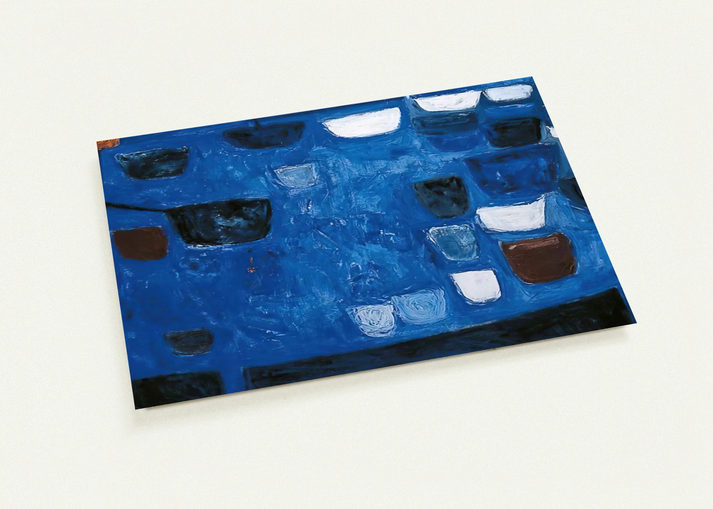
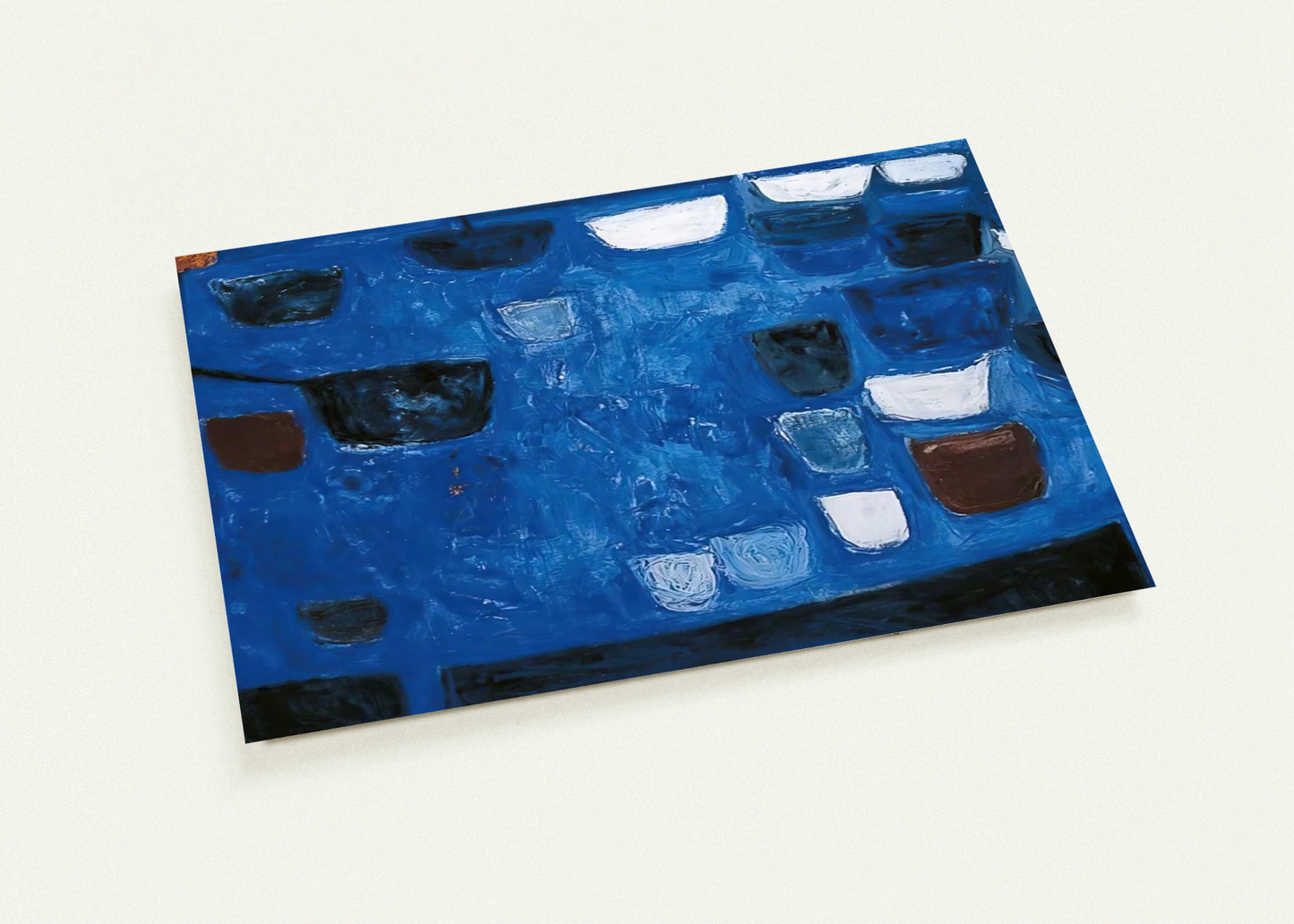
Blue Still Life - 1957 By William Scott Pack of 10 Post Cards | William Scott Post Cards | A6 (10.5 x 14.8 cm) - 4.1 x 5.8 inches
Blue Still Life - 1957 By William Scott Pack of 10 Post Cards | William Scott Post Cards | A6 (10.5 x 14.8 cm) - 4.1 x 5.8 inches
Couldn't load pickup availability
Elevate Your Correspondence with William Scott’s Modernist Vision
Experience the profound simplicity of Blue Still Life (1957), a hallmark of William Scott’s mid-century mastery. This curated pack of 10 fine art postcards brings the sophisticated tension between abstraction and figuration into your hands. Scott, a central figure in British Modernism, was renowned for transforming mundane kitchen utensils into rhythmic, structural explorations of space and form.
As an elite curator of world-class reproductions, RedKalion ensures these archival-grade postcards reflect the artist's original intent. Our museum-quality prints capture the subtle shifts in blue hues and the painterly texture that defined Scott’s 1957 period—a time when his work moved toward a more minimalist, flattened perspective that remains timelessly modern.
Uncompromising Quality and Craftsmanship
Each postcard is produced using state-of-the-art 12-color fine art printing technology. Unlike standard 4-color commercial prints, our process ensures stunning color depth and accuracy, preserving the cool, atmospheric tones of the original oil painting. Printed on 200 gsm (80 lb) museum-grade paper with a thickness of 0.26 mm (10.3 mils), these cards possess a tactile weight that signifies true quality.
- Finish: A smooth matte finish provides a sophisticated, glare-free display suitable for framing or writing.
- Sustainability: Printed on FSC-certified, environmentally conscious paper.
- Format: A6 size (10.5 x 14.8 cm / 4.1 x 5.8 inches), perfect for personal notes or miniature gallery displays.
By choosing these RedKalion reproductions, you are investing in an archival masterpiece that endures. Whether sent to a fellow connoisseur or kept as a collective study of mid-century art, these postcards serve as a testament to the enduring power of British still-life painting.
Discover Unlimited Art Possibilities
At RedKalion, you can find virtually any artwork from any artist, available in a wide range of sizes to perfectly match your space.
If you didn’t find what you’re looking for, contact us at support@redkalion.com . We will source any artwork and produce it in any size and format you need, including art prints, posters, canvas, framed pieces, framed canvas, and more.
For dedicated art enthusiasts, we also offer handcrafted replicas of any artwork, carefully painted by highly skilled artists using traditional techniques.
For custom requests, contact us at support@redkalion.com .
What printing technology is used for these William Scott postcards?
We use 12-color fine art printing technology, which provides superior color vibrancy and accuracy compared to standard inkjet prints, ensuring the deep blues of Scott’s work are perfectly captured.
What is the weight and finish of the paper?
These postcards are printed on premium 200 gsm (80 lb) paper with a 0.26 mm thickness and a smooth matte finish, offering a sturdy feel and glare-free viewing.
Are the materials used in these postcards sustainable?
Yes. RedKalion is committed to the environment; we use FSC-certified paper from responsibly managed forests to ensure our museum-quality reproductions are eco-friendly.
Is there a minimum order requirement for these postcards?
While this is a pack of 10 postcards, our print-on-demand model means there are no additional minimum order requirements for any of our fine art collections.
How are the postcards shipped and handled?
Each pack is printed on demand to ensure quality control and is shipped in protective packaging to ensure your fine art prints arrive in pristine, museum-ready condition.
What inspired William Scott's Blue Still Life (1957)?
Scott was inspired by the 'Kitchen Sink' realism of the era and French still-life traditions, focusing on the primitive beauty of domestic objects like pots and pans to explore abstract geometry.
Why is 1957 considered a significant year for Scott’s work?
In 1957, Scott’s style shifted toward greater abstraction and a restricted palette. Blue Still Life represents this pivotal transition, emphasizing spatial relationships over literal representation in British Modernism.