RedKalion
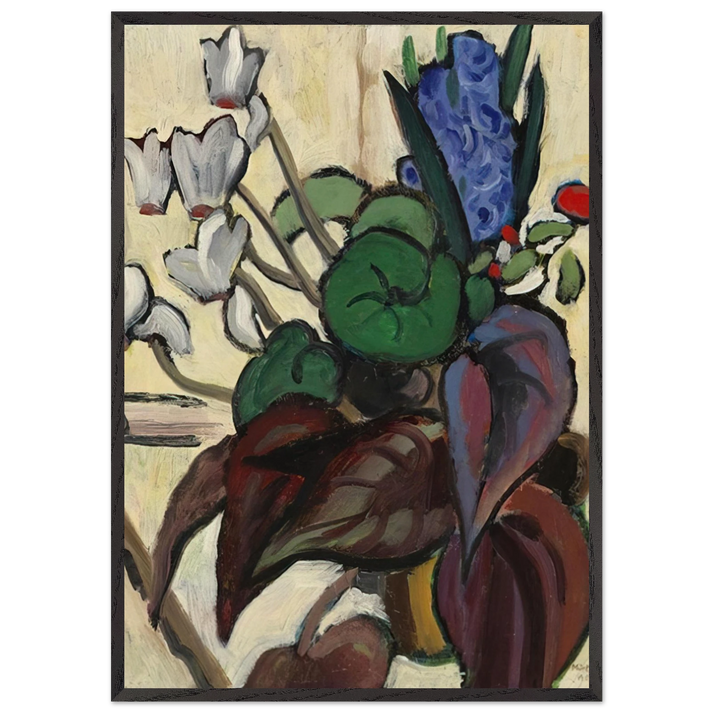
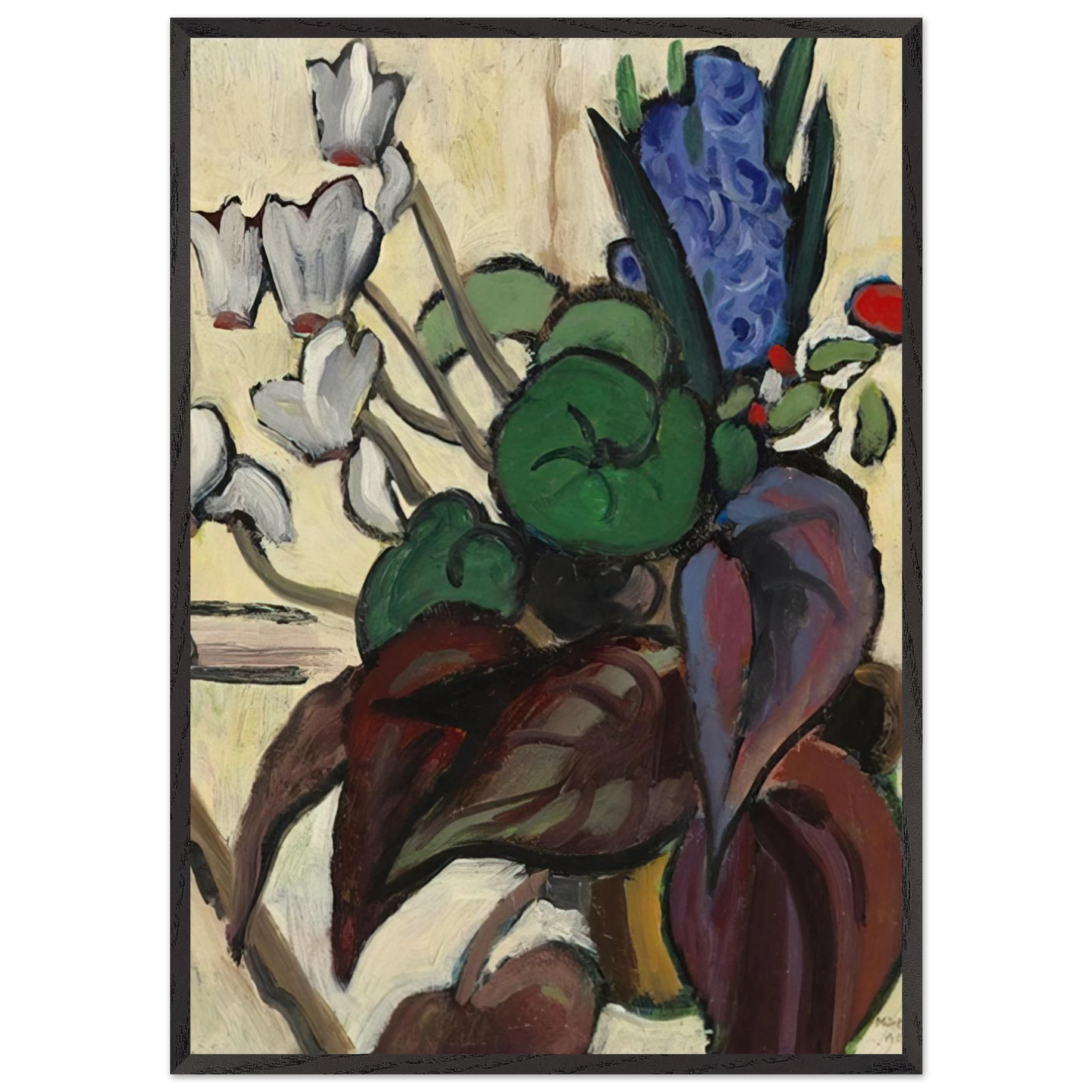
BLUMEN AUF WEI ZYKLAMEN UND HYAZINTHE 1934 - Gabriele Munter 70x100 cm / 28x40 inches Framed Art Print – Black Wooden Frame
BLUMEN AUF WEI ZYKLAMEN UND HYAZINTHE 1934 - Gabriele Munter 70x100 cm / 28x40 inches Framed Art Print – Black Wooden Frame
Couldn't load pickup availability
Elevate Your Space with Gabriele Münter’s 'Blumen auf Weiß: Zyklamen und Hyazinthe'
Experience the vibrant spirit of German Expressionism with this museum-quality reproduction of Gabriele Münter’s 'Blumen auf Weiß: Zyklamen und Hyazinthe' (1934). As a founding member of Der Blaue Reiter, Münter was a master of color and simplified forms. This 1934 masterpiece captures her unique ability to infuse domestic subjects with profound emotional depth through bold outlines and a luminous white background that allows the cyclamen and hyacinth to resonate with vitality.
Authentic Artistry Meets Modern Craftsmanship
At RedKalion, we curate art that endures. This fine art print is meticulously produced on 250 gsm (110 lb) archival museum-quality paper. The natural white, matte finish eliminates glare, ensuring the intensity of Münter’s palette remains true from every angle. Our commitment to quality means using FSC-certified materials, ensuring your investment is both beautiful and ethically sourced.
The RedKalion Framing Excellence
This 70x100 cm (28x40 inches) masterpiece arrives in a premium black wooden frame crafted from responsibly sourced oak and ash. Distinguished by a substantial 20mm (0.79") thickness and width—superior to standard 14mm frames—it provides a sophisticated, gallery-grade presence on your wall. Protected by shatterproof plexiglass, the print is shielded from UV rays and physical damage, maintaining its brilliance for generations.
Historical Significance and Aesthetic Appeal
Created during a period of professional isolation in Murnau, this piece reflects Münter's artistic resilience. Her technique of 'Hinterglasmalerei' (glass painting) influences the thick, expressive contours seen here. This framed art print is not merely a decoration; it is a piece of art history, ready-to-hang with an included kit to instantly transform your living or office space into a private gallery.
Discover Unlimited Art Possibilities
At RedKalion, you can find virtually any artwork from any artist, available in a wide range of sizes to perfectly match your space.
If you didn’t find what you’re looking for, contact us at support@redkalion.com . We will source any artwork and produce it in any size and format you need, including art prints, posters, canvas, framed pieces, framed canvas, and more.
For dedicated art enthusiasts, we also offer handcrafted replicas of any artwork, carefully painted by highly skilled artists using traditional techniques.
For custom requests, contact us at support@redkalion.com .
What is the quality of the paper used for this Gabriele Münter print?
We use 250 gsm (110 lb) natural white, matte, uncoated paper. This archival museum-quality paper is acid-free and designed to prevent yellowing, ensuring your fine art print maintains its color integrity for decades.
Does the frame come ready to hang?
Yes, your framed art print includes a professional hanging kit. It arrives fully assembled in a 20mm thick black wooden frame, allowing you to elevate your space immediately upon delivery.
Is the wood for the frame sustainably sourced?
Absolutely. We use FSC-certified oak and ash wood for our frames. This ensures that the materials meet the highest environmental and social standards, supporting responsible forest management.
How is the artwork protected during shipping?
Each print is protected by shatterproof, transparent plexiglass and secured in robust packaging. This ensures your artwork arrives in pristine condition, shielded from the rigors of transit.
What are the exact dimensions of the frame profile?
Our premium frames are 20mm (0.79") wide and 20mm thick. This wider profile offers a more substantial, high-end aesthetic compared to thinner, standard commercial frames.
What influenced Münter's style in 'Blumen auf Weiß'?
Münter was heavily influenced by Bavarian folk art and glass painting. This is evident in her use of bold, dark outlines and the simplification of floral forms to their essential emotional essence.
Why is the year 1934 significant for this artwork?
In 1934, Münter was living in semi-seclusion in Murnau. This piece represents her continued dedication to German Expressionist ideals during a time when modern art was being suppressed in Germany.