
RedKalion
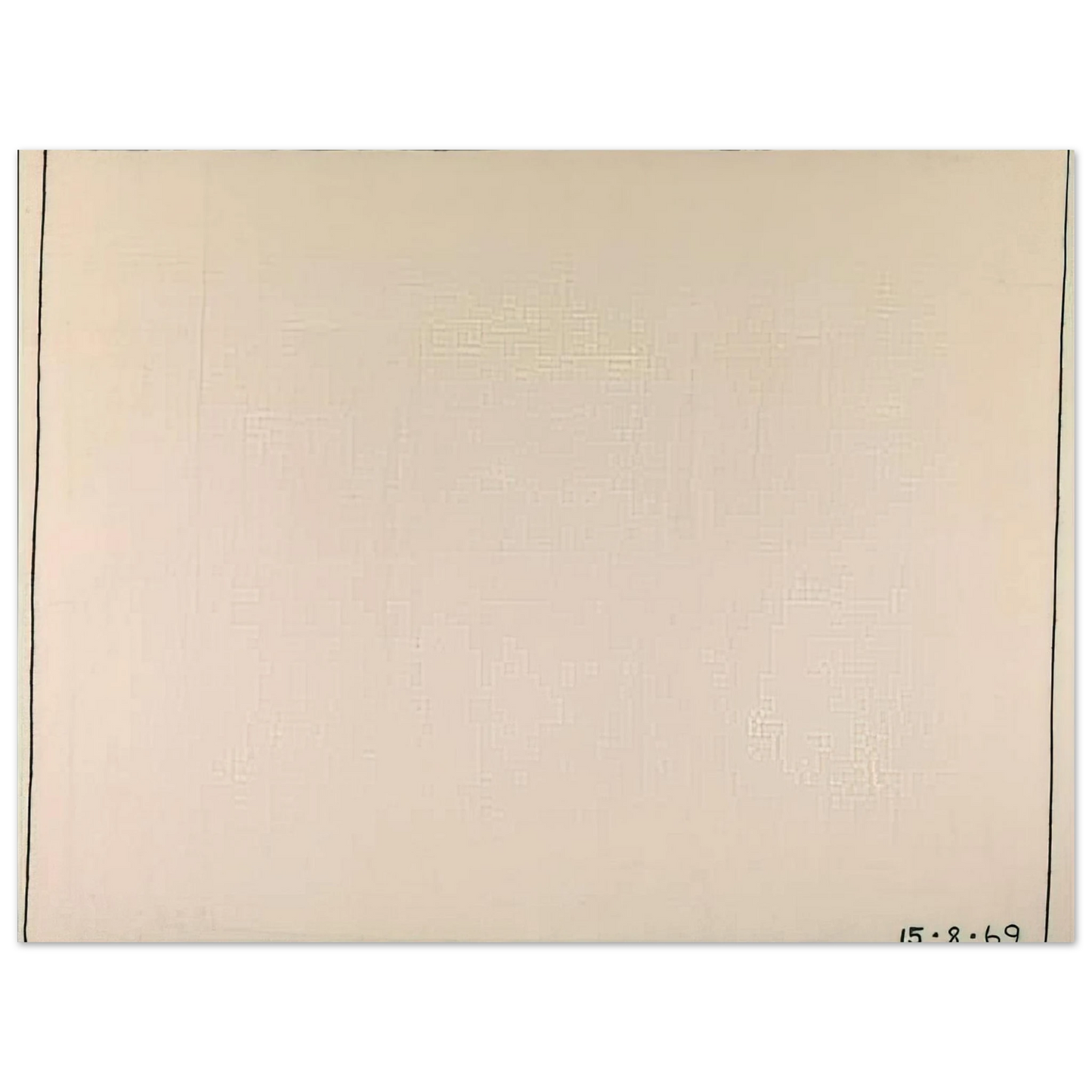
Bob Law - Nothing to be Afraid Of IV 15.8.69 - 1969 75x100 cm / 30x40inches Fine Art Poster
Bob Law - Nothing to be Afraid Of IV 15.8.69 - 1969 75x100 cm / 30x40inches Fine Art Poster
Couldn't load pickup availability
Embrace the Void: Bob Law’s Minimalist Masterpiece
Bob Law’s Nothing to be Afraid Of IV 15.8.69 is a profound exploration of space, time, and the limits of perception. As a leading figure in British Minimalism, Law’s 1969 series challenged the viewer to confront the 'nothingness' of the canvas, finding beauty and depth in subtle variations of field and form. This specific work captures the meditative intensity of Law’s practice, offering a sophisticated focal point for the modern interior.
At RedKalion, we honor the minimalist ethos of this work by utilizing our Master's Edition archival paper. This museum-quality reproduction is crafted to capture the nuance of Law’s original 1969 composition, ensuring that the interplay of tone and texture remains as impactful as the day it was created. The off-white, natural white finish of our matte paper provides a luxurious, non-reflective surface that invites close contemplation.
Technical Excellence and Artistry
- Museum-Quality Paper: Printed on 250 gsm (110 lb) acid-free paper with a thickness of 0.29 mm, ensuring a heavy, premium feel.
- Archival Longevity: The acid-free (pH above 7) composition prevents yellowing, preserving the integrity of the piece for generations.
- Sustainable Craftsmanship: We utilize FSC-certified paper, aligning Law’s exploration of space with a commitment to the environment.
- Sophisticated Finish: The uncoated matte texture eliminates glare, making it ideal for spaces with high-quality lighting.
Elevate your collection with this archival-grade reproduction. Bob Law’s work is not merely a visual experience; it is a philosophical statement on the nature of existence. By choosing a RedKalion print, you are investing in a piece of art history rendered with the precision and care that museum curators demand.
Discover Unlimited Art Possibilities
At RedKalion, you can find virtually any artwork from any artist, available in a wide range of sizes to perfectly match your space.
If you didn’t find what you’re looking for, contact us at support@redkalion.com . We will source any artwork and produce it in any size and format you need, including art prints, posters, canvas, framed pieces, framed canvas, and more.
For dedicated art enthusiasts, we also offer handcrafted replicas of any artwork, carefully painted by highly skilled artists using traditional techniques.
For custom requests, contact us at support@redkalion.com .
What paper is used for this Bob Law print?
We use Master's Edition archival paper, which is museum-quality, 250 gsm (110 lb), and 0.29 mm thick. This ensures a premium, heavy-weight feel for your Bob Law reproduction.
Is the paper used for this reproduction sustainable?
Yes, all our prints are produced on FSC-certified paper. This ensures that your museum-quality fine art poster is sourced from responsibly managed forests.
How does the matte finish affect the appearance of 'Nothing to be Afraid Of IV'?
The uncoated, natural white matte finish provides a luxurious texture and eliminates glare. This allows the subtle tonal shifts in Law’s minimalist work to be viewed clearly from any angle.
How long will this museum-quality print last without fading?
Our archival paper is acid-free with a pH above 7, which prevents yellowing and degradation over time. This ensures your investment in British Minimalism endures for decades.
What are the shipping and order minimums for RedKalion prints?
There are no minimum orders. Each Bob Law print is printed and shipped on demand, ensuring your artwork arrives in pristine condition with no unnecessary waste.
What is the significance of the title 'Nothing to be Afraid Of' in Law’s work?
The title reflects Bob Law’s interest in the 'void.' He believed that emptiness was a space of infinite potential and meditation, rather than something to be feared.
How does this 1969 piece fit into the British Minimalism movement?
Bob Law was a pioneer of British Minimalism. This 1969 piece is a prime example of his 'field' works, focusing on reduction, scale, and the physical presence of the viewer.