RedKalion
BOOKPLATE B G ESCHER BEER - MC Escher Acrylic Print - 70x100 cm / 28x40″ inches | Maurits Cornelis Escher Prints
BOOKPLATE B G ESCHER BEER - MC Escher Acrylic Print - 70x100 cm / 28x40″ inches | Maurits Cornelis Escher Prints
Couldn't load pickup availability
Elevate Your Space with the Geometric Mastery of M.C. Escher
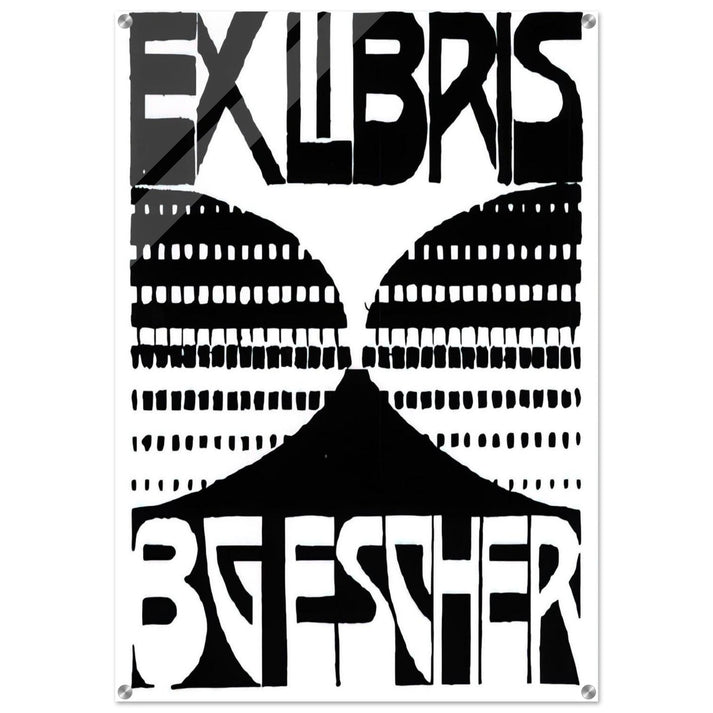
The BOOKPLATE B G ESCHER BEER is an exceptional window into the early genius of Maurits Cornelis Escher. Created in 1922 as a personalized ex-libris for his brother, Berend George Escher, this work showcases the foundational elements of symmetry and graphic precision that would later define Escher's career. At 70x100 cm (28x40″), this fine art print transforms a private, historical emblem into a commanding statement piece for the modern interior.
The Artistry of Maurits Cornelis Escher
M.C. Escher was a master of the woodcut and lithograph, often blurring the lines between mathematical rigour and artistic expression. This specific bookplate illustrates his early fascination with interlocking forms and the play between positive and negative space. By selecting this museum-quality reproduction, you are not merely purchasing decor; you are acquiring a piece of art history curated by RedKalion, designed to endure for generations.
Museum-Quality Acrylic Craftsmanship
Our commitment to archival excellence is reflected in the physical construction of this piece. Each print is rendered on 4mm (0.15") high-grade acrylic, providing a sleek, vibrant finish that enhances the depth and contrast of Escher's intricate lines. The straight-cut corners offer a contemporary aesthetic, while our specialized printing process ensures that any transparent backgrounds default to a crisp, clean white for optimal visual clarity.
Installation and Presentation
To ensure a seamless transition from our gallery to your wall, every order includes a professional hanging kit. The acrylic features pre-drilled holes at each corner (located 14mm from the edge), accompanied by 15mm screw heads for a secure and sophisticated mount. This archival-grade masterpiece is engineered to resist the passage of time, maintaining its brilliance in any setting.

Discover Unlimited Art Possibilities
At RedKalion, you can find virtually any artwork from any artist, available in a wide range of sizes to perfectly match your space.
If you didn’t find what you’re looking for, contact us at support@redkalion.com . We will source any artwork and produce it in any size and format you need, including art prints, posters, canvas, framed pieces, framed canvas, and more.
For dedicated art enthusiasts, we also offer handcrafted replicas of any artwork, carefully painted by highly skilled artists using traditional techniques.
For custom requests, contact us at support@redkalion.com .
What is the significance of the 'Bookplate B.G. Escher Beer' artwork?
Created in 1922, this piece is an early ex-libris (bookplate) M.C. Escher designed for his brother. It represents the artist's burgeoning interest in geometric symmetry and graphic balance, serving as a precursor to his famous tessellations and impossible constructions.
What technique did M.C. Escher use for the original piece?
The original artwork was a woodcut, a relief printing technique where the artist carves an image into a block of wood. Escher utilized this medium to achieve the high contrast and bold, clean lines characteristic of his early graphic works.
What material is used for this RedKalion acrylic print?
This print is crafted from 4mm (0.15") thick acrylic. This material is chosen for its durability and its ability to provide a sleek, vibrant finish that protects the artwork while enhancing the visual depth of the graphic design.
How do I hang the 70x100 cm M.C. Escher acrylic print?
The print includes a comprehensive hanging kit with hardware and screws. It features pre-drilled holes in each corner, 14mm from the edge with an 8mm diameter, ensuring a secure and professional installation on your wall.
How is the artwork shipped to ensure it arrives safely?
RedKalion utilizes specialized, reinforced packaging to protect the acrylic from scratches or impact during transit. We use premium couriers to ensure your museum-quality reproduction arrives in pristine condition, ready for immediate display.
Will the colors of the Escher print fade over time?
No. We use archival-grade inks and high-quality acrylic that offers natural UV resistance. This combination ensures the deep blacks and crisp whites of Escher’s work remain vibrant and resist fading for decades under normal indoor lighting.
Can this print be displayed in high-humidity areas?
Yes. The 4mm acrylic material is moisture-resistant, making it an excellent choice for environments where traditional paper prints might warp. This durability ensures the structural integrity of your M.C. Escher masterpiece remains uncompromised.