RedKalion
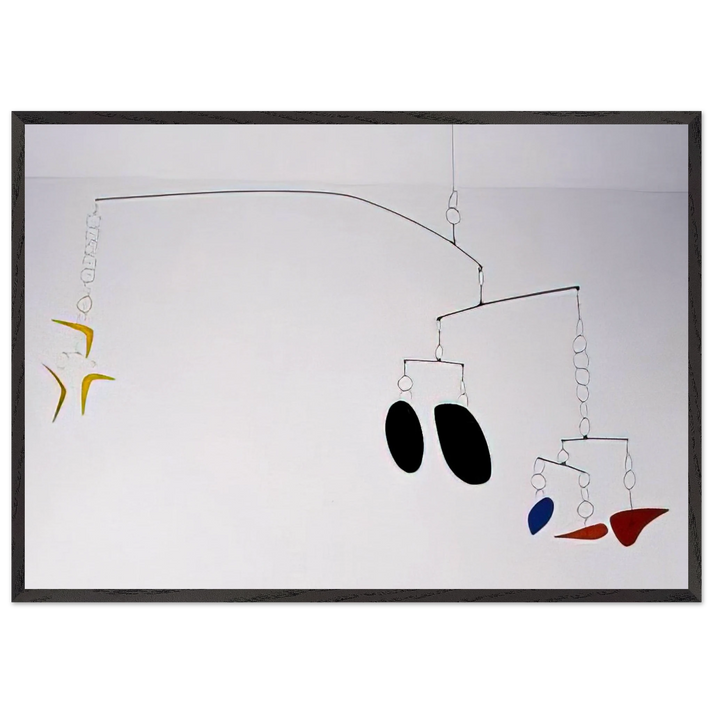
BOOMERANGS 1941 - Alexander Calder 70x100 cm / 28x40 inches Framed Art Print – Black Wooden Frame
BOOMERANGS 1941 - Alexander Calder 70x100 cm / 28x40 inches Framed Art Print – Black Wooden Frame
Couldn't load pickup availability
Embrace Kinetic Elegance: Boomerangs (1941) by Alexander Calder
Infuse your living space with the rhythmic grace of Alexander Calder’s Boomerangs (1941). This premium framed art print captures a pivotal moment in 20th-century modernism, where Calder—the pioneer of the mobile—translated his mastery of spatial balance onto a two-dimensional surface. The composition features his signature biomorphic forms, evoking a sense of suspended animation and lyrical movement that defines the height of his creative output during the early 1940s.
Museum-Quality Artistry for the Modern Collector
At RedKalion, we curate our fine art prints to meet the highest standards of archival excellence. This reproduction of Boomerangs is rendered on 250 gsm (110 lb) natural white, museum-quality paper. The matte, uncoated finish ensures a glare-free viewing experience, allowing the deep blacks and vibrant forms to resonate with clarity. By choosing an archival-grade reproduction, you are investing in a piece designed to maintain its tonal integrity for generations.
Sophisticated Framing and Sustainable Craftsmanship
Your Alexander Calder art print arrives encased in a premium black wooden frame, meticulously crafted from responsibly sourced oak and ash. With a robust profile of 20mm (0.79") in both width and thickness, the frame offers a more substantial, gallery-grade presence than standard retail alternatives. Protected by shatterproof plexiglass and featuring an FSC-certified paper core, this piece balances aesthetic luxury with environmental responsibility.
- Artist: Alexander Calder (1941)
- Material: 250 gsm / 110 lb archival-grade matte paper
- Frame: 20mm thick black wooden frame (Oak/Ash)
- Protection: High-clarity shatterproof plexiglass
- Installation: Includes hanging kit, ready to hang upon arrival
Elevate your interior with a masterpiece that bridges the gap between mid-century abstraction and timeless sophistication. This framed 70x100 cm print serves as a definitive focal point, reflecting a deep appreciation for art history and meticulous craftsmanship.

Discover Unlimited Art Possibilities
At RedKalion, you can find virtually any artwork from any artist, available in a wide range of sizes to perfectly match your space.
If you didn’t find what you’re looking for, contact us at support@redkalion.com . We will source any artwork and produce it in any size and format you need, including art prints, posters, canvas, framed pieces, framed canvas, and more.
For dedicated art enthusiasts, we also offer handcrafted replicas of any artwork, carefully painted by highly skilled artists using traditional techniques.
For custom requests, contact us at support@redkalion.com .
What is the quality of the paper used for the Alexander Calder Boomerangs print?
We use 250 gsm (110 lb) museum-quality paper. This heavy-weight, natural white paper is acid-free and archival, ensuring your fine art print remains vibrant without yellowing over time.
Does the black wooden frame include glass?
To ensure safe transit and long-term durability, we use premium shatterproof plexiglass. It provides the same clarity as traditional glass while offering superior protection for your Calder reproduction.
Is the Boomerangs 1941 print ready to hang upon arrival?
Yes, every framed print from RedKalion includes a professional hanging kit. The 70x100 cm frame is fully assembled and ready to be displayed immediately upon unboxing.
How does RedKalion ensure the archival longevity of this Calder reproduction?
We utilize FSC-certified, archival-grade paper and lightfast inks. Combined with our solid wood frames and protective plexiglass, the print is shielded from environmental degradation and UV light.
What are the specific dimensions of the frame?
The black wooden frame (ash/oak) measures 20mm (0.79") in both width and thickness. This provides a contemporary, high-end profile that is sturdier than standard 14mm frames.
What is the significance of the year 1941 in Alexander Calder's career?
1941 was a prolific year for Calder as he refined his 'mobiles' and 'stabiles.' Boomerangs reflects his exploration of balance and abstract forms during the height of American Modernism.
Why are the shapes in 'Boomerangs' characteristic of Calder's style?
Calder used biomorphic, organic shapes inspired by nature and geometry. In Boomerangs, these forms suggest potential energy and motion, mirroring the kinetic sculptures for which he is internationally renowned.