RedKalion
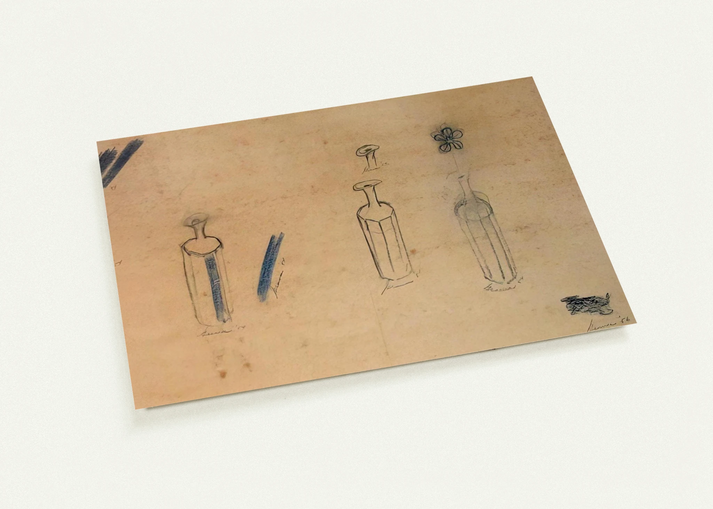
Bottles and Flowers - 1956 By Morris Graves Pack of 10 Post Cards | Morris Graves Post Cards | A6 (10.5 x 14.8 cm) - 4.1 x 5.8 inches
Bottles and Flowers - 1956 By Morris Graves Pack of 10 Post Cards | Morris Graves Post Cards | A6 (10.5 x 14.8 cm) - 4.1 x 5.8 inches
Couldn't load pickup availability
Experience the Quiet Contemplation of Morris Graves’ 'Bottles and Flowers' (1956)
Invite the meditative spirit of the Northwest School into your correspondence with this exquisite set of ten fine art post cards featuring Bottles and Flowers - 1956 by Morris Graves. Known for his profound spiritual connection to the natural world, Graves’ transition in the mid-1950s toward still-life subjects allowed for a masterful exploration of light and void. In this piece, the delicate transparency of glass and the fleeting beauty of flora become vessels for a unique Zen-like stillness.
At RedKalion, we honor the artist's original intent by utilizing advanced 12-color fine art printing technology. Unlike standard mass-produced stationery, these museum-quality reproductions capture the nuanced tonalities and the ethereal 'inner light' characteristic of Graves’ work, ensuring each A6 card feels like a miniature gallery piece.
Museum-Quality Craftsmanship in Every Detail
Each set is printed on demand with meticulous attention to detail. These are not merely notes; they are archival-grade reproductions designed for those who appreciate the intersection of art history and tactile quality. Whether used for personal greetings or displayed as a curated set of miniatures, these post cards elevate any exchange into a moment of artistic appreciation.
- Color Vibrancy: Our 12-color fine art printing delivers vivid, accurate colors with stunning depth, far surpassing standard 4-color inkjet methods.
- Premium Paper Finishing: A smooth matte finish provides a clean, glare-free display, perfect for appreciating Graves' delicate line work.
- Substantial Weight: Printed on 200 gsm (80 lb) paper with a thickness of 0.26 mm for a premium, durable feel.
- Eco-Conscious Production: We use FSC-certified paper and environmentally friendly materials, ensuring your art collection supports sustainable practices.
Elevate your space or your correspondence with an archival masterpiece that endures. RedKalion remains the definitive curator for those seeking the finest in historical art reproductions.

Discover Unlimited Art Possibilities
At RedKalion, you can find virtually any artwork from any artist, available in a wide range of sizes to perfectly match your space.
If you didn’t find what you’re looking for, contact us at support@redkalion.com . We will source any artwork and produce it in any size and format you need, including art prints, posters, canvas, framed pieces, framed canvas, and more.
For dedicated art enthusiasts, we also offer handcrafted replicas of any artwork, carefully painted by highly skilled artists using traditional techniques.
For custom requests, contact us at support@redkalion.com .
What makes the printing quality of these post cards unique?
We use 12-color fine art printing technology, which provides significantly more color depth and accuracy than standard 4-color printers, capturing every subtle hue in Morris Graves' original 1956 masterpiece.
What is the texture and finish of the paper?
The cards feature a premium smooth matte finish on 200 gsm (80 lb) paper. This ensures a glare-free surface that is soft to the touch and easy to write on.
Are these post cards environmentally friendly?
Yes. These Morris Graves post cards are printed on demand using FSC-certified paper, reducing waste and ensuring the materials come from responsibly managed forests.
How long will these fine art prints last without fading?
By using archival-grade inks and high-quality 200 gsm paper, our prints are designed for longevity, resisting fading and maintaining their vibrancy for years when kept out of direct sunlight.
What are the exact dimensions of the post cards?
Each card in this pack of 10 is A6 size, measuring 10.5 x 14.8 cm (approximately 4.1 x 5.8 inches), making them ideal for standard mailing or framing.
What characterizes Morris Graves' style in 'Bottles and Flowers'?
Graves utilized a technique influenced by Zen Buddhism and East Asian aesthetics, focusing on 'inner light' and the symbolic presence of objects to evoke a sense of spiritual peace and stillness.
Why is 1956 considered a significant period for Morris Graves?
In 1956, Graves moved to Ireland, where his work shifted from mystical birds to more structured, refined still-lifes. This period reflects a mature focus on the quiet beauty of everyday objects.