

RedKalion
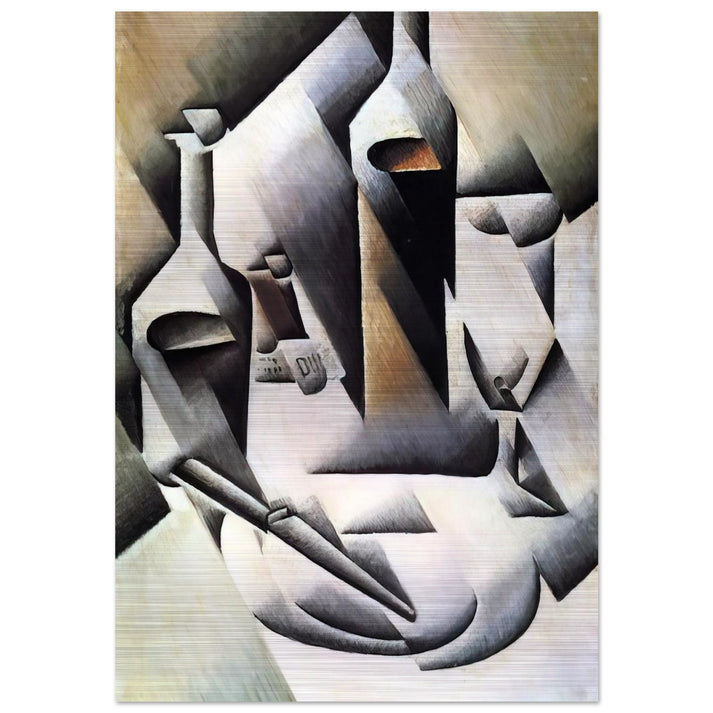
BOTTLES AND KNIFE 1912 - Juan Gris Brushed Aluminum Print - 70x100 cm / 28x40 inches | Juan Gris Aluminum Print | Juan Gris Prints
BOTTLES AND KNIFE 1912 - Juan Gris Brushed Aluminum Print - 70x100 cm / 28x40 inches | Juan Gris Aluminum Print | Juan Gris Prints
Couldn't load pickup availability
Elevate Your Space with Juan Gris’s 1912 Masterpiece: Bottles and Knife
Experience the intellectual rigor and aesthetic precision of Analytic Cubism with this premium reproduction of Juan Gris’s 1912 work, Bottles and Knife. As a central figure in the Cubist movement, Gris brought a unique mathematical harmony to the style, often referred to as 'visual synthesis.' This piece captures a pivotal moment in art history where everyday objects are deconstructed into a sophisticated play of geometric planes and overlapping perspectives.
Museum-Quality Execution on Brushed Aluminum
At RedKalion, we curate only the finest archival-grade reproductions. This Juan Gris Brushed Aluminum Print is meticulously crafted on a 3mm (0.12") AluDibond® base. The material features a horizontal grain that provides a dynamic, metallic texture, perfectly complementing the industrial and structural nature of Gris’s composition. The unique matte, glare-free finish ensures that the intricate details of the bottle and knife remain the focal point, regardless of your room’s lighting.
Innovative Printing for Art Aficionados
Our direct-to-surface printing technique allows for vivid color saturation while maintaining a sophisticated texture. Because white areas are left unprinted, the brushed silver aluminum shines through, creating a striking metallic effect that breathes new life into this 1912 classic. This is more than a fine art print; it is a durable, rigid masterpiece designed to endure for generations.
- Artist: Juan Gris (1887–1927)
- Material: 3mm Brushed Aluminum DIBOND® with horizontal grain.
- Finish: Matte and glare-free metallic silver effect.
- Durability: Highly rigid and archival-grade for long-term preservation.
- Ready to Display: Professional hanging kit included.
By choosing a RedKalion reproduction, you are investing in a sophisticated piece of art history that marries 20th-century genius with 21st-century material innovation. Transform your gallery wall with a work that defines the transition into modern abstraction.


Discover Unlimited Art Possibilities
At RedKalion, you can find virtually any artwork from any artist, available in a wide range of sizes to perfectly match your space.
If you didn’t find what you’re looking for, contact us at support@redkalion.com . We will source any artwork and produce it in any size and format you need, including art prints, posters, canvas, framed pieces, framed canvas, and more.
For dedicated art enthusiasts, we also offer handcrafted replicas of any artwork, carefully painted by highly skilled artists using traditional techniques.
For custom requests, contact us at support@redkalion.com .
What makes this Juan Gris print 'museum-quality'?
RedKalion utilizes archival-grade 3mm Aluminum DIBOND® and advanced direct-to-surface printing. This ensures color accuracy, structural rigidity, and a sophisticated matte finish that meets the standards of high-end galleries and private collectors.
How does the brushed aluminum finish affect the artwork's appearance?
The horizontal grain of the aluminum creates a dynamic metallic effect. In this Juan Gris print, unprinted areas reveal the silver aluminum, adding a modern, industrial depth to the Cubist geometric forms.
Is the hanging hardware included with the print?
Yes, every RedKalion aluminum print includes a professional hanging kit. The specific hardware varies slightly based on the fulfillment country to ensure the most secure and aesthetic mounting for your 70x100 cm piece.
How do I clean and maintain my aluminum art print?
The matte, glare-free finish is highly durable. Simply use a soft, dry microfiber cloth to remove dust. Avoid harsh chemicals, though the AluDibond® material is naturally resistant to fading and moisture.
What is the shipping process for large-format prints?
We use specialized, high-durability packaging to protect your Juan Gris reproduction during transit. Every shipment is tracked and insured, ensuring your museum-quality print arrives in pristine condition.
What is the historical significance of 'Bottles and Knife' (1912)?
Created in 1912, this work represents Juan Gris's transition into Analytic Cubism. It showcases his 'mathematical' approach, where he organized the canvas using a grid-like structure before placing objects, differing from Picasso’s more organic deconstructions.
Why is Juan Gris considered a master of Cubism?
Unlike his contemporaries, Gris focused on 'Synthetism,' moving from the abstract to the concrete. His work is celebrated for its clarity, sophisticated color palettes, and the architectural stability he brought to modern art.