

RedKalion
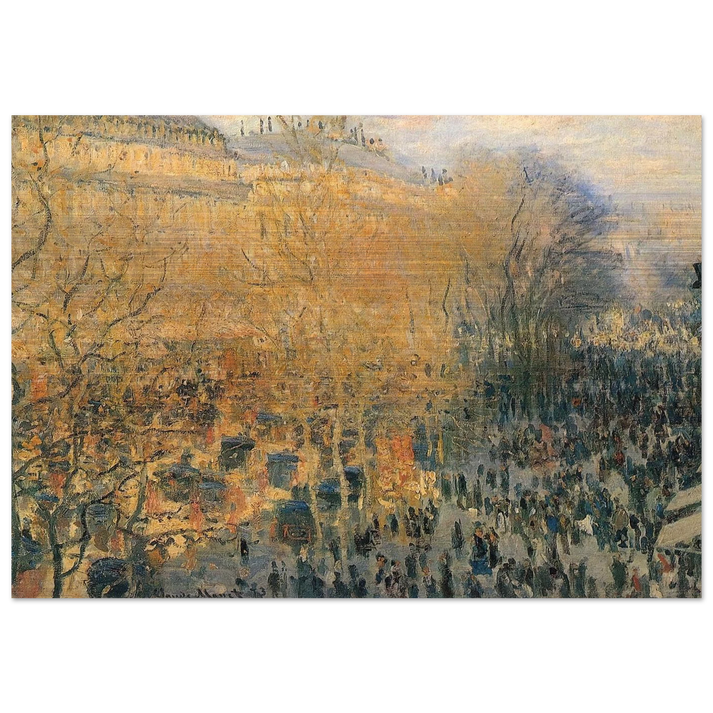
Boulevard of Capucines - claude monet Brushed Aluminum Print - 70x100 cm / 28x40 inches | claude monet Aluminum Print | claude monet Prints
Boulevard of Capucines - claude monet Brushed Aluminum Print - 70x100 cm / 28x40 inches | claude monet Aluminum Print | claude monet Prints
Couldn't load pickup availability
A Masterpiece of Modernity: Monet’s Boulevard of Capucines
Experience the vibrant pulse of 19th-century Paris through Claude Monet’s Boulevard of Capucines. This iconic impressionist work, originally conceived in 1873 from the elevated perspective of photographer Nadar’s studio, captures the fleeting movement and winter light of a bustling city. At RedKalion, we elevate this historical treasure into a contemporary statement piece through our premium museum-quality reproduction on brushed aluminum, bridging the gap between classical artistry and modern industrial design.
The Sophistication of Brushed Aluminum DIBOND®
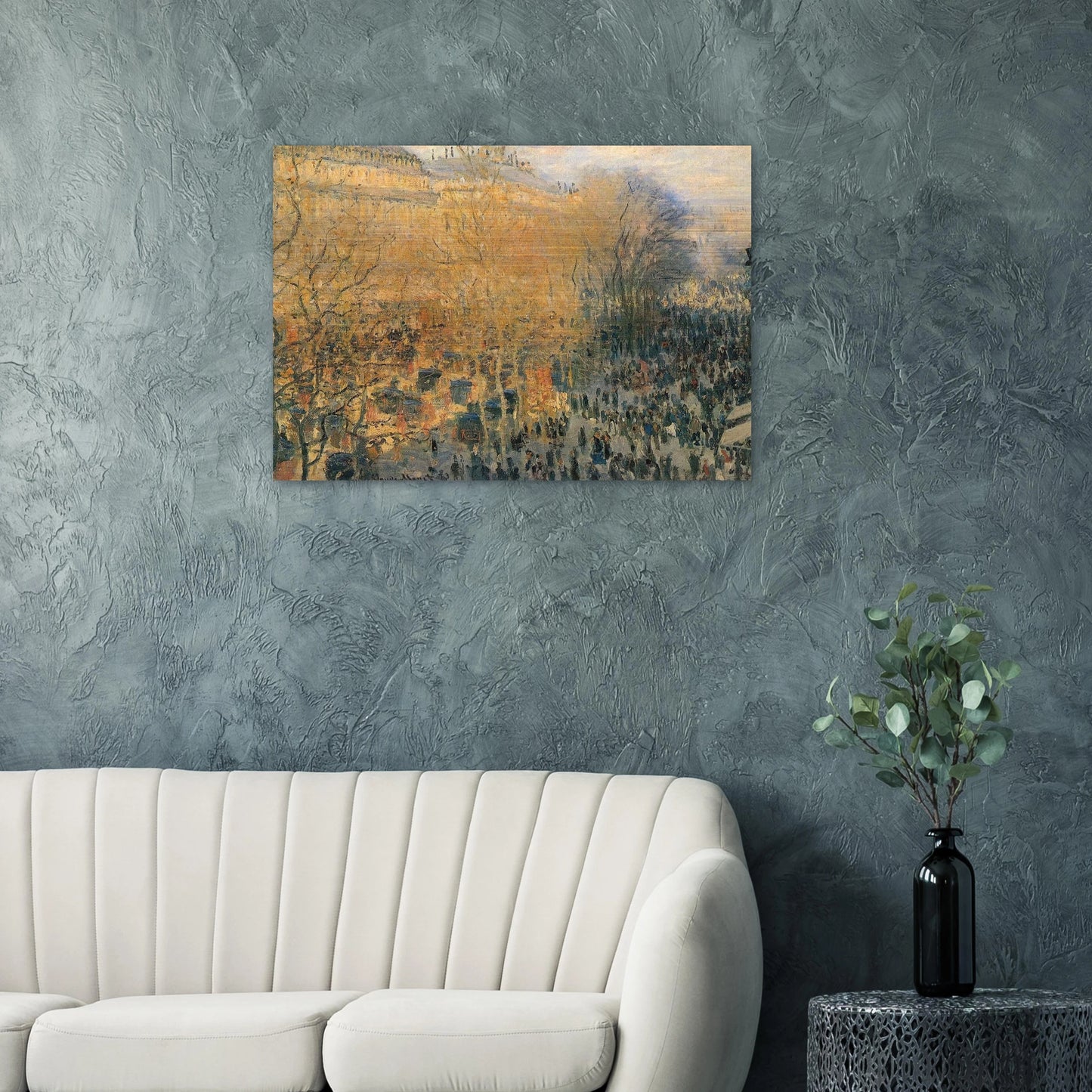
This fine art print is meticulously crafted on 3mm (0.12") Brushed silver Aluminum DIBOND®. The unique horizontal grain of the metal adds a dynamic, shimmering quality to the Parisian sky and architecture. Our advanced direct-printing process ensures vivid colors and a sophisticated matte, glare-free finish. In this specific medium, the white areas of Monet’s composition remain unprinted, allowing the raw metallic silver effect of the aluminum to shine through, lending the piece an ethereal glow that changes with the ambient light of your room.
- Direct Print: Achieves stunning color fidelity with a professional matte appearance.
- Structural Integrity: The 3mm DIBOND® provides a rigid, durable base that resists environmental wear.
- Dynamic Grain: The horizontal brushed finish complements Monet's energetic brushwork, adding tactile depth.
- Ready to Hang: Each print includes a curated hanging kit adapted to your region for effortless installation.
Art Historical Context: Capturing the Fleeting Moment
In Boulevard of Capucines, Monet utilized rapid, shorthand brushstrokes—often referred to as 'taches'—to represent the Parisian crowd. This technique was revolutionary, prioritizing the 'impression' of movement over photographic detail. By choosing a Claude Monet Aluminum Print from RedKalion, you are not merely purchasing decor; you are investing in an archival-grade reproduction that honors the artist's legacy of innovation. Elevate your space with a masterpiece that captures the enduring elegance of the Belle Époque.


Discover Unlimited Art Possibilities
At RedKalion, you can find virtually any artwork from any artist, available in a wide range of sizes to perfectly match your space.
If you didn’t find what you’re looking for, contact us at support@redkalion.com . We will source any artwork and produce it in any size and format you need, including art prints, posters, canvas, framed pieces, framed canvas, and more.
For dedicated art enthusiasts, we also offer handcrafted replicas of any artwork, carefully painted by highly skilled artists using traditional techniques.
For custom requests, contact us at support@redkalion.com .
What material is used for this Claude Monet print?
This artwork is printed on 3mm Brushed silver Aluminum DIBOND®, featuring a horizontal grain and a metallic finish that enhances the light and texture of the original painting.
Does the print come ready to hang?
Yes, every RedKalion aluminum print includes a specialized hanging kit tailored to your location, ensuring a secure and elegant display immediately upon arrival.
What is the finish of the Boulevard of Capucines aluminum print?
The print features a matte, glare-free finish. White areas of the artwork are left unprinted to reveal the striking brushed silver metallic effect of the aluminum base.
How durable is the Aluminum DIBOND® material?
Aluminum DIBOND® is exceptionally durable and rigid, providing an archival-quality base that protects your fine art print from warping and environmental degradation over time.
How is the artwork shipped to ensure safety?
We use premium, secure packaging specifically designed for large-format art, ensuring your museum-quality reproduction arrives in pristine condition regardless of the destination.
What is the historical significance of Boulevard of Capucines?
Painted in 1873, this piece is a cornerstone of Impressionism, famously capturing the 'heroism of modern life' through Monet’s revolutionary use of light and movement in urban Paris.
Why did Monet use blurred figures in this painting?
Monet used 'taches' or dots of color to represent the crowd, focusing on the sensory experience of a busy street rather than individual details, a hallmark of Impressionist theory.