RedKalion
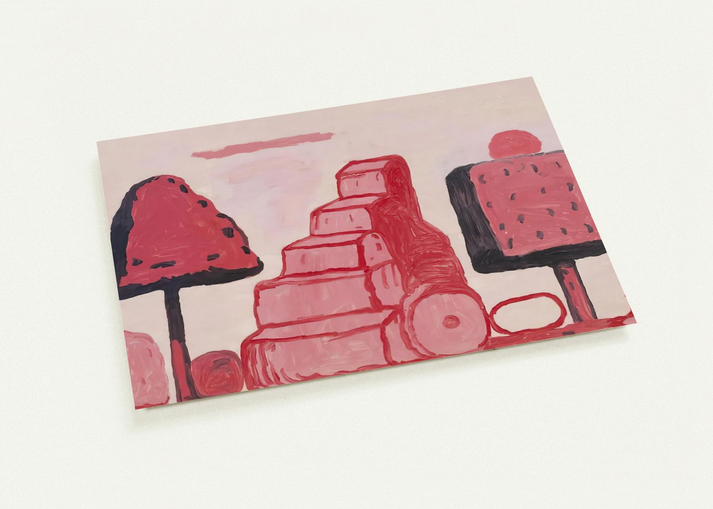
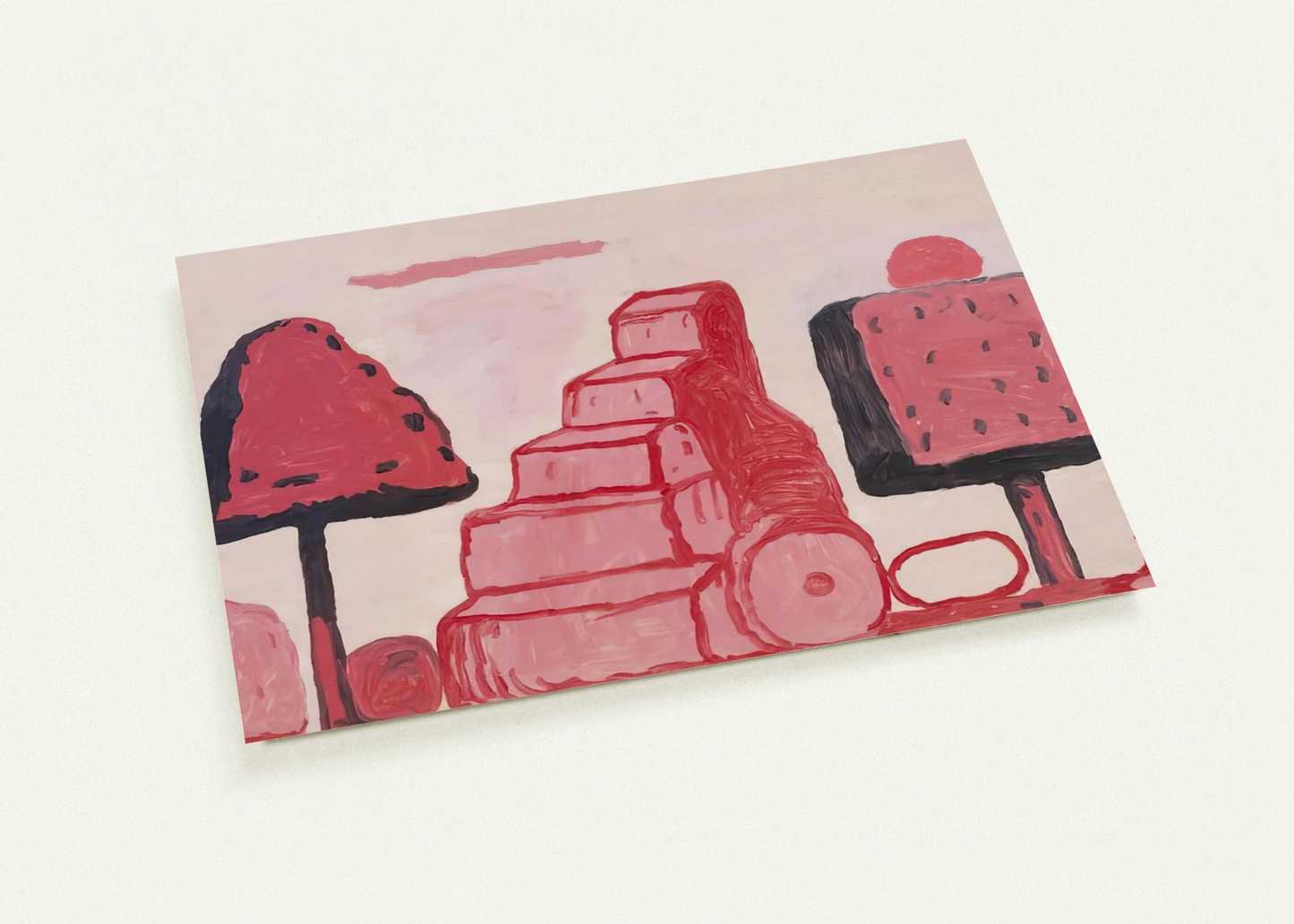
BOX TREE ROME By Philip Guston Pack of 10 Post Cards | Philip Guston Post Cards | A6 (10.5 x 14.8 cm) - 4.1 x 5.8 inches
BOX TREE ROME By Philip Guston Pack of 10 Post Cards | Philip Guston Post Cards | A6 (10.5 x 14.8 cm) - 4.1 x 5.8 inches
Couldn't load pickup availability
Elevate Your Correspondence with Philip Guston’s 'Box Tree Rome'
Immerse yourself in the profound neo-expressionist world of Philip Guston with this exclusive pack of 10 museum-quality postcards. Featuring the evocative Box Tree Rome, this collection captures a pivotal moment in Guston’s career. During his residency at the American Academy in Rome in the early 1970s, Guston moved away from pure abstraction, embracing a symbolic, figurative language characterized by heavy outlines and a mastery of pink and grey hues. These prints represent the intersection of historical grandeur and existential introspection.
Museum-Quality Reproductions
At RedKalion, we bridge the gap between historical art and modern curation. Each postcard is produced using 12-color fine art printing technology. Unlike standard 4-color commercial prints, our process ensures an exceptional depth of color and tonal accuracy, preserving the subtle textures of Guston’s brushwork. The smooth matte finish eliminates glare, providing a clean, sophisticated display for both personal messages and home decor.
- Artist: Philip Guston
- Title: Box Tree Rome
- Format: Pack of 10 flat postcards (A6 - 10.5 x 14.8 cm)
- Material: 200 gsm (80 lb) FSC-certified paper, thickness: 0.26 mm (10.3 mils)
- Sustainability: Printed on demand with environmentally conscious materials
A Legacy of Artistic Excellence
Guston’s Box Tree Rome is more than a landscape; it is a testament to the artist’s evolution. By choosing these archival-grade prints, you are not merely purchasing stationery; you are acquiring a piece of art history rendered with the precision of a fine art gallery. Our FSC-certified paper ensures that your appreciation for art aligns with a commitment to the environment, making these cards a thoughtful gift or a sophisticated addition to any collection.
Discover Unlimited Art Possibilities
At RedKalion, you can find virtually any artwork from any artist, available in a wide range of sizes to perfectly match your space.
If you didn’t find what you’re looking for, contact us at support@redkalion.com . We will source any artwork and produce it in any size and format you need, including art prints, posters, canvas, framed pieces, framed canvas, and more.
For dedicated art enthusiasts, we also offer handcrafted replicas of any artwork, carefully painted by highly skilled artists using traditional techniques.
For custom requests, contact us at support@redkalion.com .
What is the printing quality of these Philip Guston postcards?
We utilize 12-color fine art printing technology. This advanced method provides superior color vibrancy and depth compared to standard 4-color inkjet printing, ensuring every detail of Philip Guston’s artwork is accurately reproduced.
What paper weight is used for the Box Tree Rome cards?
The postcards are printed on premium 200 gsm (80 lb) paper with a thickness of 0.26 mm (10.3 mils), offering a sturdy, museum-quality feel that far exceeds typical postcard stock.
How long does shipping take for these fine art prints?
As these are printed on demand to ensure the highest quality control, orders typically ship within 3-5 business days. Delivery times vary by location, but tracking is provided for every order.
Are the materials used for these postcards eco-friendly?
Yes, all our postcards are printed on FSC-certified paper, ensuring the materials are sourced from responsibly managed forests. This aligns with RedKalion’s commitment to environmental sustainability.
Can I buy these Philip Guston postcards individually?
These are currently offered exclusively as a pack of 10 postcards. This allows you to share Guston’s vision with others or create a curated gallery wall in your own space.
What is the significance of Philip Guston's 'Rome' series?
The 'Rome' series marks Guston's transition from Abstract Expressionism to figurative storytelling. Created during his 1970-71 residency, these works explore architectural forms and personal memory using a distinctively bold, weighted style.
Why is Philip Guston's style in 'Box Tree Rome' considered unique?
Guston’s late style is celebrated for its 'clumsy' brilliance—deliberate, thick lines and a limited palette that convey deep emotional weight, bridging the gap between high art and satirical cartooning.