

RedKalion
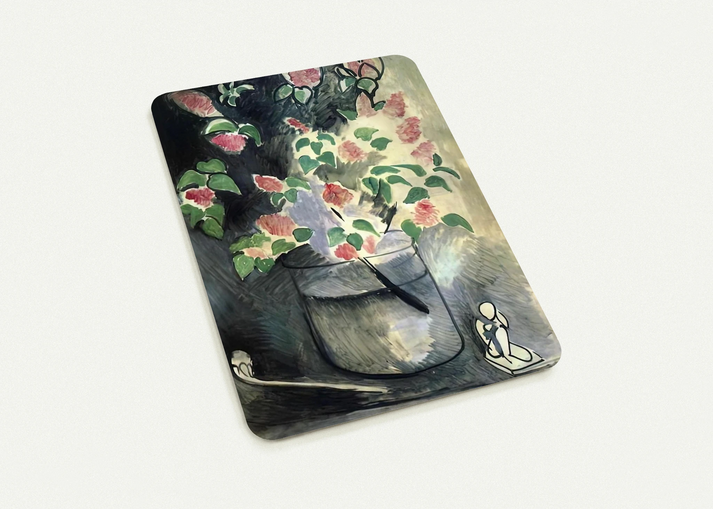
BRANCH OF LILLACS 1914 By Henri Matisse Pack of 10 Post Cards | Henri Matisse Post Cards | A6 (10.5 x 14.8 cm) - 4.1 x 5.8 inches
BRANCH OF LILLACS 1914 By Henri Matisse Pack of 10 Post Cards | Henri Matisse Post Cards | A6 (10.5 x 14.8 cm) - 4.1 x 5.8 inches
Couldn't load pickup availability
The Essence of Spring: Henri Matisse’s Branch of Lilacs (1914)
In 1914, as Europe stood on the precipice of monumental change, Henri Matisse was refining his mastery of color and form. Branch of Lilacs (1914) is a testament to his unique ability to distill the sensory beauty of nature into a rhythmic, visual composition. Moving beyond the explosive palette of his earlier Fauvist years, this work demonstrates a sophisticated balance of light and shadow, where the delicate lilac petals are rendered with fluid, expressive brushstrokes that capture the fleeting vitality of the bloom.
Museum-Quality Fine Art in Every Detail
RedKalion is proud to present this curated pack of 10 post cards, transforming Matisse’s botanical masterpiece into a tactile, shareable experience. Each card is produced using our advanced 12-color fine art printing technology. Unlike standard 4-color inkjet processes, our method ensures breathtaking color accuracy and depth, preserving the subtle tonal shifts of Matisse's original palette. Whether you are sending a thoughtful note or creating a miniature gallery wall, these museum-quality reproductions offer an archival elegance that endures.
Superior Craftsmanship and Ethical Standards
Our commitment to excellence extends to the materials we select. Each post card features:
- Paper Finishing: A sophisticated smooth matte finish that eliminates glare and enhances color clarity.
- Paper Weight: Substantial 200 gsm (80 lb) paper for a premium feel.
- Thickness: 0.26 mm (10.3 mils) for durability and structural integrity.
- Sustainability: Printed on FSC-certified, environmentally conscious paper.
- Precision Sizing: Standard A6 format (10.5 x 14.8 cm / 4.1 x 5.8 inches).
By choosing RedKalion, you are investing in an archival-grade product that honors the legacy of Henri Matisse while adhering to the highest standards of modern art reproduction.


Discover Unlimited Art Possibilities
At RedKalion, you can find virtually any artwork from any artist, available in a wide range of sizes to perfectly match your space.
If you didn’t find what you’re looking for, contact us at support@redkalion.com . We will source any artwork and produce it in any size and format you need, including art prints, posters, canvas, framed pieces, framed canvas, and more.
For dedicated art enthusiasts, we also offer handcrafted replicas of any artwork, carefully painted by highly skilled artists using traditional techniques.
For custom requests, contact us at support@redkalion.com .
What printing technology is used for these Matisse post cards?
We use 12-color fine art printing technology, which provides superior color vibrancy and depth compared to standard 4-color processes, ensuring a museum-quality reproduction.
What is the weight and finish of the paper?
The cards are printed on 200 gsm (80 lb) paper with a thickness of 0.26 mm. They feature a smooth matte finish for a glare-free, premium display.
Are these post cards environmentally friendly?
Yes, all our fine art reproductions are printed on demand using FSC-certified paper, ensuring the materials are sourced from responsibly managed forests.
What are the shipping and production logistics?
Each pack is printed on demand with no minimum order requirements, reducing waste and ensuring your art arrives in pristine, freshly printed condition.
Will the colors fade over time?
Our use of archival-grade inks and 12-color technology ensures exceptional longevity and resistance to fading, allowing the artwork to remain vibrant for years.
What characterizes Matisse's 1914 period in 'Branch of Lilacs'?
The 1914 period marks a transition toward more structured compositions. Matisse focused on capturing the 'essential character' of objects through simplified forms and sophisticated color harmonies.
Why did Matisse frequently choose floral subjects like lilacs?
Matisse viewed floral subjects as a way to explore the rhythm of nature and light. Lilacs, specifically, allowed him to experiment with the density of color and organic shapes.