
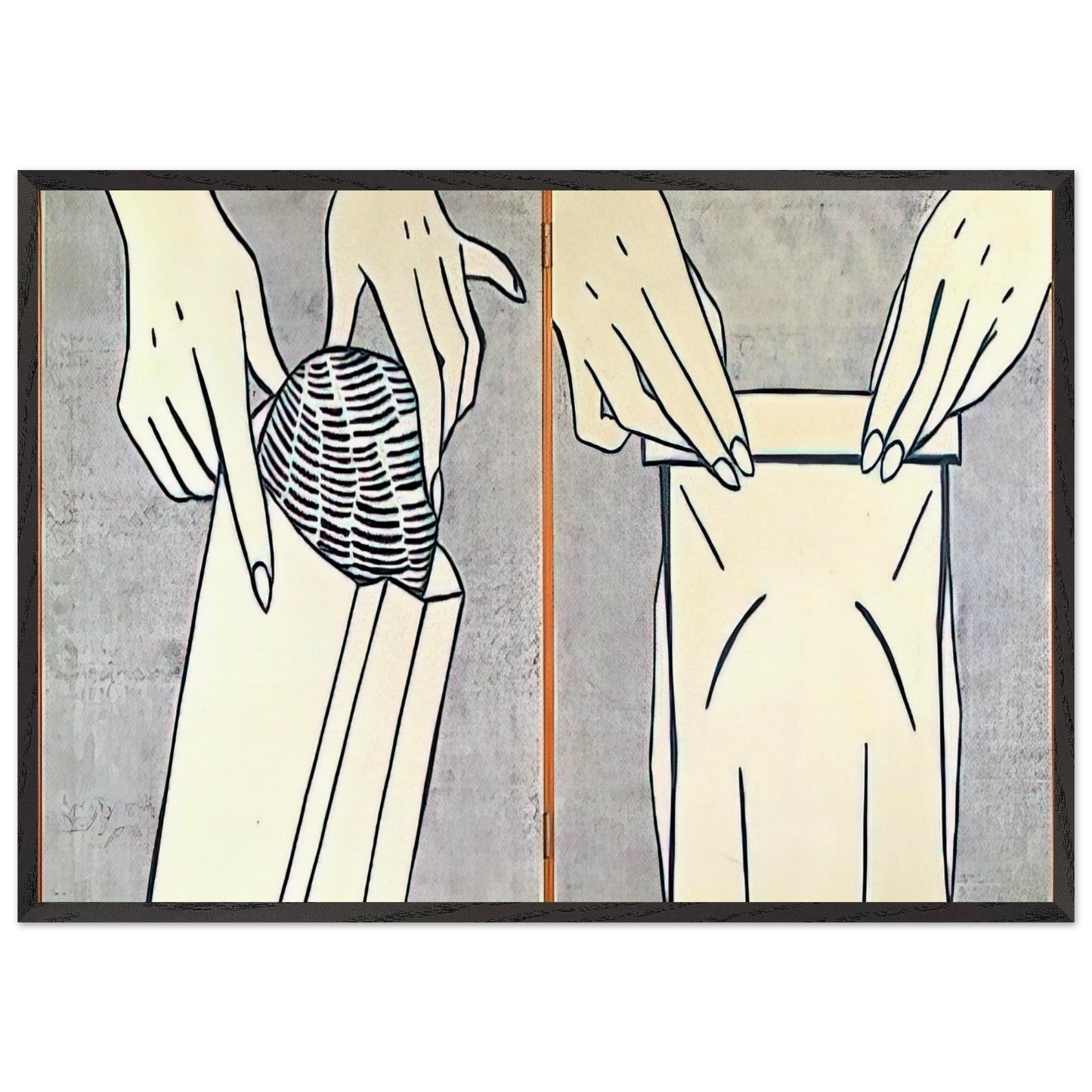
What is the quality of the paper used for this Lichtenstein print?
We use 250 gsm (110 lb) archival museum-quality paper. It is a heavy-weight, natural white, matte, and uncoated paper with a thickness of 0.29 mm, ensuring the 'Bread in Bag 1961' print remains vibrant and resists aging for decades.
How is the Bread in Bag 1961 print framed?
The print is mounted in a premium black frame made from responsibly sourced oak and ash wood. The frame measures 20mm (0.79") in both width and thickness, providing a more robust and elegant profile than standard 14mm frames.
Is the glass used in the frame safe?
Yes, we use shatterproof, transparent plexiglass to protect your 'Bread in Bag 1961' art print. This high-quality material provides the clarity of glass while offering superior durability and safety during shipping and home display.
Does the print come ready to hang?
Absolutely. Every RedKalion framed print includes a professional hanging kit. Your Roy Lichtenstein artwork will arrive fully assembled and ready to be mounted on your wall immediately upon delivery.
What makes the paper "archival museum-quality" at RedKalion?
Our paper is acid-free and FSC-certified, meaning it is treated to prevent yellowing or degradation over time. This archival standard ensures that your fine art reproduction maintains its integrity and value as a long-term investment.
Why is 'Bread in Bag' (1961) historically significant in Pop Art?
Created in 1961, 'Bread in Bag' was one of Lichtenstein's first works to use commercial illustration techniques. It signaled the end of Abstract Expressionism's dominance and the rise of Pop Art, turning everyday consumer items into iconic gallery subjects.
How are RedKalion frames different from standard commercial frames?
RedKalion frames are 20mm wide and thick, compared to the standard 14mm. We use solid, responsibly sourced wood (oak/ash) rather than MDF or plastic, ensuring a premium feel and superior structural integrity for your Lichtenstein masterpiece.