
RedKalion
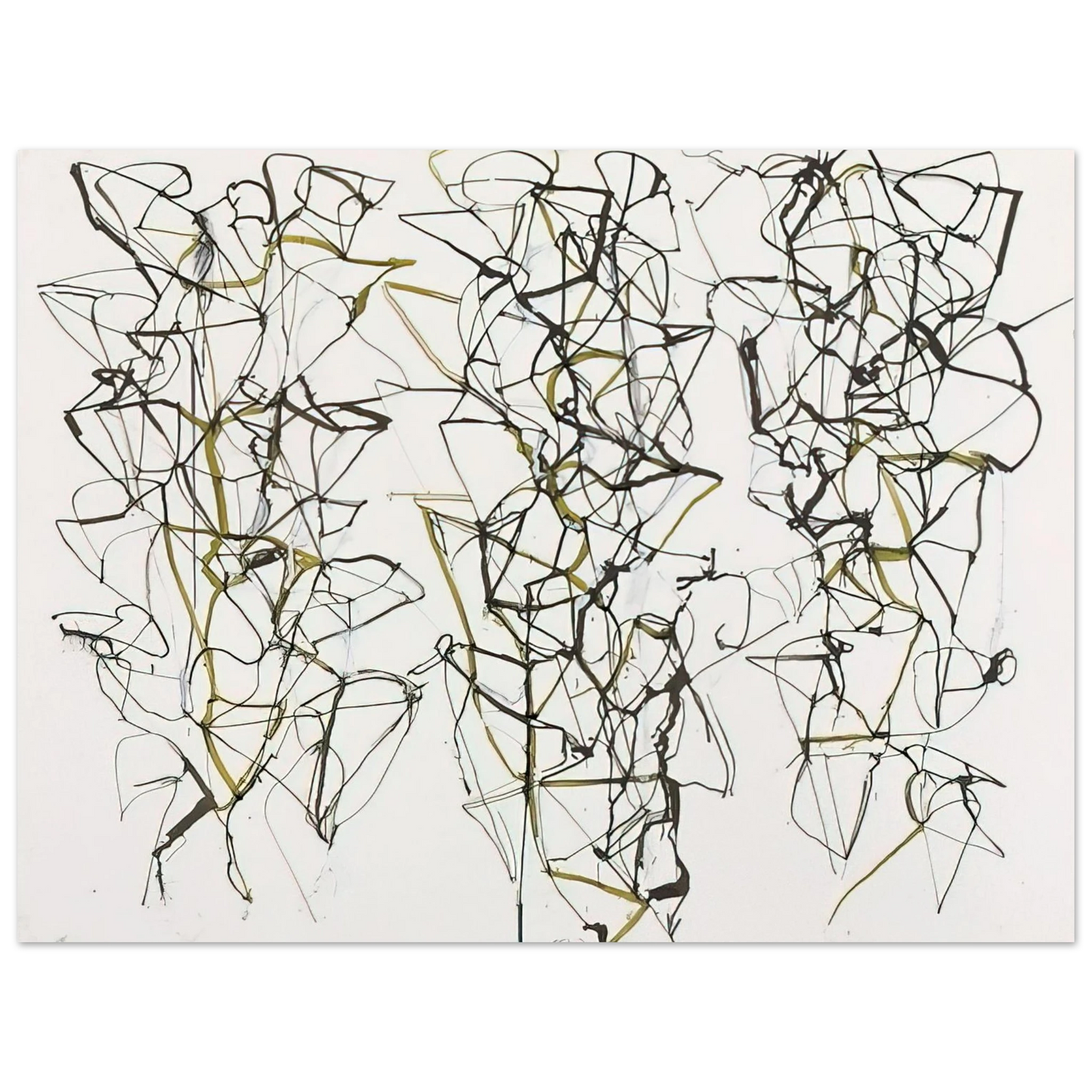
Brice Marden - Untitled with Green - 1989 75x100 cm / 30x40inches Fine Art Poster
Brice Marden - Untitled with Green - 1989 75x100 cm / 30x40inches Fine Art Poster
Couldn't load pickup availability
A Masterpiece of Abstraction: Brice Marden’s 'Untitled with Green' (1989)
Step into the transformative era of Brice Marden with this exquisite reproduction of Untitled with Green (1989). This period marked a pivotal shift in Marden’s career, as he transitioned from the dense, monochromatic wax panels of his early work toward the fluid, calligraphic gestures inspired by Chinese poetry and the natural world. This piece captures that evolution perfectly, featuring a delicate dance of organic lines that weave through a contemplative space, anchored by the subtle, earthy resonance of green hues.
As a premier museum-quality reproduction, this fine art print offers a window into the mind of one of the most influential American minimalists. The 1989 series is celebrated for its rhythmic complexity, where every stroke feels both spontaneous and deeply considered. At RedKalion, we ensure that the integrity of Marden’s vision is preserved through meticulous printing processes that capture the nuanced layers of his original composition.
Premium Archival Specifications
To honor the legacy of this contemporary master, each print is produced on our Master's Edition archival paper. This choice ensures that the sophisticated palette and intricate linework of 'Untitled with Green' remain vibrant for generations. Our commitment to quality includes:
- Luxurious Texture: A matte, uncoated, natural white finish that eliminates glare and provides a premium tactile experience.
- Substantial Weight: Printed on heavy 250 gsm (110 lb) paper with a thickness of 0.29 mm for a robust, gallery-grade feel.
- Archival Integrity: Acid-free (pH above 7) materials prevent yellowing and degradation over time.
- Sustainability: Proudly printed on FSC-certified paper, supporting responsible forest management.
Elevate your collection with an archival masterpiece that endures. This 75x100 cm (30x40 inches) statement piece is printed and shipped on demand, ensuring that your artwork arrives in pristine condition, ready to transform your interior with a sense of quiet, intellectual beauty.
Discover Unlimited Art Possibilities
At RedKalion, you can find virtually any artwork from any artist, available in a wide range of sizes to perfectly match your space.
If you didn’t find what you’re looking for, contact us at support@redkalion.com . We will source any artwork and produce it in any size and format you need, including art prints, posters, canvas, framed pieces, framed canvas, and more.
For dedicated art enthusiasts, we also offer handcrafted replicas of any artwork, carefully painted by highly skilled artists using traditional techniques.
For custom requests, contact us at support@redkalion.com .
What defines the quality of this Brice Marden print?
This reproduction is part of RedKalion’s Master's Edition, using 250 gsm archival paper. The matte, natural white finish ensures a luxury appearance that mirrors the original's depth and texture without distracting reflections.
How does the archival nature of the paper benefit the artwork?
Our acid-free paper (pH above 7) prevents the yellowing and brittleness associated with standard posters. This museum-quality standard ensures your fine art print remains vibrant and structurally sound for decades.
Is the paper used for this reproduction sustainable?
Yes, RedKalion prioritizes environmental responsibility. This Brice Marden print is produced on FSC-certified paper, ensuring the materials are sourced from responsibly managed forests that provide environmental and social benefits.
What is the shipping and fulfillment process?
We operate on a demand-based model with no minimum orders. Each print is produced specifically for you and shipped in protective packaging to ensure it reaches your space in museum-grade condition.
What are the physical dimensions and thickness of the print?
The poster measures 75x100 cm (30x40 inches) with a thickness of 0.29 mm (11.4 mils). The heavy 250 gsm weight ensures the paper lies flat and resists creasing.
What was the artistic context of Marden’s work in 1989?
In 1989, Marden moved away from Minimalism toward the 'Cold Mountain' style. This era integrated calligraphic influence and rhythmic, overlapping lines, representing a more fluid, organic approach to abstract composition.
What does the 'Green' in this composition represent?
The green tones in Marden's 1989 works often reference nature and botanical growth. In this piece, the color acts as a grounding element for the ethereal, winding lines that define his late-century aesthetic.