RedKalion
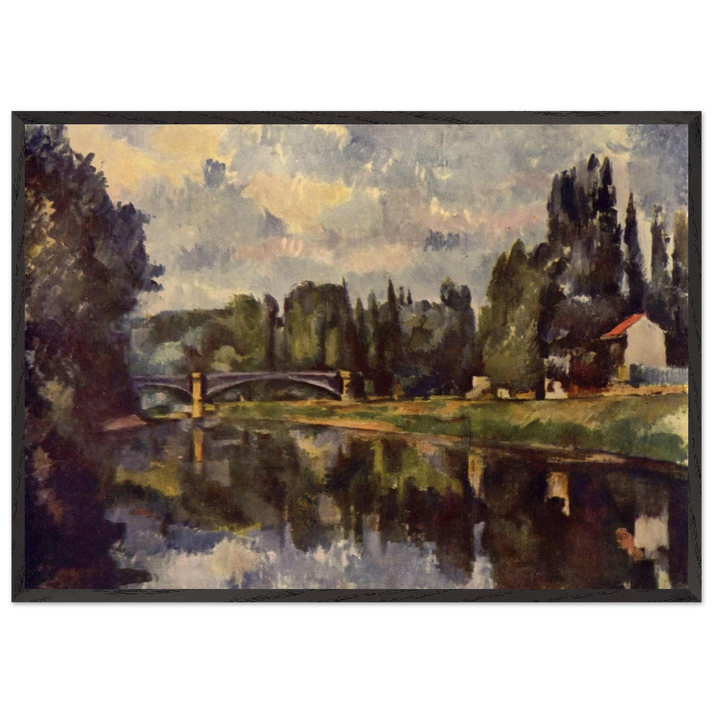
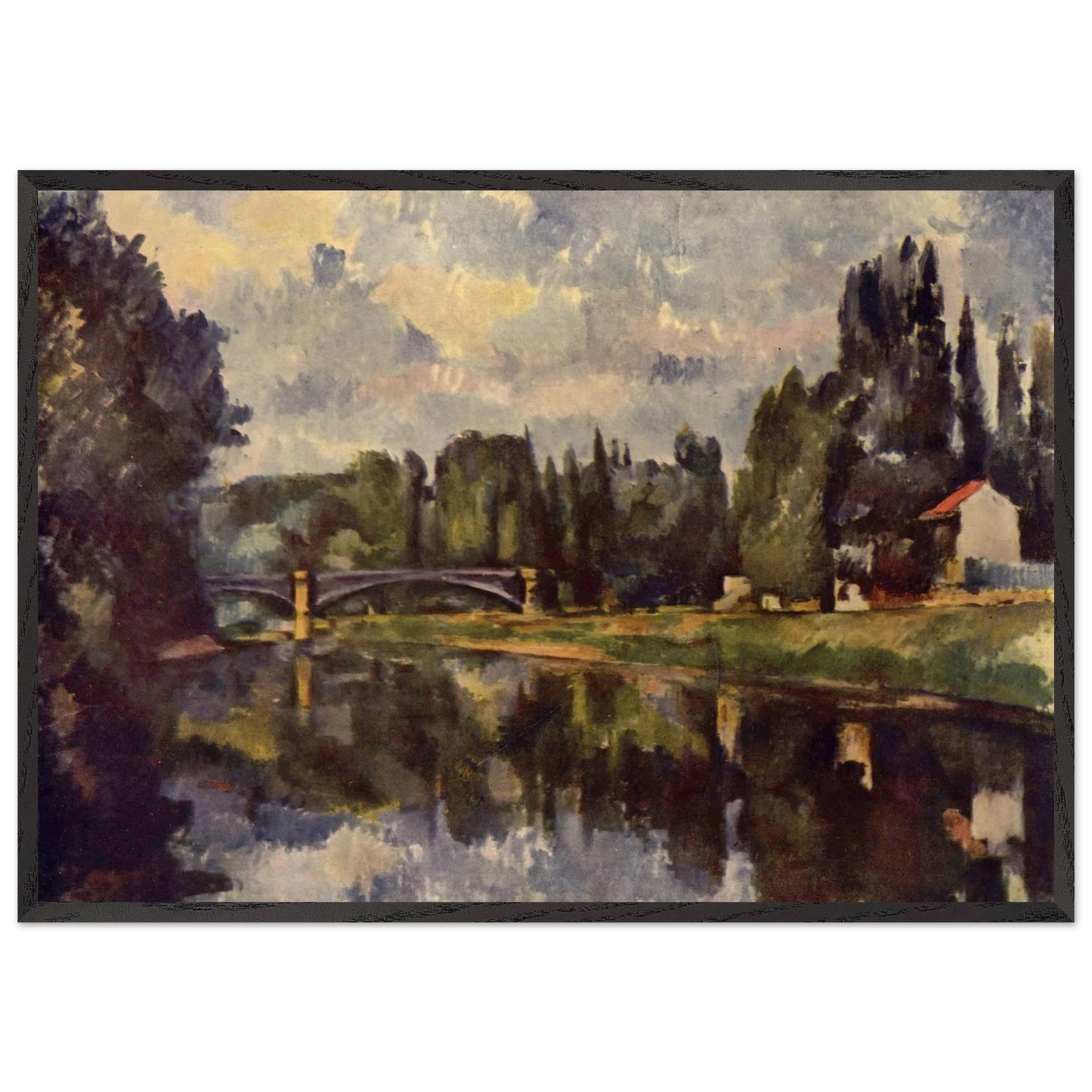
Bridge over the Marne - Paul Cezanne 70x100 cm / 28x40 inches Framed Art Print – Black Wooden Frame
Bridge over the Marne - Paul Cezanne 70x100 cm / 28x40 inches Framed Art Print – Black Wooden Frame
Couldn't load pickup availability
Elevate Your Space with Cézanne’s Bridge over the Marne
Experience the profound structural elegance of Paul Cézanne’s Bridge over the Marne. Painted during his mature period (circa 1888–1890), this masterpiece serves as a pivotal bridge between Impressionism and the dawn of 20th-century Cubism. Cézanne’s unique approach to landscape—utilizing rhythmic, constructive brushstrokes and a muted palette of greens and ochres—transforms a serene riverside scene into a rigorous exploration of geometric form and spatial depth. This 70x100 cm museum-quality reproduction captures the delicate reflections and the architectural stability that made Cézanne the 'father of us all,' according to Picasso and Matisse.
Museum-Grade Craftsmanship by RedKalion
At RedKalion, we honor the legacy of fine art through uncompromising production standards. This fine art print is rendered on premium 250 gsm (110 lb) archival paper. Unlike standard prints, our paper is natural white, uncoated, and acid-free, ensuring that the subtle tonal transitions of Cézanne's palette remain vibrant for generations. The 28x40 inch print is housed in a professional black wooden frame, providing a sophisticated, contemporary finish that complements both modern and traditional interiors.
- Archival Quality: 250 gsm museum-grade paper with a matte finishing for a glare-free viewing experience.
- Premium Framing: A 20mm (0.79") thick and wide black frame crafted from responsibly sourced oak and ash wood.
- Protective Glazing: Outfitted with shatterproof, transparent plexiglass to safeguard the artwork against dust and damage.
- Ready to Hang: Each framed print arrives with a pre-installed hanging kit for immediate installation.
- Sustainability: Printed on FSC-certified materials, ensuring an ethically produced addition to your collection.
By choosing this RedKalion reproduction, you are not merely purchasing a poster; you are investing in a meticulously curated piece of art history designed to endure as a focal point in your home or office.
Discover Unlimited Art Possibilities
At RedKalion, you can find virtually any artwork from any artist, available in a wide range of sizes to perfectly match your space.
If you didn’t find what you’re looking for, contact us at support@redkalion.com . We will source any artwork and produce it in any size and format you need, including art prints, posters, canvas, framed pieces, framed canvas, and more.
For dedicated art enthusiasts, we also offer handcrafted replicas of any artwork, carefully painted by highly skilled artists using traditional techniques.
For custom requests, contact us at support@redkalion.com .
What are the specific paper quality standards for this print?
We use 250 gsm (110 lb) natural white, archival-grade paper. It is uncoated and matte, providing a premium feel and ensuring long-term color stability for your Cézanne reproduction.
What characterizes the frame included with the 70x100 cm print?
The print features a 20mm (0.79") thick black wooden frame made from sustainably sourced oak and ash. It is wider than standard frames, offering enhanced durability and a gallery-style aesthetic.
How is the artwork protected during shipping and display?
Each framed print is protected by shatterproof, transparent plexiglass. For shipping, we utilize robust, protective packaging to ensure your artwork arrives in pristine condition, ready for display.
Is the Bridge over the Marne print ready to hang upon arrival?
Yes, every RedKalion framed art print includes a high-quality hanging kit, allowing you to mount the 28x40 inch masterpiece directly onto your wall with ease.
What is the archival longevity of this museum-quality reproduction?
By utilizing acid-free, FSC-certified 250 gsm paper and archival inks, our prints are designed to resist yellowing and fading, maintaining their museum-quality appearance for decades.
What is the historical significance of Cézanne's 'Bridge over the Marne'?
This work highlights Cézanne's transition toward Modernism. He focused on the 'passage' technique, where brushstrokes blend shapes and colors to emphasize the underlying geometry of the natural landscape.
Why did Cézanne choose the Marne river as a subject?
The Marne offered Cézanne a landscape of stillness and reflection. The water’s surface allowed him to experiment with vertical and horizontal planes, creating a balanced, structural harmony within the composition.