RedKalion
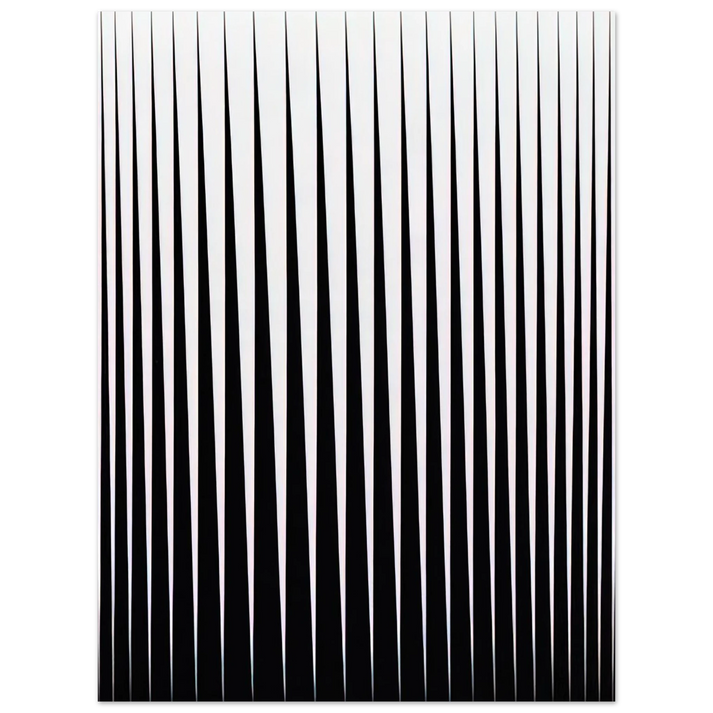
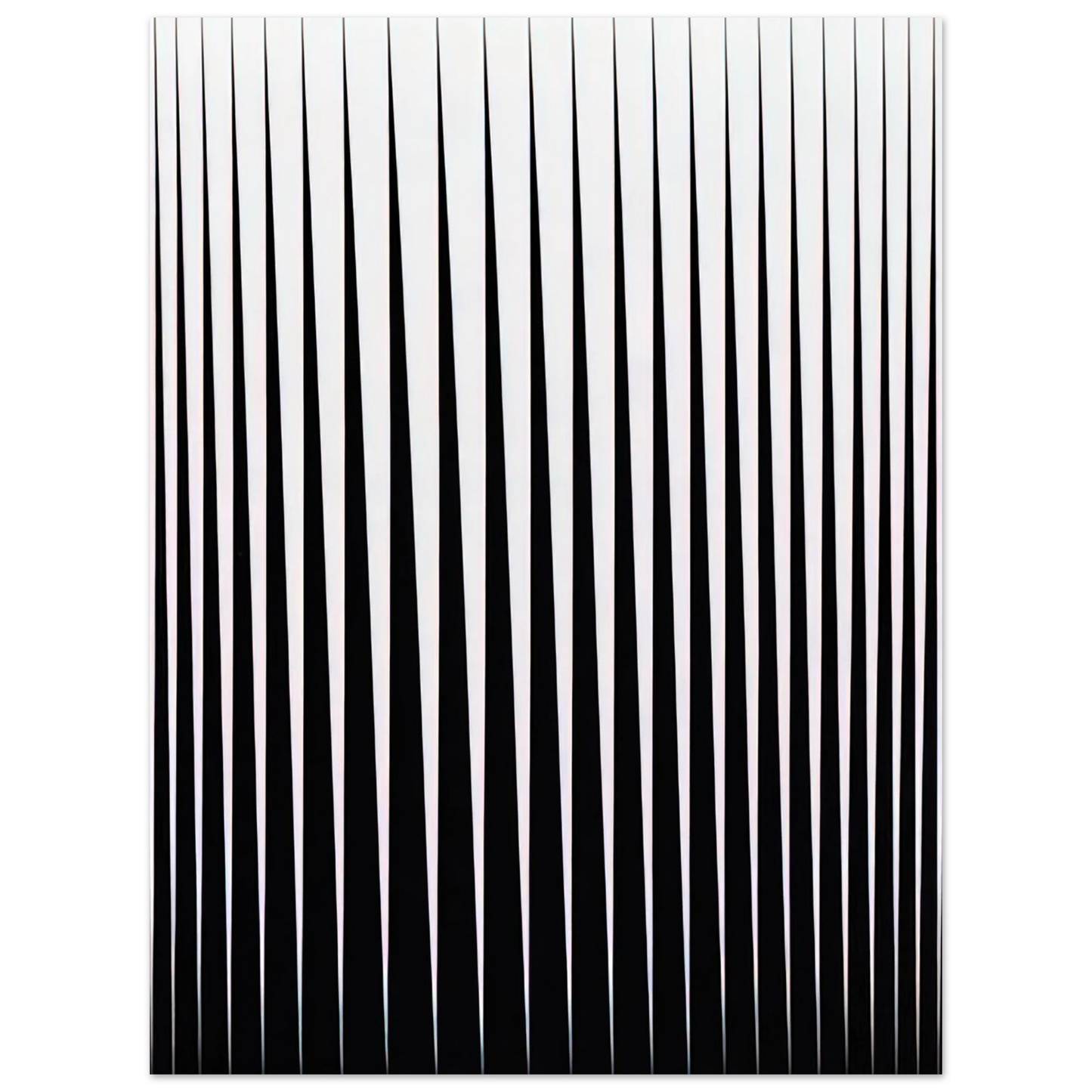
Bridget Riley - BREATHE 1966 75x100 cm / 30x40inches Fine Art Poster
Bridget Riley - BREATHE 1966 75x100 cm / 30x40inches Fine Art Poster
Couldn't load pickup availability
A Masterpiece of Perception: Bridget Riley’s Breathe (1966)
Experience the rhythmic pulse of Bridget Riley's 1966 masterpiece, 'Breathe'. This iconic Op Art fine art print captures the radical experimentation of the 1960s, where Riley mastered the ability to transform static geometric forms into a living, undulating experience. At 75x100 cm (30x40 inches), this museum-quality reproduction commands attention, inviting the viewer into a deep exploration of visual tension and release.
The Artistic Legacy of Op Art
In 'Breathe', Riley utilizes meticulously calculated vertical lines that vary in thickness and spacing, creating an optical illusion of expansion and contraction. This technique, a hallmark of the Op Art movement, engages the viewer's physiology, making the canvas appear to inhale and exhale. Our reproduction honors Riley’s precision, ensuring that the sharp contrasts and delicate gradients are preserved with absolute clarity.
Museum-Grade Archival Specifications
RedKalion is dedicated to curating works that endure. This Master's Edition archival print is produced on premium 250 gsm (110 lb) paper with a thickness of 0.29 mm (11.4 mils). The matte, uncoated finish provides a sophisticated, natural white (off-white) texture that eliminates glare, allowing the complex geometric patterns to take center stage. To ensure your investment stands the test of time, we use acid-free paper (pH above 7), preventing the yellowing or degradation common in lesser prints.
- Paper Weight: 250 gsm / 110 lb (Master's Edition)
- Sustainability: FSC-certified paper from responsibly managed forests
- Finish: Luxurious matte, natural white texture
- Durability: Archival-grade, acid-free composition
- Craftsmanship: Printed and shipped on demand with no minimum order requirements
Elevate your space with a cornerstone of modern abstraction. This RedKalion reproduction is not merely a poster; it is a sophisticated tribute to one of the 20th century’s most influential artists, designed for the discerning collector.
Discover Unlimited Art Possibilities
At RedKalion, you can find virtually any artwork from any artist, available in a wide range of sizes to perfectly match your space.
If you didn’t find what you’re looking for, contact us at support@redkalion.com . We will source any artwork and produce it in any size and format you need, including art prints, posters, canvas, framed pieces, framed canvas, and more.
For dedicated art enthusiasts, we also offer handcrafted replicas of any artwork, carefully painted by highly skilled artists using traditional techniques.
For custom requests, contact us at support@redkalion.com .
What defines the quality of this Bridget Riley fine art print?
This is a Master's Edition print using 250 gsm (110 lb) archival paper. The museum-quality weight and 0.29 mm thickness ensure a premium, substantial feel that far exceeds standard posters.
Is the paper used for 'Breathe' archival-grade?
Yes. The paper is acid-free with a pH level above 7, which prevents yellowing and preserves the stark black-and-white contrast of Riley's work for decades.
What is the finish of this Op Art reproduction?
The print features a matte, uncoated finish on natural white paper. This luxurious texture prevents glare and highlights the precise geometric lines of the artwork.
How is shipping handled for large-format prints?
Our 75x100 cm prints are printed and shipped on demand with no minimum order. We use specialized protective packaging to ensure your museum-quality reproduction arrives in pristine condition.
Is the paper sustainably sourced?
Absolutely. We use FSC-certified paper, ensuring that your fine art print meets the highest environmental and social standards for responsible forest management.
What was the inspiration behind Riley's 'Breathe' (1966)?
Riley sought to evoke physical sensations through visual stimuli. 'Breathe' specifically explores the concept of rhythmic compression, creating a kinetic energy that mimics the human respiratory cycle.
Why is 'Breathe' considered a cornerstone of Op Art?
It exemplifies Riley's transition into complex tonal variations within a monochrome palette, demonstrating how mathematical precision can create a powerful, subjective emotional response in the viewer.