
RedKalion
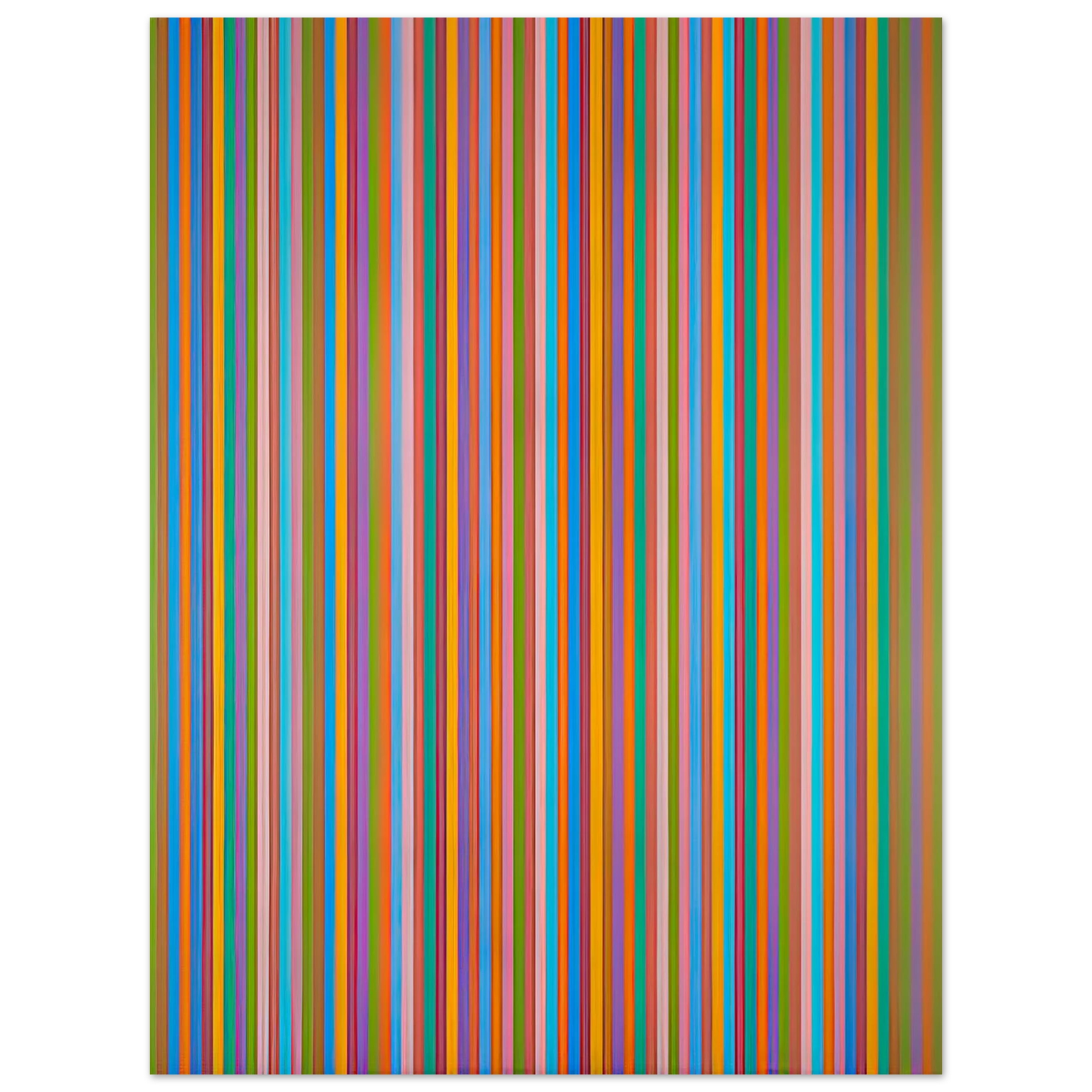
Bridget Riley - ECCLESIA 1985 75x100 cm / 30x40inches Fine Art Poster
Bridget Riley - ECCLESIA 1985 75x100 cm / 30x40inches Fine Art Poster
Couldn't load pickup availability
A Masterpiece of Rhythmic Color: Bridget Riley’s ECCLESIA (1985)
Elevate your space with a definitive expression of geometric abstraction. Bridget Riley’s ECCLESIA 1985 represents a pivotal era in the artist’s career, where she moved beyond the high-contrast black and white of the early Op Art movement into a sophisticated exploration of color relationships. In this 75x100 cm fine art print, Riley employs her signature vertical stripes to create a visual rhythm that suggests depth, light, and architectural space—fitting for a work whose title evokes the grandeur of the 'Ecclesia'.
Museum-Quality Craftsmanship by RedKalion
As a premier curator of world-class reproductions, RedKalion offers this museum-quality reproduction to the most discerning collectors. We utilize the Master's Edition archival paper, ensuring that every hue in Riley’s carefully constructed palette is rendered with absolute precision. The natural white (off-white), matte finish provides a luxurious, uncoated texture that eliminates glare, allowing the optical interaction of the colors to take center stage in any lighting environment.
Technical Specifications & Sustainability
- Paper Excellence: Heavyweight 250 gsm (110 lb) paper with a thickness of 0.29 mm (11.4 mils).
- Archival Integrity: Acid-free (pH above 7) to ensure the piece endures without yellowing or degradation over time.
- Sustainability: Printed on FSC-certified paper, supporting responsible forest management.
- Ethical Fulfillment: Each piece is printed and shipped on demand with no minimum order requirements, reducing environmental waste.
Experience the enduring legacy of one of the 20th century’s most influential artists with an archival masterpiece that brings the vibrant energy of 1980s abstraction into the modern home.
Discover Unlimited Art Possibilities
At RedKalion, you can find virtually any artwork from any artist, available in a wide range of sizes to perfectly match your space.
If you didn’t find what you’re looking for, contact us at support@redkalion.com . We will source any artwork and produce it in any size and format you need, including art prints, posters, canvas, framed pieces, framed canvas, and more.
For dedicated art enthusiasts, we also offer handcrafted replicas of any artwork, carefully painted by highly skilled artists using traditional techniques.
For custom requests, contact us at support@redkalion.com .
What is the quality of the paper used for this Bridget Riley print?
We use our Master's Edition archival paper, a premium 250 gsm (110 lb) natural white stock. This museum-quality paper is thick, durable, and provides a luxurious, uncoated matte finish for a truly professional fine art display.
Will the colors of ECCLESIA 1985 fade over time?
No. This print is produced on acid-free paper (pH above 7), which prevents yellowing and preserves the vibrancy of the pigments. It is designed to meet archival standards, ensuring the artwork remains an enduring part of your collection.
Is the paper used for this fine art poster sustainable?
Yes, RedKalion is committed to ethical standards. We use FSC-certified paper, which ensures the material comes from responsibly managed forests that provide environmental, social, and economic benefits.
How is the artwork shipped and fulfilled?
We print and ship on demand, meaning there is no excess stock or waste. Your order is processed with care and shipped in robust packaging to ensure it arrives at your door in pristine condition.
What is the finish and texture of the ECCLESIA 1985 print?
This fine art reproduction features a matte, uncoated finish. The natural white (off-white) color of the paper adds a sophisticated texture and prevents the glare often found on lower-quality gloss posters.
What does 'Ecclesia' signify in Bridget Riley’s 1980s work?
By 1985, Riley was exploring 'the color of light.' ECCLESIA refers to an architectural and communal sense of space, using vertical stripes to create a rhythmic, vibrating field of color that suggests structural depth.
How does this piece differ from Riley's earlier Op Art?
While her 1960s work focused on black-and-white optical illusions, ECCLESIA 1985 demonstrates her mastery of the 'Egyptian Palette.' She used a specific set of colors to explore how hues interact and change when placed side-by-side.