RedKalion
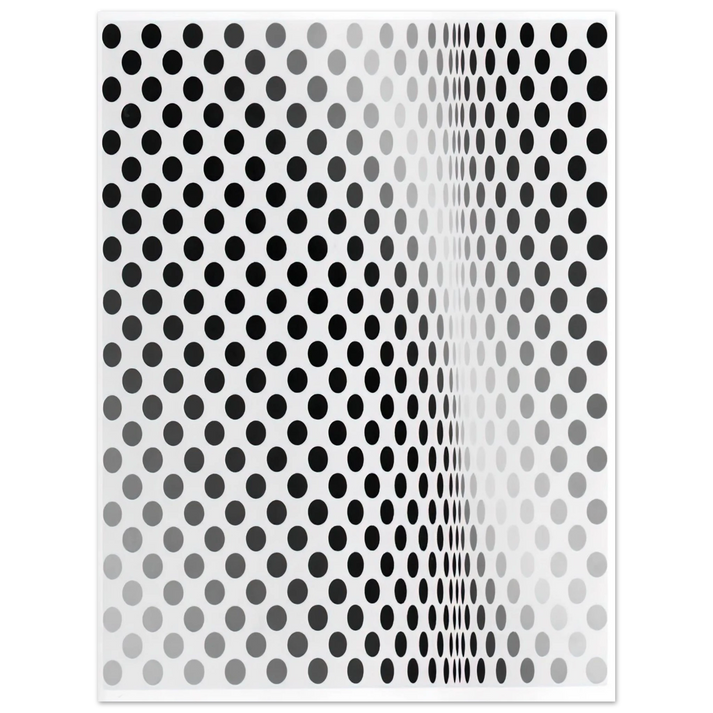
Bridget Riley - PAUSE 1964 75x100 cm / 30x40inches Fine Art Poster
Bridget Riley - PAUSE 1964 75x100 cm / 30x40inches Fine Art Poster
Couldn't load pickup availability
Experience the Optical Rhythm of Bridget Riley's Pause (1964)
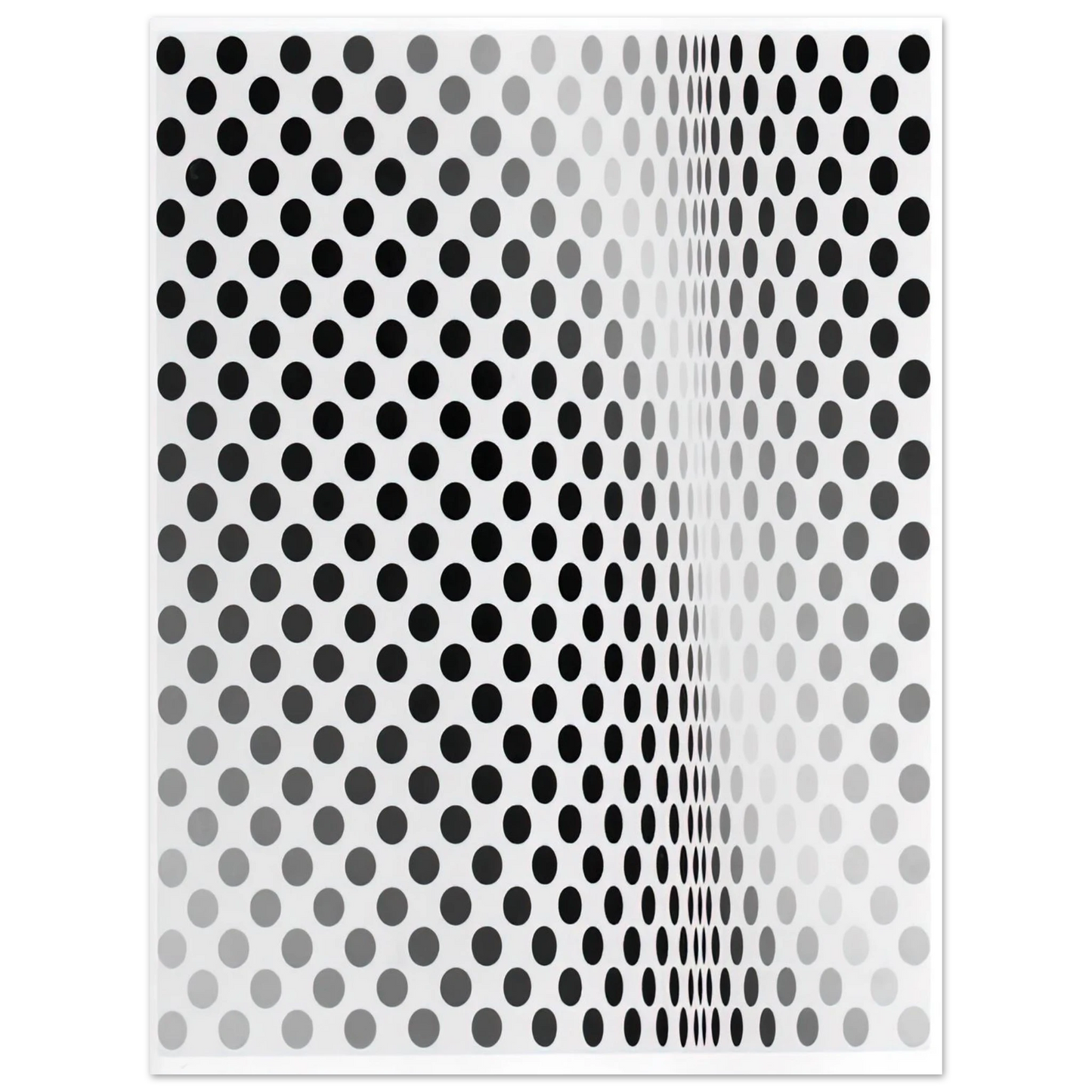
Step into the vanguard of British abstraction with this museum-quality reproduction of Bridget Riley's 1964 masterpiece, Pause. As a central figure in the Op Art movement, Riley utilizes geometric precision to challenge human perception. In this particular work, the rhythmic compression of circles creates a powerful sense of depth and tension, making it a cornerstone for collectors of mid-century modernism and contemporary minimalism.
RedKalion is proud to offer this archival fine art print, meticulously curated to preserve the integrity of Riley’s vision. Our Master's Edition archival paper provides a natural white, matte finish that eliminates glare, allowing the stark contrast and subtle nuances of the monochromatic composition to take center stage. This 75x100 cm (30x40 inches) piece serves as a sophisticated focal point for any interior seeking an element of intellectual movement.
- Archival Quality: Printed on 250 gsm (110 lb) acid-free paper to ensure your investment remains pristine for generations without yellowing.
- Sustainable Elegance: Each piece is crafted using FSC-certified paper, reflecting a commitment to both environmental responsibility and artistic excellence.
- Museum-Grade Texture: The thickness of 0.29 mm (11.4 mils) provides a substantial, luxurious feel, mirroring the weight of paper found in world-class galleries.
- Sophisticated Finish: The uncoated, off-white surface ensures the depth of the black tones remains rich and consistent from any viewing angle.
Discover Unlimited Art Possibilities
At RedKalion, you can find virtually any artwork from any artist, available in a wide range of sizes to perfectly match your space.
If you didn’t find what you’re looking for, contact us at support@redkalion.com . We will source any artwork and produce it in any size and format you need, including art prints, posters, canvas, framed pieces, framed canvas, and more.
For dedicated art enthusiasts, we also offer handcrafted replicas of any artwork, carefully painted by highly skilled artists using traditional techniques.
For custom requests, contact us at support@redkalion.com .
What are the material specifications of the Bridget Riley Pause 1964 print?
The print is produced on Master's Edition 250 gsm (110 lb) archival paper. It features a matte, uncoated, natural white finish with a thickness of 0.29 mm, ensuring a museum-quality texture.
How does the archival quality prevent the print from aging?
Our paper is acid-free with a pH above 7, which chemically prevents the yellowing or degradation of the fibers over time, ensuring your Bridget Riley reproduction remains gallery-fresh for decades.
Is this product sustainably sourced?
Yes, all prints from RedKalion use FSC-certified paper or equivalent certifications. This ensures that the materials for your fine art poster are harvested in a socially and environmentally responsible manner.
How is the print fulfilled and shipped?
RedKalion utilizes a print-on-demand model with no minimum orders. Each Bridget Riley Pause print is carefully packaged and shipped to ensure it arrives in perfect condition at your doorstep.
What is the exact size of this Bridget Riley poster?
This specific edition is produced at 75x100 cm, which translates to approximately 30x40 inches, making it a standard large-format size ideal for statement framing.
What is the historical significance of Pause (1964) in the Op Art movement?
Pause is a seminal work where Riley explored the 'compression' of shapes. By altering the intervals between circles, she creates a visual sensation of the surface vibrating or curving, a hallmark of 1960s Optical Art.
Why is a matte finish preferred for Bridget Riley's geometric works?
A matte finish is essential for Op Art because it eliminates light reflections. This allows the viewer to focus entirely on the geometric patterns and the intended optical illusions without visual interference.