RedKalion
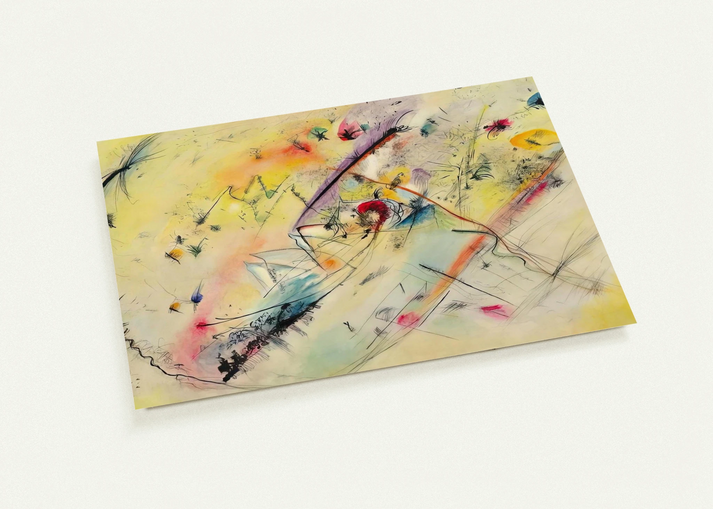
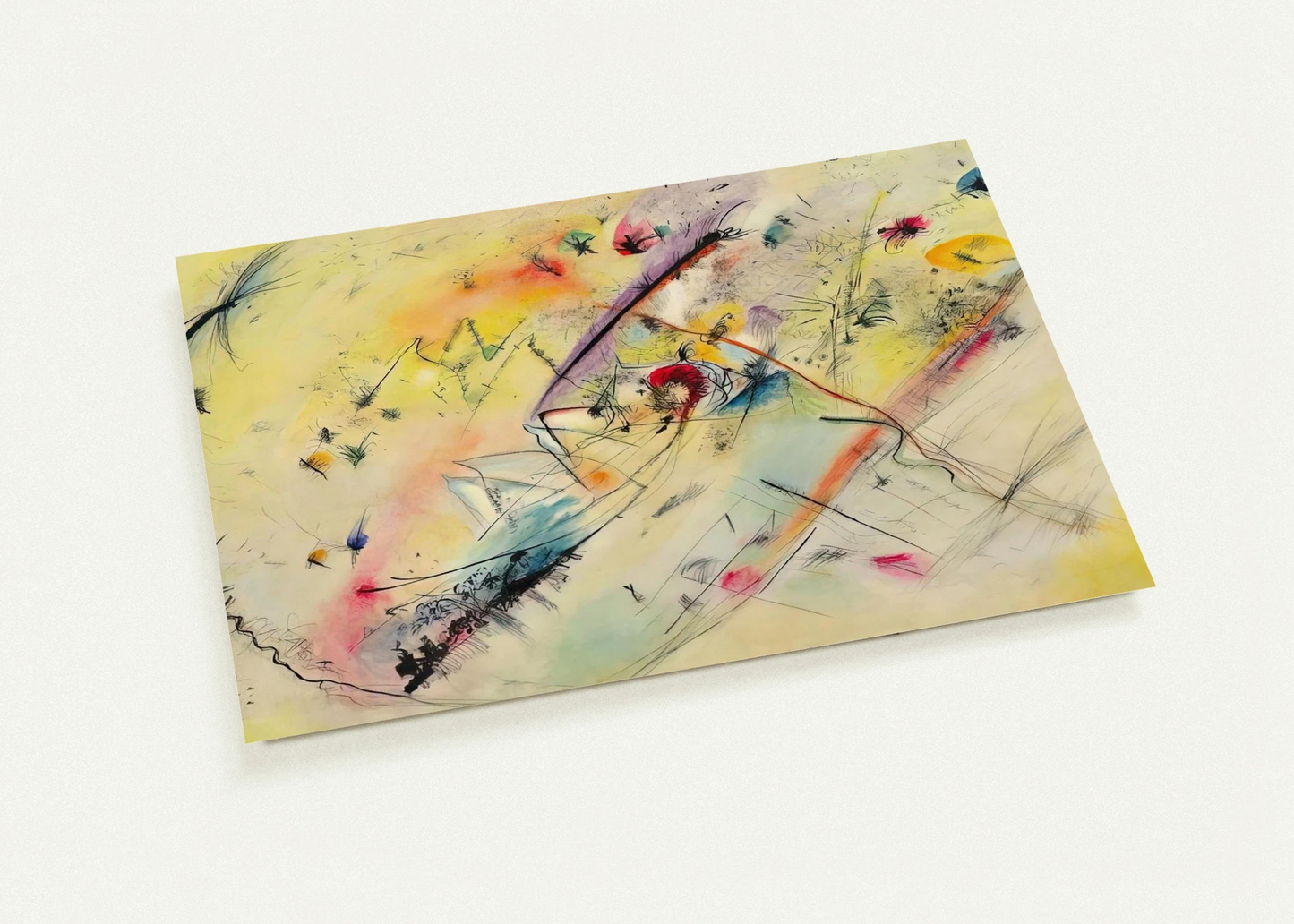
BRIGHT PICTURE 1913 By Wassily Kandinsky Pack of 10 Post Cards | Wassily Kandinsky Post Cards | A6 (10.5 x 14.8 cm) - 4.1 x 5.8 inches
BRIGHT PICTURE 1913 By Wassily Kandinsky Pack of 10 Post Cards | Wassily Kandinsky Post Cards | A6 (10.5 x 14.8 cm) - 4.1 x 5.8 inches
Couldn't load pickup availability
Elevate Your Correspondence with Wassily Kandinsky's Abstract Vision
Step into the revolutionary world of 1913, a pivotal year when Wassily Kandinsky fundamentally altered the course of art history. Our Bright Picture (Helles Bild) postcard set brings this masterwork of early abstraction into your hands. This specific piece represents the zenith of Kandinsky's pre-war period, where form and color break free from representational constraints to evoke a purely spiritual and emotional response—a concept the artist famously explored in his treatise, Concerning the Spiritual in Art.
Museum-Grade Precision in Every Print
At RedKalion, we bridge the gap between historical masterpiece and modern tactile experience. These are not standard stationery items; they are archival-grade reproductions. Utilizing 12-color fine art printing technology, we achieve a chromatic depth and accuracy that far exceeds conventional 4-color printing. Every fluid line and vibrant hue of Kandinsky’s composition is rendered with stunning clarity on 200 gsm (80 lb) FSC-certified paper.
Exquisite Specifications for the Discerning Collector
- Artistic Significance: A faithful reproduction of the 1913 masterpiece, capturing the rhythmic energy of the Der Blaue Reiter movement.
- Premium Texture: A smooth matte finish ensures a glare-free viewing experience, highlighting the 0.26 mm thickness of the archival stock.
- Sustainability: Printed on demand on environmentally conscious, FSC-certified paper to minimize waste.
- Versatility: While perfect for correspondence, the weight and vibrancy of these A6 cards make them suitable for small-scale framing and display.
Invite the complexity of the avant-garde into your daily life. Whether shared with a fellow connoisseur or kept as a personal collection of mini-masterpieces, these postcards serve as an enduring testament to the power of abstract expressionism.
Discover Unlimited Art Possibilities
At RedKalion, you can find virtually any artwork from any artist, available in a wide range of sizes to perfectly match your space.
If you didn’t find what you’re looking for, contact us at support@redkalion.com . We will source any artwork and produce it in any size and format you need, including art prints, posters, canvas, framed pieces, framed canvas, and more.
For dedicated art enthusiasts, we also offer handcrafted replicas of any artwork, carefully painted by highly skilled artists using traditional techniques.
For custom requests, contact us at support@redkalion.com .
What makes these Kandinsky postcards "museum-quality"?
Unlike standard cards, we use 12-color fine art printing. This professional giclée process ensures vivid, accurate colors and deep gradients that mirror the original 1913 oil painting's complexity.
What is the weight and feel of the paper?
Each card is printed on 200 gsm (80 lb) paper with a thickness of 0.26 mm. The smooth matte finish provides a sophisticated, non-reflective surface that is tactile and durable.
Is the paper sourced sustainably?
Yes. RedKalion is committed to conservation; all postcards are printed on FSC-certified paper, ensuring the materials are sourced from responsibly managed forests.
How are these postcards produced and shipped?
We utilize a print-on-demand model to reduce environmental impact. Your set of 10 postcards is produced specifically for you, ensuring the highest quality control before being dispatched.
Can these postcards be framed as fine art prints?
Absolutely. Due to the 12-color archival printing and heavy paper weight, these A6 cards function as high-end miniature prints suitable for framing in small spaces.
What was Kandinsky's artistic goal with Bright Picture (1913)?
In 1913, Kandinsky aimed to achieve "synesthesia," where colors evoked musical sounds. Bright Picture is a study in emotional resonance through non-objective forms and harmonic color theory.
Why is 1913 considered a significant year for Kandinsky's work?
1913 was the peak of Kandinsky's expressive abstraction before WWI. During this time, he moved away from landscape references toward the pure, rhythmic compositions seen in Bright Picture.