RedKalion
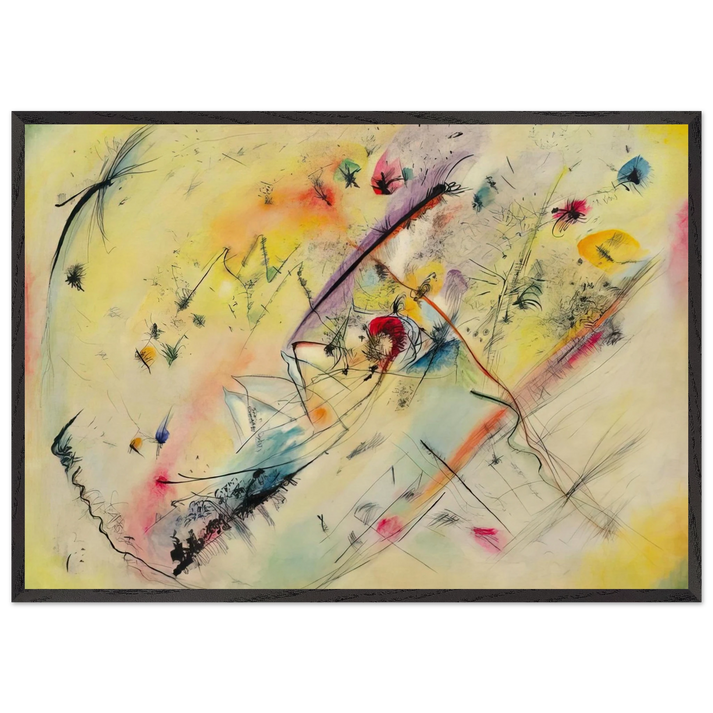
BRIGHT PICTURE 1913 - Wassily Kandinsky 70x100 cm / 28x40 inches Framed Art Print – Black Wooden Frame
BRIGHT PICTURE 1913 - Wassily Kandinsky 70x100 cm / 28x40 inches Framed Art Print – Black Wooden Frame
Couldn't load pickup availability
Elevate Your Space with Wassily Kandinsky’s Bright Picture (1913)
Immerse yourself in the rhythmic energy of Bright Picture (Helles Bild), a seminal 1913 masterpiece by Wassily Kandinsky. As a pioneer of abstract art, Kandinsky utilized this composition to explore the profound connection between color and sound—a phenomenon known as synesthesia. This museum-quality reproduction captures the explosive transition from representational form to pure emotional expression that defined the Der Blaue Reiter (The Blue Rider) period.
Museum-Grade Reproduction for Discerning Collectors
At RedKalion, we honor Kandinsky's legacy by utilizing archival museum-quality paper. This natural white, matte, uncoated paper has a weight of 250 gsm (110 lb) and a thickness of 0.29 mm, ensuring the vibrant primaries and complex secondary tones of the 1913 original remain vivid for generations. Our commitment to quality means your fine art print is not just a decoration, but a lasting investment in aesthetic excellence.
Premium Framing and Sustainable Craftsmanship
Your 70x100 cm (28x40 inches) masterpiece arrives in a sophisticated black wooden frame, expertly crafted from responsibly sourced oak and ash. Our frames feature a refined 20mm (0.79") profile—providing a more substantial, premium presence than standard commercial frames. Each piece is protected by shatterproof plexiglass, ensuring your artwork remains safe while maintaining crystal-clear visibility.
- Sustainable Choice: Printed on FSC-certified materials, supporting global reforestation efforts.
- Ready to Hang: Includes a professional hanging kit for immediate installation.
- Sophisticated Finish: The archival matte finish eliminates glare, allowing the intricate linework of Kandinsky to shine under any lighting.
Transform your interior into a private gallery with this archival masterpiece that endures, curated by the experts at RedKalion.

Discover Unlimited Art Possibilities
At RedKalion, you can find virtually any artwork from any artist, available in a wide range of sizes to perfectly match your space.
If you didn’t find what you’re looking for, contact us at support@redkalion.com . We will source any artwork and produce it in any size and format you need, including art prints, posters, canvas, framed pieces, framed canvas, and more.
For dedicated art enthusiasts, we also offer handcrafted replicas of any artwork, carefully painted by highly skilled artists using traditional techniques.
For custom requests, contact us at support@redkalion.com .
What are the paper specifications for this Kandinsky print?
We use 250 gsm (110 lb) natural white, matte, archival museum-quality paper. It is uncoated and features a thickness of 0.29 mm, ensuring your museum-quality reproduction is durable and vibrant.
Is the frame made from high-quality materials?
Yes, our frames are made from responsibly sourced, FSC-certified oak and ash wood. They measure 20mm (0.79") in width and thickness, providing a sturdy, premium feel compared to standard thin frames.
How is the artwork protected during shipping and on the wall?
We use shatterproof, transparent plexiglass to protect the print from dust and impact. Every order is shipped in secure packaging to ensure it arrives in pristine condition at your doorstep.
Is the artwork ready to hang upon arrival?
Absolutely. Your framed Kandinsky print includes a professional hanging kit, allowing you to elevate your space immediately without needing additional hardware.
Are RedKalion prints environmentally friendly?
Yes, we prioritize sustainability. All paper and wood materials are FSC-certified or equivalent, ensuring that your fine art print supports responsible forest management.
What is the significance of Bright Picture in Kandinsky’s career?
Created in 1913, Bright Picture marks a pivotal moment where Kandinsky moved toward total abstraction. It reflects his theory that colors evoke specific spiritual and musical resonances, independent of physical objects.
What art movement does this piece belong to?
This work belongs to German Expressionism, specifically the Der Blaue Reiter (The Blue Rider) movement, which focused on spiritual truths and the emotive power of abstract form.