

RedKalion
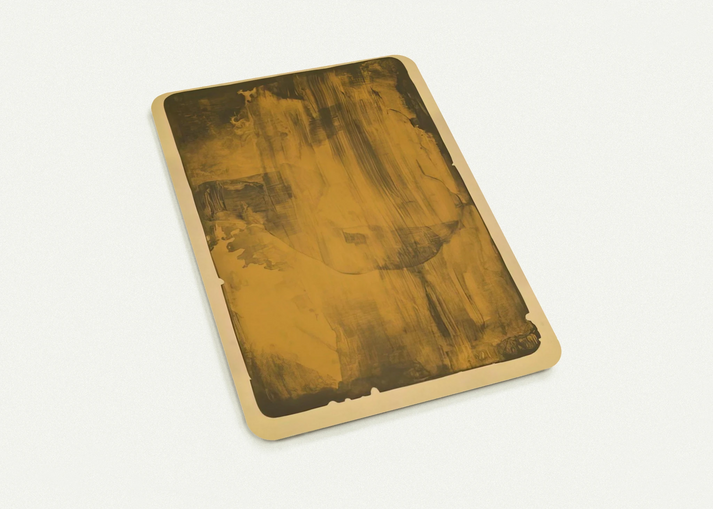
Bronze Smoke - 1978 By Helen Frankenthaler Pack of 10 Post Cards | Helen Frankenthaler Post Cards | A6 (10.5 x 14.8 cm) - 4.1 x 5.8 inches
Bronze Smoke - 1978 By Helen Frankenthaler Pack of 10 Post Cards | Helen Frankenthaler Post Cards | A6 (10.5 x 14.8 cm) - 4.1 x 5.8 inches
Couldn't load pickup availability
Capturing the Ethereal: Bronze Smoke (1978) by Helen Frankenthaler
Experience the atmospheric depth and fluid elegance of Bronze Smoke (1978), a definitive masterwork by the legendary Helen Frankenthaler. As a pioneer of the 'soak-stain' technique, Frankenthaler redefined the boundaries of Abstract Expressionism, and this piece exemplifies her transition into the complex, layered palettes of the late 1970s. These museum-quality Helen Frankenthaler postcards offer a tactile connection to her legacy, allowing you to share or display a fragment of art history.
Unrivaled Print Quality and Material Excellence
At RedKalion, we believe fine art deserves a superior medium. This pack of 10 flat postcards is produced using our 12-color fine art printing technology. Unlike standard 4-color inkjet processes, our method captures the subtle tonal shifts and 'smoke' textures of the original 1978 composition with breathtaking accuracy and vibrancy. Each card is printed on 200 gsm (80 lb) FSC-certified paper, featuring a smooth matte finish that eliminates glare while maintaining a thickness of 0.26 mm (10.3 mils) for a premium, substantial feel.
A Sustainable Choice for the Discerning Curator
Our commitment to archival longevity is matched only by our dedication to the environment. These postcards are printed on demand to minimize waste and utilize eco-friendly, responsibly sourced materials. Whether used for personalized correspondence or as a curated set for a small-scale gallery wall, these prints serve as an enduring testament to Frankenthaler’s vision. Elevate your collection with a museum-quality reproduction that honors the artist's original intent while meeting the highest standards of modern sustainable craftsmanship.


Discover Unlimited Art Possibilities
At RedKalion, you can find virtually any artwork from any artist, available in a wide range of sizes to perfectly match your space.
If you didn’t find what you’re looking for, contact us at support@redkalion.com . We will source any artwork and produce it in any size and format you need, including art prints, posters, canvas, framed pieces, framed canvas, and more.
For dedicated art enthusiasts, we also offer handcrafted replicas of any artwork, carefully painted by highly skilled artists using traditional techniques.
For custom requests, contact us at support@redkalion.com .
What characterizes Helen Frankenthaler's 'Bronze Smoke' (1978)?
'Bronze Smoke' reflects Frankenthaler’s mastery of the soak-stain technique, utilizing thinned pigments to create ethereal, atmospheric layers. This 1978 piece demonstrates a shift toward more complex, earthy tones compared to her earlier, brighter color field works.
Why is Helen Frankenthaler's work significant in modern art history?
What printing technology is used for these Helen Frankenthaler postcards?
We utilize advanced 12-color fine art printing technology. This ensures the vivid, accurate color reproduction and stunning depth necessary to capture the nuances of Frankenthaler’s original abstract compositions.
What are the paper specifications for this pack?
The postcards are printed on 200 gsm (80 lb) FSC-certified paper with a thickness of 0.26 mm (10.3 mils). They feature a smooth matte finish for a clean, glare-free display.
Are these postcards environmentally friendly?
Yes. Our postcards are printed on demand to reduce overproduction and use FSC-certified paper, ensuring the materials are sourced from responsibly managed forests.
Can these postcards be framed as mini art prints?
Absolutely. Due to the high-weight 200 gsm paper and 12-color archival printing, these A6 cards are ideal for small-scale framing and long-term display.
How does the 12-color print differ from standard postcard printing?
Standard printing uses only four colors (CMYK), which can flatten complex artworks. Our 12-color process provides a much wider color gamut, capturing the specific bronze and smoky hues of the 1978 original.