

RedKalion
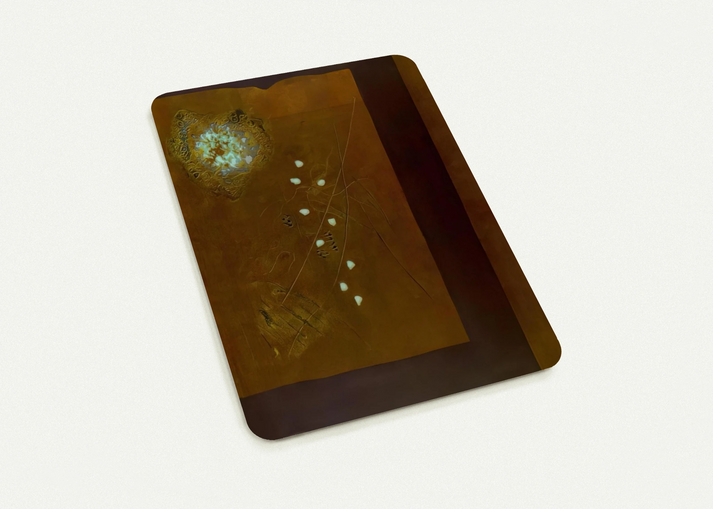
Brown Wall - 1971 By Hiroyuki Tajima Pack of 10 Post Cards | Hiroyuki Tajima Post Cards | A6 (10.5 x 14.8 cm) - 4.1 x 5.8 inches
Brown Wall - 1971 By Hiroyuki Tajima Pack of 10 Post Cards | Hiroyuki Tajima Post Cards | A6 (10.5 x 14.8 cm) - 4.1 x 5.8 inches
Couldn't load pickup availability
The Architectural Serenity of Hiroyuki Tajima’s Brown Wall (1971)
Experience the profound textural depth of Mid-Century Japanese abstraction with this exclusive pack of 10 fine art postcards featuring Brown Wall - 1971 by Hiroyuki Tajima. As a leading figure in the Sōsaku-hanga (creative print) movement, Tajima was renowned for his ability to transform abstract concepts into tactile, atmospheric experiences. This 1971 masterpiece is a testament to his late-career mastery, where he moved beyond traditional woodblock techniques to incorporate shellac and other materials, creating surfaces that mimic weathered stone and ancient architecture.
At RedKalion, we believe such significant works of art deserve to be shared and preserved. These postcards are not merely stationery; they are museum-quality reproductions designed to bring a touch of archival sophistication to your correspondence or interior decor. Whether used for a thoughtful note or displayed as a curated miniature gallery, these prints embody the quiet power of Tajima’s vision.
Uncompromising Print Quality and Material Excellence
- 12-Color Fine Art Printing: We utilize advanced 12-color technology to capture the subtle ochre, burnt umber, and sepia tones of Tajima’s palette, ensuring a depth that standard 4-color printing simply cannot replicate.
- Premium Matte Finish: Each card features a smooth, glare-free matte finish on 200 gsm (80 lb) paper, providing a substantial, luxurious feel at 0.26 mm thickness.
- Archival Integrity: Printed on FSC-certified, environmentally conscious paper, these cards are designed to resist fading and endure as long-lasting keepsakes.
- A6 Precision: Sized perfectly at 10.5 x 14.8 cm (4.1 x 5.8 inches), they are ideal for standard mailing or framing in small-format shadow boxes.
By choosing RedKalion, you are investing in a piece of art history curated with expertise. Elevate your space and your sentiments with an archival masterpiece that celebrates the enduring legacy of Hiroyuki Tajima.


Discover Unlimited Art Possibilities
At RedKalion, you can find virtually any artwork from any artist, available in a wide range of sizes to perfectly match your space.
If you didn’t find what you’re looking for, contact us at support@redkalion.com . We will source any artwork and produce it in any size and format you need, including art prints, posters, canvas, framed pieces, framed canvas, and more.
For dedicated art enthusiasts, we also offer handcrafted replicas of any artwork, carefully painted by highly skilled artists using traditional techniques.
For custom requests, contact us at support@redkalion.com .
What makes the printing quality of these Hiroyuki Tajima postcards unique?
We use 12-color fine art printing technology, which offers superior color vibrancy and accuracy compared to standard inkjet methods, perfectly capturing the nuanced textures of Tajima’s abstract compositions.
What is the weight and feel of the postcard paper?
Each postcard is printed on 200 gsm (80 lb) paper with a 0.26 mm thickness. The smooth matte finish ensures a professional, glare-free aesthetic that feels substantial in hand.
Are these postcards environmentally friendly?
Yes. RedKalion uses FSC-certified paper, ensuring that your art reproductions are sourced from responsibly managed forests and produced using sustainable practices.
Can these postcards be sent through standard mail?
Absolutely. These are standard A6 size (10.5 x 14.8 cm), making them perfect for international mailing or as sophisticated inserts for gifts and frames.
How does RedKalion handle production and shipping?
Each pack is printed on demand to reduce waste. We maintain a no-minimum order policy, ensuring your fine art prints are created specifically for you with meticulous care.
What artistic movement does Brown Wall - 1971 represent?
This work belongs to the Sōsaku-hanga movement, where artists insisted on being the sole creator—drawing, carving, and printing—to ensure the artwork was a direct expression of their soul.
Why is the texture so significant in Tajima's work?
Tajima pioneered the use of mixed media in printmaking, using materials like shellac and resins to create the cratered, three-dimensional look seen in Brown Wall, evoking architectural decay and geological time.