RedKalion
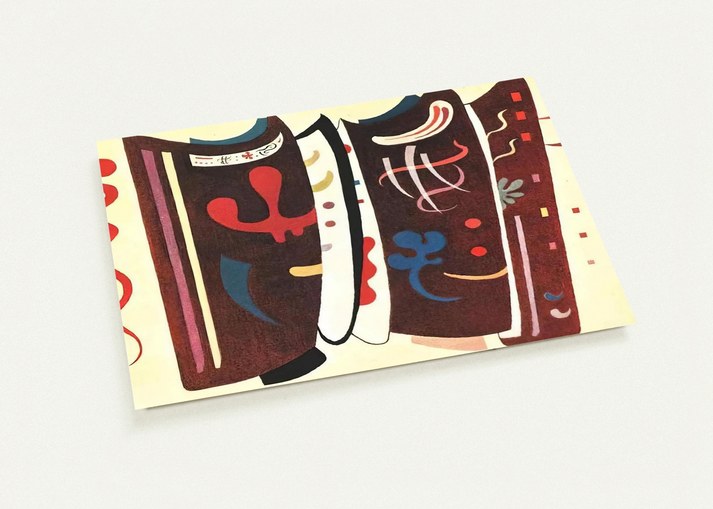
BROWN WITH SUPPLEMENT 1935 By Wassily Kandinsky Pack of 10 Post Cards | Wassily Kandinsky Post Cards | A6 (10.5 x 14.8 cm) - 4.1 x 5.8 inches
BROWN WITH SUPPLEMENT 1935 By Wassily Kandinsky Pack of 10 Post Cards | Wassily Kandinsky Post Cards | A6 (10.5 x 14.8 cm) - 4.1 x 5.8 inches
Couldn't load pickup availability
The Lyricism of Form: Wassily Kandinsky’s Brown with Supplement (1935)
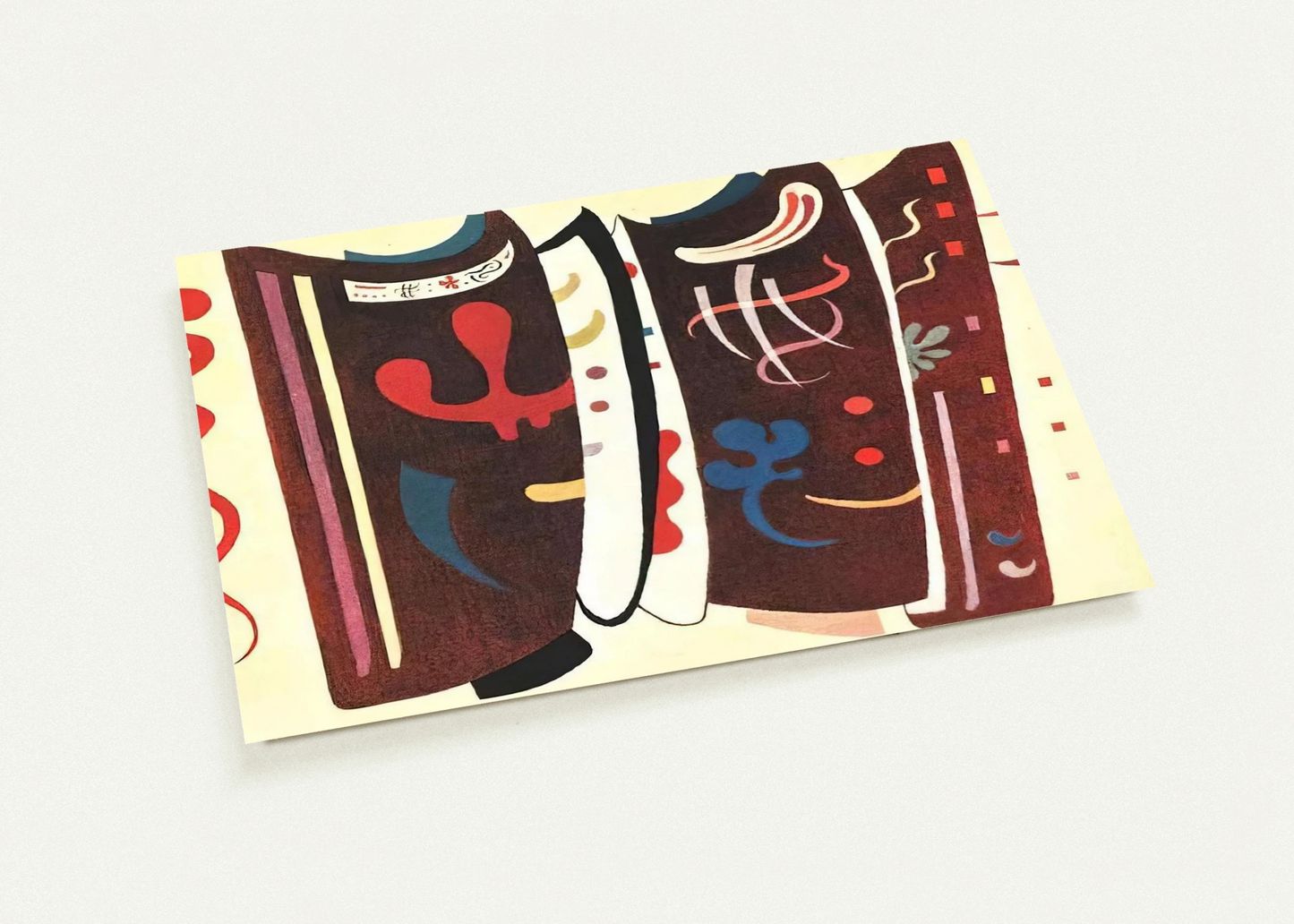
Experience the visionary abstraction of Wassily Kandinsky with this exquisite pack of ten fine art postcards featuring Brown with Supplement (1935). Painted during the artist's prolific Paris period, this work signifies a masterful transition from the geometric rigors of the Bauhaus toward a more organic, biomorphic aesthetic. RedKalion is proud to offer these museum-quality reproductions, allowing you to curate a personal gallery or share a sentiment of timeless sophistication.
A Masterpiece of the Paris Period
By 1935, Kandinsky had fully embraced a lyrical style, populating his canvases with cell-like forms and rhythmic, calligraphic lines. In Brown with Supplement, the earthy, grounded central field is balanced by floating 'supplementary' elements that evoke a sense of microscopic life and cosmic order. Our fine art postcards capture the subtle tonal shifts and intricate textures of the original composition with breathtaking fidelity, reflecting Kandinsky’s belief that color and form could resonate directly with the human soul.
Exacting Material Specifications
At RedKalion, we bridge the gap between historical art and modern archival standards. These postcards are not merely stationery; they are miniature masterpieces crafted to the following specifications:
- 12-Color Fine Art Printing: Utilizing state-of-the-art technology, we achieve a color depth and accuracy that far surpasses standard 4-color printing.
- Archival Paper: Each card is printed on 200 gsm (80 lb) paper with a thickness of 0.26 mm, providing a substantial and premium tactile experience.
- Smooth Matte Finish: A clean, glare-free display ensures the artwork remains the focus, regardless of lighting conditions.
- Sustainable Excellence: We use FSC-certified, environmentally conscious paper, ensuring your love for art also supports the planet.
Whether used for sophisticated correspondence or framed as a coordinated set, these archival-grade postcards bring the genius of Wassily Kandinsky into your daily life. Elevate your space with a legacy of abstraction that endures.
Discover Unlimited Art Possibilities
At RedKalion, you can find virtually any artwork from any artist, available in a wide range of sizes to perfectly match your space.
If you didn’t find what you’re looking for, contact us at support@redkalion.com . We will source any artwork and produce it in any size and format you need, including art prints, posters, canvas, framed pieces, framed canvas, and more.
For dedicated art enthusiasts, we also offer handcrafted replicas of any artwork, carefully painted by highly skilled artists using traditional techniques.
For custom requests, contact us at support@redkalion.com .
What is the print quality of these Kandinsky postcards?
We use 12-color fine art printing technology. This ensures vivid, museum-quality color accuracy and stunning depth that far exceeds standard inkjet reproductions, capturing every nuance of Kandinsky’s 1935 palette.
Are the materials used for these cards eco-friendly?
Yes. All postcards are printed on environmentally conscious, FSC-certified paper. We prioritize sustainability alongside archival quality, ensuring our fine art prints are as responsible as they are beautiful.
What paper finish is used for the Brown with Supplement cards?
These cards feature a smooth matte finish. This provides a clean, glare-free surface that highlights the detail and texture of the artwork without distracting reflections.
How are these postcards produced and shipped?
Each pack is printed on demand with no minimum order requirements. This process reduces waste and ensures that your specific set of 10 postcards meets our rigorous quality control standards before shipping.
What are the physical dimensions and weight of the cards?
The postcards are A6 size (10.5 x 14.8 cm). They are printed on 200 gsm (80 lb) paper with a thickness of 0.26 mm, offering a sturdy, premium feel.
What is the significance of the "Paris Period" in this 1935 work?
Kandinsky’s Paris period (1933–1944) saw him move away from rigid geometry toward biomorphic shapes inspired by biology, making Brown with Supplement a key example of his late-career lyrical abstraction.
Why is Kandinsky’s work considered "biomorphic"?
Biomorphic abstraction refers to the use of organic, fluid shapes that resemble microscopic organisms or natural cells, a style Kandinsky perfected in the mid-1930s to express the vitality of life.