RedKalion
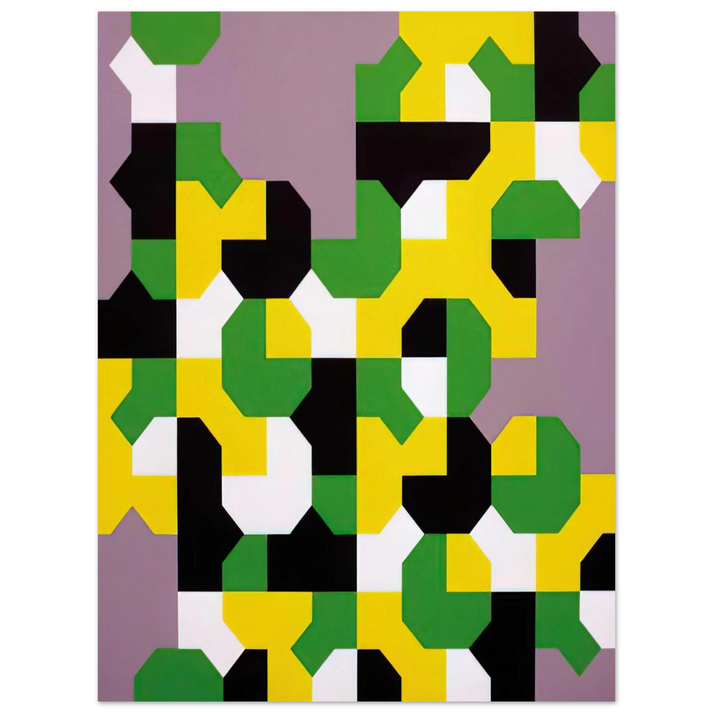
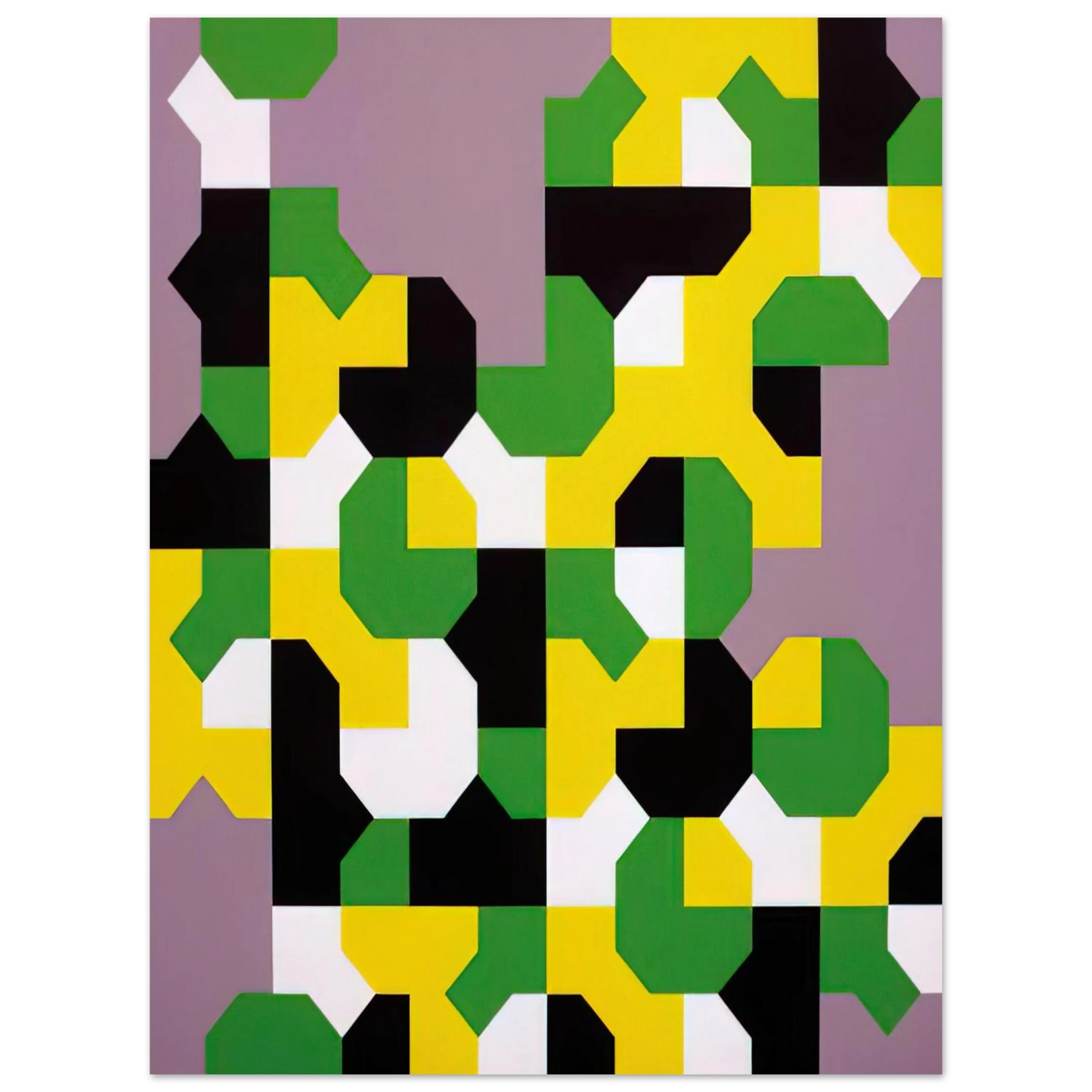
Bruno Munari - Curva di Peano - 1991 75x100 cm / 30x40inches Fine Art Poster
Bruno Munari - Curva di Peano - 1991 75x100 cm / 30x40inches Fine Art Poster
Couldn't load pickup availability
Elevate Your Space with Bruno Munari’s Mathematical Masterpiece
Incorporate the intellectual rigor of Italian Concrete Art into your interior with this museum-quality reproduction of Bruno Munari’s 'Curva di Peano' (1991). As a polymath of the 20th-century avant-garde, Munari spent his late career exploring the intersection of visual aesthetics and mathematical logic. The Peano Curve—a space-filling fractal discovered by mathematician Giuseppe Peano—served as the perfect vessel for Munari's philosophy of 'controlled coincidence' and geometric harmony.
The Significance of 'Curva di Peano'
This fine art print captures the mesmerizing complexity of a line that twists and turns to fill a two-dimensional plane without ever intersecting itself. Munari’s 1991 interpretation is more than a geometric exercise; it is a meditation on infinity and order. By translating a complex mathematical theorem into a minimalist visual language, Munari invites the viewer to witness the inherent beauty of logic. This piece is an essential acquisition for collectors of Italian Modernism and Geometric Abstraction.
Archival Excellence by RedKalion
At RedKalion, we curate our prints for the discerning eye. This reproduction is crafted to endure as long as the original’s legacy:
- Master’s Edition Paper: We utilize 250 gsm (110 lb) archival-grade paper, providing a substantial, premium feel.
- Luxurious Finish: The matte, uncoated, natural white surface ensures a deep, rich color profile without distracting glare, perfect for high-end gallery displays.
- Museum-Quality Longevity: Our acid-free (pH above 7) paper prevents yellowing or degradation, preserving the crisp lines of Munari’s work for generations.
- Sustainability: Each print is made on FSC-certified paper, ensuring that your investment in art also respects the environment.
This 75x100 cm / 30x40 inches poster is printed on demand with meticulous attention to detail, ensuring that every archival masterpiece delivered by RedKalion meets the highest standards of international galleries.
Discover Unlimited Art Possibilities
At RedKalion, you can find virtually any artwork from any artist, available in a wide range of sizes to perfectly match your space.
If you didn’t find what you’re looking for, contact us at support@redkalion.com . We will source any artwork and produce it in any size and format you need, including art prints, posters, canvas, framed pieces, framed canvas, and more.
For dedicated art enthusiasts, we also offer handcrafted replicas of any artwork, carefully painted by highly skilled artists using traditional techniques.
For custom requests, contact us at support@redkalion.com .
What are the specifications of the paper used for this Bruno Munari print?
We use Master's Edition archival paper. It is a museum-quality, 250 gsm (110 lb) natural white paper with a thickness of 0.29 mm (11.4 mils), providing a premium, substantial feel for fine art reproductions.
How does the archival quality ensure the longevity of the 'Curva di Peano' reproduction?
The paper is acid-free with a pH value above 7, which prevents yellowing and brittleness over time. This archival standard ensures your Bruno Munari print maintains its original integrity for decades.
Is the paper used for this fine art poster sustainably sourced?
Yes, all our prints use FSC-certified paper or equivalent certifications depending on regional availability. This guarantees that the materials are sourced responsibly with environmental and social considerations in mind.
What is the shipping and order fulfillment process?
At RedKalion, we fulfill orders on demand with no minimum requirements. Your museum-quality print is produced specifically for you and shipped in robust packaging to ensure it arrives in pristine condition.
Does this museum-quality print have a glossy or matte finish?
This print features a matte, uncoated finish. This natural white (off-white) texture is specifically chosen to eliminate reflections, providing a sophisticated look that emphasizes the depth of the artwork.
What is the significance of the 'Curva di Peano' in Bruno Munari's late work?
The Peano Curve represents Munari's fascination with mathematical logic and spatial filling. In 1991, he utilized this concept to explore how a simple line could create complex, infinite structures through geometric repetition.
Why is the 75x100 cm format ideal for this specific artwork?
The 75x100 cm (30x40 inches) scale allows the intricate twists of the Peano Curve to be fully appreciated. It transforms the mathematical concept into a bold, architectural statement piece for modern interiors.