
RedKalion
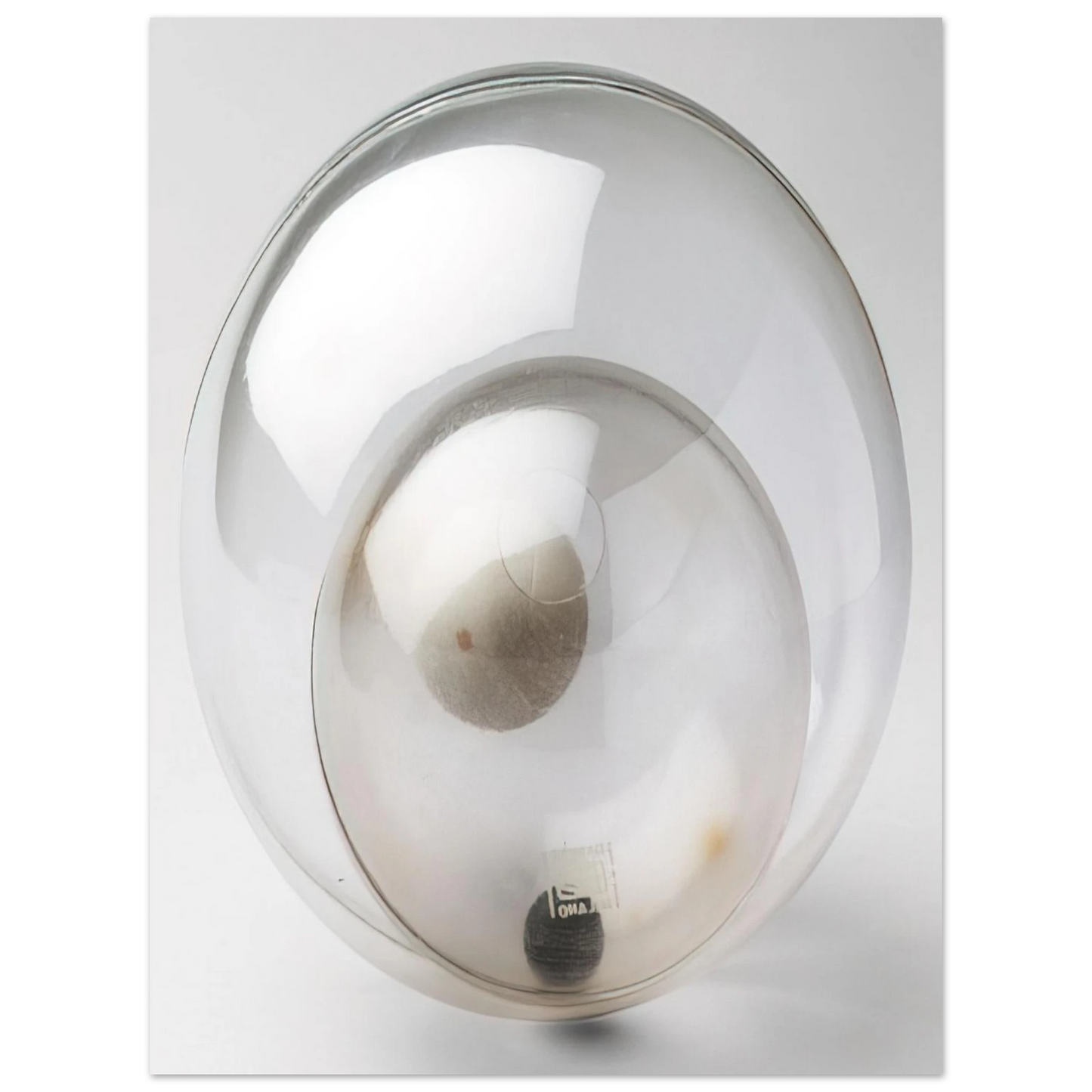
Bruno Munari - Double Spheres Object - 1963 75x100 cm / 30x40inches Fine Art Poster
Bruno Munari - Double Spheres Object - 1963 75x100 cm / 30x40inches Fine Art Poster
Couldn't load pickup availability
Elevate Your Collection with Bruno Munari’s Double Spheres Object (1963)
RedKalion is proud to present a museum-quality reproduction of Bruno Munari’s Double Spheres Object (1963). A central figure in the Italian Arte Programmata (Programmed Art) movement, Munari was a visionary who blurred the lines between design, kinetic art, and visual pedagogy. This 75x100 cm fine art print captures the geometric precision and rhythmic balance of the original work, serving as a sophisticated testament to 20th-century European modernism.
Archival Craftsmanship and Material Excellence
At RedKalion, we believe that world-class art deserves world-class materials. This museum-quality reproduction is rendered on our exclusive Master's Edition archival paper. With a substantial weight of 250 gsm (110 lb) and a thickness of 0.29 mm (11.4 mils), this print offers a tactile presence that commands attention. The natural white (off-white) finish and matte, uncoated texture ensure that the deep blacks and precise lines of the Double Spheres Object are presented without distracting glare.
A Legacy of Intellectual Design
Munari’s 1963 exploration of spherical forms was more than a mere aesthetic exercise; it was an investigation into the mechanics of human perception. By integrating this archival masterpiece into your space, you are celebrating the legacy of a polymath who transformed how we view the relationship between art and the industrial world. Our commitment to quality ensures that this piece remains a cornerstone of your collection for decades to come, thanks to its acid-free (pH above 7) composition that prevents yellowing and degradation.
- Sustainable Production: Printed on demand using FSC-certified paper to minimize environmental impact.
- Museum Standards: Archival-grade materials ensure the longevity and integrity of the color and detail.
- Sophisticated Finish: The uncoated, natural white paper provides a luxurious, high-end gallery feel.
Discover Unlimited Art Possibilities
At RedKalion, you can find virtually any artwork from any artist, available in a wide range of sizes to perfectly match your space.
If you didn’t find what you’re looking for, contact us at support@redkalion.com . We will source any artwork and produce it in any size and format you need, including art prints, posters, canvas, framed pieces, framed canvas, and more.
For dedicated art enthusiasts, we also offer handcrafted replicas of any artwork, carefully painted by highly skilled artists using traditional techniques.
For custom requests, contact us at support@redkalion.com .
What are the specific paper specifications for this Bruno Munari print?
We use Master's Edition archival paper, which is 250 gsm (110 lb) with a thickness of 0.29 mm. It features a matte, uncoated, natural white finish for a luxurious texture.
Is the paper used for the Double Spheres Object reproduction sustainable?
Yes, RedKalion utilizes FSC-certified paper for all reproductions. This ensures that your museum-quality fine art print is produced following the highest environmental and social standards.
How does RedKalion ensure the longevity of the artwork over time?
Our prints are created on acid-free paper with a pH above 7. This archival standard prevents the paper from yellowing or becoming brittle, ensuring your investment remains pristine for years.
What is the fulfillment process for these museum-quality prints?
Every order is printed and shipped on demand with no minimum order requirements. This process allows us to maintain the highest quality control and reduce unnecessary waste.
Does the print come with a frame, or is it a standalone poster?
This product is a 75x100 cm (30x40 inches) fine art poster. It is shipped unframed, allowing you the flexibility to choose a custom frame that fits your interior design perfectly.
What was the significance of the Double Spheres Object in 1963?
Created during the height of the Programmed Art movement, this piece represents Munari’s fascination with kinetic structures and the viewer's active role in perceiving geometric relationships and optical movement.
Who was Bruno Munari and why is his work historically important?
Bruno Munari was a titan of Italian modernism. Often called the 'Leonardo of the 20th century,' he revolutionized graphic design, kinetic art, and children's education through his innovative 'useless machines' and visual research.