RedKalion
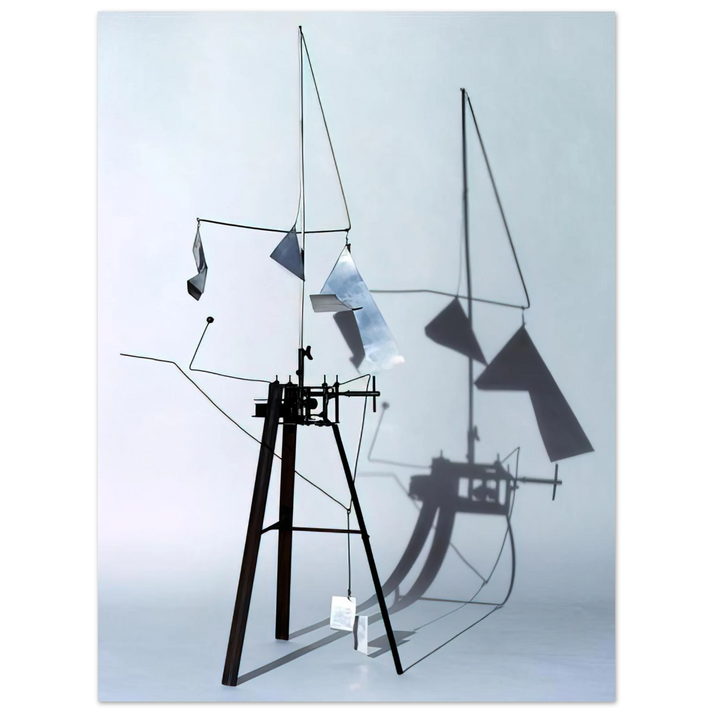
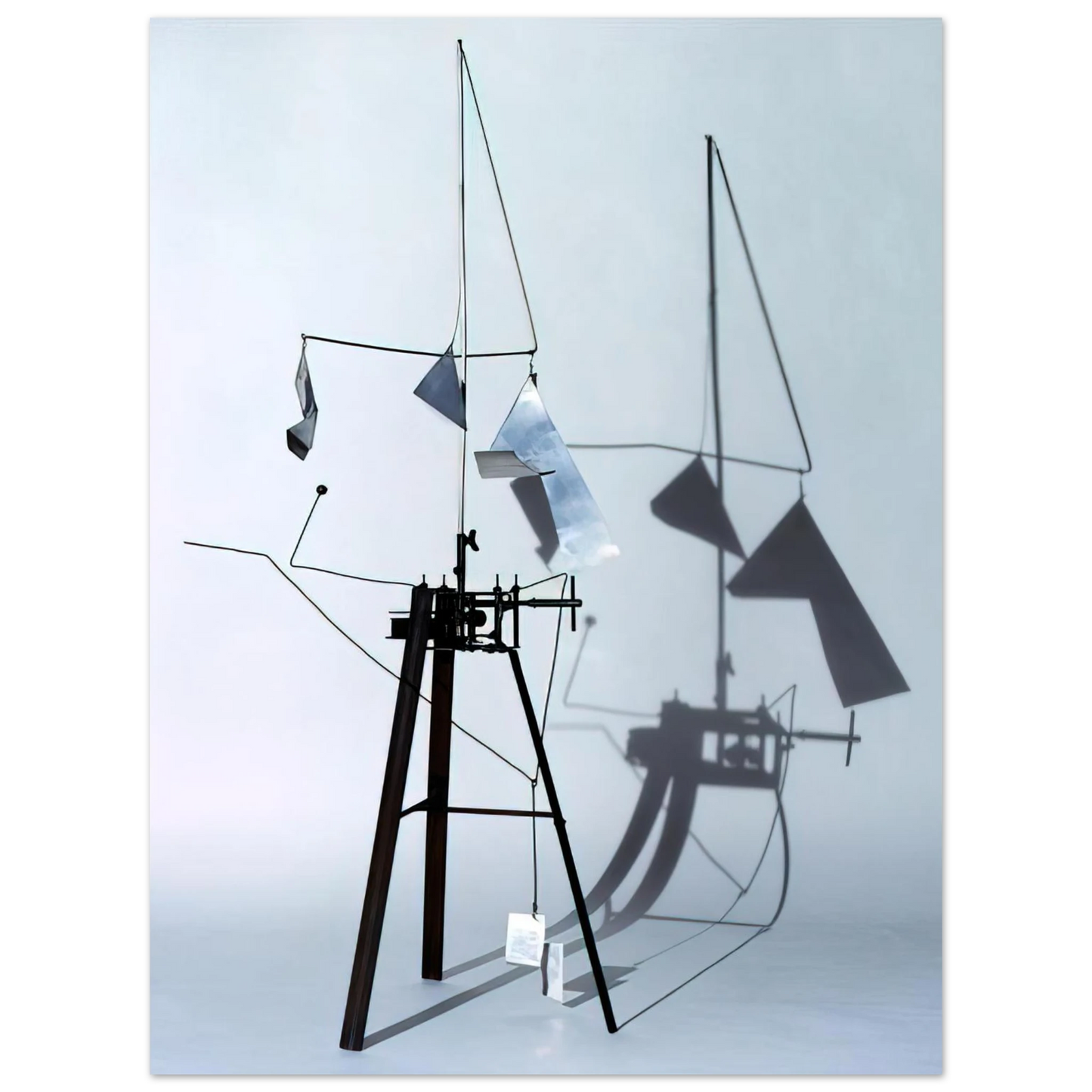
Bruno Munari - Useless Machine Arrhythmic Carousel - 1953 75x100 cm / 30x40inches Fine Art Poster
Bruno Munari - Useless Machine Arrhythmic Carousel - 1953 75x100 cm / 30x40inches Fine Art Poster
Couldn't load pickup availability
The Playful Geometry of Bruno Munari’s Useless Machines
Experience the whimsical sophistication of Italian modernism with this museum-quality reproduction of Bruno Munari's 'Useless Machine Arrhythmic Carousel' (1953). A pivotal figure in the Futurism and Concrete Art movements, Munari challenged the industrial obsession with productivity by creating his Macchine Inutili (Useless Machines). These works were designed to liberate art from the static, offering a rhythmic, kinetic experience that exists solely for aesthetic delight.
This particular 1953 composition, the Arrhythmic Carousel, is a masterclass in balance and visual syncopation. Its geometric forms suggest a mechanical grace that defies predictable patterns, inviting the viewer into a state of contemplative play. To honor Munari's meticulous eye for texture and form, RedKalion presents this work as a premium fine art print, capturing every subtle nuance of the original mid-century vision.
Archival Excellence for the Discerning Collector
At RedKalion, we believe that an iconic work like the Useless Machine Arrhythmic Carousel deserves a medium that matches its historical importance. This print is rendered on our Master's Edition archival paper, a heavyweight 250 gsm (110 lb) substrate that offers a luxurious, tactile presence. The natural white, matte finish ensures that there is no distracting glare, allowing the vibrant yet sophisticated color palette to speak for itself.
- Museum-Quality Longevity: Acid-free paper (pH above 7) ensures your investment will not yellow or degrade over time.
- Substantial Texture: A thickness of 0.29 mm (11.4 mils) provides the structural integrity of a true gallery piece.
- Sustainably Sourced: Our commitment to the environment is reflected in our use of FSC-certified paper.
- Precision Fulfillment: Each piece is printed and shipped on demand, ensuring a pristine, freshly-crafted arrival.
Elevate your interior with an archival masterpiece that endures. This 75x100 cm (30x40 inches) poster is more than a decoration; it is a tribute to the genius of Bruno Munari and a testament to the timeless appeal of Italian design.
Discover Unlimited Art Possibilities
At RedKalion, you can find virtually any artwork from any artist, available in a wide range of sizes to perfectly match your space.
If you didn’t find what you’re looking for, contact us at support@redkalion.com . We will source any artwork and produce it in any size and format you need, including art prints, posters, canvas, framed pieces, framed canvas, and more.
For dedicated art enthusiasts, we also offer handcrafted replicas of any artwork, carefully painted by highly skilled artists using traditional techniques.
For custom requests, contact us at support@redkalion.com .
What makes the 'Master's Edition' paper special for this Munari print?
Our Master's Edition paper is a 250 gsm (110 lb) archival-grade substrate. It is acid-free and FSC-certified, providing a luxurious off-white matte finish that prevents yellowing and preserves the artwork's integrity for decades.
Will the colors of the Arrhythmic Carousel fade over time?
No. By using acid-free paper with a pH above 7, we ensure the chemical stability of the print. This museum-quality standard prevents oxidation and fading, maintaining the vibrant geometry of Munari’s 1953 masterpiece.
How is the artwork shipped to ensure it arrives in pristine condition?
We utilize a sophisticated print-on-demand fulfillment process with no minimum orders. Each 75x100 cm poster is carefully handled and shipped in protective packaging designed to prevent creases or damage during transit.
Does the print have a glossy or matte finish?
This fine art reproduction features a premium matte, uncoated finish. This creates a sophisticated, glare-free viewing experience that highlights the natural texture of the 0.29 mm thick archival paper.
Is the paper used for this Bruno Munari poster environmentally friendly?
Yes, RedKalion is committed to sustainability. The paper used for this museum-quality reproduction is FSC-certified, ensuring it comes from responsibly managed forests that provide environmental, social, and economic benefits.
What was Bruno Munari’s philosophy behind the 'Useless Machines'?
Munari’s 'Useless Machines' were a critique of the industrial age's focus on utility. He sought to create 'machines' that produced only poetic images and movement, bridging the gap between art and life through playful kineticism.
Why is the 'Arrhythmic Carousel' significant in 20th-century art?
Created in 1953, this work represents Munari's transition into the 'Macchina Inutile' series' peak. It exemplifies Concrete Art's focus on geometric abstraction while introducing a sense of 'arrhythmia' or unpredictable visual rhythm.