RedKalion
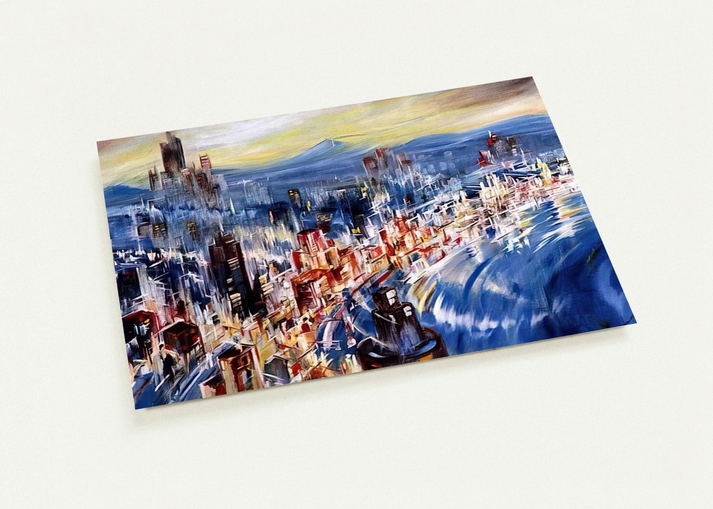
Built for the Future By Konrad Zuse Pack of 10 Post Cards | Konrad Zuse Post Cards | A6 (10.5 x 14.8 cm) - 4.1 x 5.8 inches
Built for the Future By Konrad Zuse Pack of 10 Post Cards | Konrad Zuse Post Cards | A6 (10.5 x 14.8 cm) - 4.1 x 5.8 inches
Couldn't load pickup availability
Elevate Your Correspondence with Konrad Zuse’s 'Built for the Future'
Experience the intersection of technological visionary and artistic expression with this exclusive pack of 10 fine art postcards featuring 'Built for the Future' by Konrad Zuse. While widely recognized as the inventor of the Z3—the world’s first programmable, fully automatic computer—Zuse was also a prolific painter who translated his analytical mind into vibrant, structural compositions. This piece captures a modernist architectural optimism, blending geometric precision with a forward-thinking aesthetic that defines the era of early computing and industrial progress.
Museum-Quality Reproductions for the Discerning Collector
At RedKalion, we bridge the gap between historical significance and archival craftsmanship. These postcards are not mere stationery; they are high-fidelity reproductions utilizing our proprietary 12-color fine art printing technology. Unlike standard 4-color inkjet processes, our method ensures breathtaking color accuracy and depth, preserving the nuanced palette of Zuse's original vision. Each card is rendered on 200 gsm (80 lb) FSC-certified paper, offering a substantial 0.26 mm thickness that conveys quality to the touch.
Technical Specifications & Artistry
- Historical Context: Konrad Zuse (1910–1995) used painting as a medium to explore the 'computational' nature of the world before the term existed.
- Premium Finish: A smooth matte coating ensures a glare-free display, allowing the intricate details of the artwork to shine under any light.
- Sustainability: Printed on demand on environmentally conscious, FSC-certified paper to minimize waste and ensure ethical production.
- Dimensions: Standard A6 (10.5 x 14.8 cm / 4.1 x 5.8 inches), ideal for framing as a miniature gallery or sending a sophisticated sentiment.
Whether you are an admirer of computer history, an architecture enthusiast, or a collector of fine art prints, this set provides a tangible connection to the legacy of a true polymath. RedKalion ensures that every print meets museum-grade standards, offering you a durable masterpiece that bridges the past and the future.

Discover Unlimited Art Possibilities
At RedKalion, you can find virtually any artwork from any artist, available in a wide range of sizes to perfectly match your space.
If you didn’t find what you’re looking for, contact us at support@redkalion.com . We will source any artwork and produce it in any size and format you need, including art prints, posters, canvas, framed pieces, framed canvas, and more.
For dedicated art enthusiasts, we also offer handcrafted replicas of any artwork, carefully painted by highly skilled artists using traditional techniques.
For custom requests, contact us at support@redkalion.com .
What makes these Konrad Zuse postcards museum-quality?
We use advanced 12-color fine art printing technology rather than standard 4-color methods. This ensures superior color vibrancy, depth, and accuracy, mimicking the quality of a full-sized gallery print in a compact A6 format.
What are the paper specifications for this postcard set?
Each postcard is printed on 200 gsm (80 lb) paper with a thickness of 0.26 mm (10.3 mils). The smooth matte finish provides a clean, glare-free aesthetic, perfect for both writing and display.
Is the paper used for these prints environmentally friendly?
Yes. RedKalion is committed to sustainability. All our postcards are printed on FSC-certified paper, ensuring the materials are sourced from responsibly managed forests that provide environmental, social, and economic benefits.
How are the postcards produced and shipped?
Our postcards are printed on demand to reduce environmental impact and ensure high quality. There are no minimum order requirements, and they are packaged securely to reach you in pristine condition.
Will the colors on these postcards fade over time?
No. By utilizing archival-grade inks and a 12-color printing process on high-quality 200 gsm paper, these prints are designed for longevity, maintaining their vibrancy for years without the yellowing or fading common in standard prints.
Who was the artist, Konrad Zuse?
Konrad Zuse was a German engineer and computer pioneer who invented the Z3, the first functional programmable computer. He was also an accomplished artist, often painting under the pseudonym 'Kuno See,' blending technical structure with abstract art.
What does the 'Built for the Future' artwork represent?
This piece reflects Zuse’s fascination with architectural futurism and the potential of modern technology. His style often utilizes geometric forms and bold colors to illustrate the synergy between human creativity and structural engineering.