
RedKalion
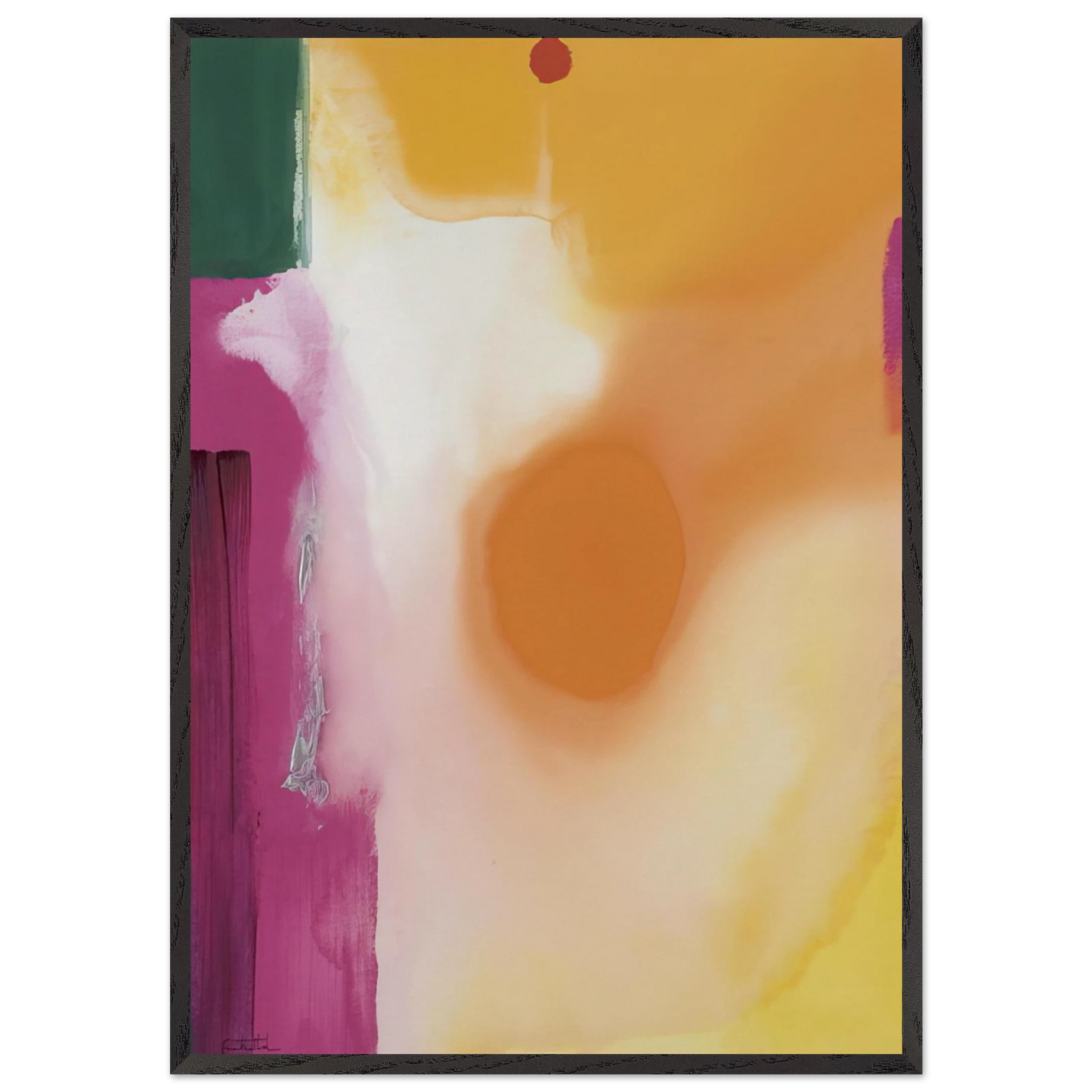
Bullseye - 1989 - Helen Frankenthaler 70x100 cm / 28x40 inches Framed Art Print – Black Wooden Frame
Bullseye - 1989 - Helen Frankenthaler 70x100 cm / 28x40 inches Framed Art Print – Black Wooden Frame
Couldn't load pickup availability
Elevate Your Space with Helen Frankenthaler’s 'Bullseye' (1989)
Experience the profound elegance of Abstract Expressionism with this museum-quality reproduction of Helen Frankenthaler’s 'Bullseye' (1989). As a pioneer of the 'soak-stain' technique, Frankenthaler redefined the relationship between color and canvas. In 'Bullseye,' created during her later, more structured period, she explores a centered, evocative composition that balances bold gestural movement with a sophisticated color palette. This fine art print captures the fluid transitions and luminous depth characteristic of her legendary mastery.
Archival Quality Meets Sophisticated Design
At RedKalion, we curate prints that honor the integrity of the original masterpiece. This 70x100 cm (28x40 inches) artwork is printed on 250 gsm (110 lb) archival museum-quality paper. The natural white, uncoated matte finish ensures that every hue of Frankenthaler’s palette is rendered with stunning accuracy without the distraction of glare. Each piece is encased in a premium, 20mm thick black wooden frame, crafted from responsibly sourced oak and ash, providing a more substantial and luxurious presence than standard commercial frames.
The RedKalion Standard of Excellence
Your 'Bullseye' print arrives ready to transform your interior. Our commitment to sustainability and durability is reflected in our choice of FSC-certified materials and shatterproof plexiglass, which protects the artwork while maintaining crystal-clear visibility. This is not merely a poster; it is a meticulously crafted reproduction designed to endure as a centerpiece in your collection, bringing the quiet power of 20th-century American abstraction into the modern home.
- Artist: Helen Frankenthaler
- Title: Bullseye (1989)
- Paper Weight: 250 gsm / 110 lb (Archival Grade)
- Frame: 20mm Wide Responsibly Sourced Black Wood
- Protection: Shatterproof Plexiglass
- Sustainability: FSC-certified or equivalent
Discover Unlimited Art Possibilities
At RedKalion, you can find virtually any artwork from any artist, available in a wide range of sizes to perfectly match your space.
If you didn’t find what you’re looking for, contact us at support@redkalion.com . We will source any artwork and produce it in any size and format you need, including art prints, posters, canvas, framed pieces, framed canvas, and more.
For dedicated art enthusiasts, we also offer handcrafted replicas of any artwork, carefully painted by highly skilled artists using traditional techniques.
For custom requests, contact us at support@redkalion.com .
What makes the paper quality of the 'Bullseye' print 'museum-grade'?
We use 250 gsm (110 lb) natural white, uncoated paper. Its thickness (0.29 mm) and acid-free composition prevent yellowing, ensuring your Helen Frankenthaler reproduction retains its vibrant colors and structural integrity for decades.
How is the black wooden frame constructed?
The frame is crafted from responsibly sourced oak or ash, measuring 20mm in width and thickness. This provides a robust, premium aesthetic compared to thinner 14mm frames, perfectly complementing the scale of the 70x100 cm print.
Is the artwork protected during shipping and display?
Yes, we use shatterproof plexiglass to protect the print surface. This material is lighter and more durable than traditional glass, making it safer for shipping and ideal for high-traffic home or office environments.
Is this Helen Frankenthaler print ready to hang?
Each framed art print includes a high-quality hanging kit. Once it arrives, you can immediately elevate your wall decor without the need for additional hardware or professional framing services.
What is RedKalion’s commitment to sustainability?
We prioritize the planet by using FSC-certified wood for our frames and paper. Our materials are sourced responsibly, ensuring that your acquisition of fine art supports sustainable forestry practices.
What technique did Helen Frankenthaler use for the original 'Bullseye'?
Frankenthaler utilized her signature 'soak-stain' method, thinning paint to allow it to merge with the fibers of the canvas. In 'Bullseye' (1989), she applied this to create a concentrated, circular focal point that emphasizes color weight.
Why is the 1989 period significant in Frankenthaler's career?
By 1989, Frankenthaler had moved beyond the ethereal washes of her early career into more deliberate, impactful compositions. 'Bullseye' reflects this maturity, showcasing a refined control over abstract forms and intense color saturation.