RedKalion
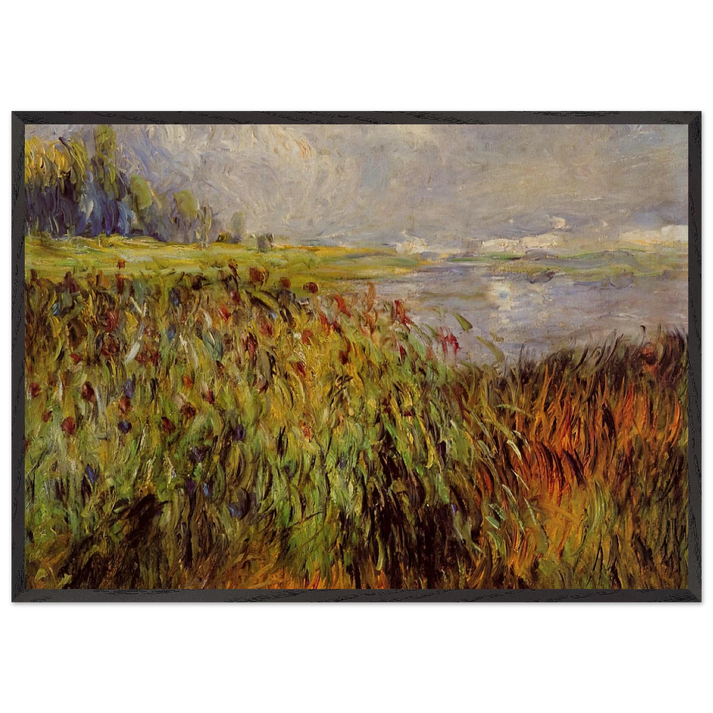
Bulrushes on the Banks of the Seine - Pierre-Auguste Renoir 70x100 cm / 28x40 inches Framed Art Print – Black Wooden Frame
Bulrushes on the Banks of the Seine - Pierre-Auguste Renoir 70x100 cm / 28x40 inches Framed Art Print – Black Wooden Frame
Couldn't load pickup availability
An Impressionist Vision of Serenity: Renoir's Bulrushes on the Banks of the Seine
Elevate your interior with this museum-quality reproduction of Pierre-Auguste Renoir's Bulrushes on the Banks of the Seine. This exquisite 70x100 cm (28x40 inches) framed art print captures the quintessential spirit of the Impressionist movement. Renoir, a master of light and texture, invites the viewer to the water's edge, where the interplay of sunlight and shadow on the reeds creates a rhythmic, painterly dance. This piece is not merely a landscape; it is an exploration of the fleeting moments and atmospheric beauty that defined the late 19th-century French avant-garde.
Museum-Grade Quality and Craftsmanship
At RedKalion, we specialize in curating archival-grade masterpieces that endure for generations. This print is produced on 250 gsm (110 lb) natural white, matte, and uncoated paper. This specific weight and archival museum-quality finish ensure that the subtle nuances of Renoir's brushwork and color palette are preserved without distracting glare. The paper is FSC-certified (or equivalent), reflecting our commitment to sustainable luxury and responsible forestry.
The Sophistication of Premium Framing
Our archival prints are housed in a responsibly sourced black wooden frame, crafted from solid oak or ash. Each frame features a refined profile of 20mm (0.79") thickness and width, offering a more substantial and sophisticated presence than standard 14mm alternatives. To ensure the longevity of your investment, the print is protected by shatterproof plexiglass and arrives ready-to-hang with an included mounting kit. This seamless blend of historical art and modern craftsmanship creates a focal point that breathes timeless elegance into any sophisticated home or office.
- Artist: Pierre-Auguste Renoir
- Title: Bulrushes on the Banks of the Seine
- Paper: 250 gsm archival-grade museum paper
- Frame: 20mm premium black oak/ash wood
- Protection: Shatterproof acrylic plexiglass
- Sustainability: FSC-certified materials

Discover Unlimited Art Possibilities
At RedKalion, you can find virtually any artwork from any artist, available in a wide range of sizes to perfectly match your space.
If you didn’t find what you’re looking for, contact us at support@redkalion.com . We will source any artwork and produce it in any size and format you need, including art prints, posters, canvas, framed pieces, framed canvas, and more.
For dedicated art enthusiasts, we also offer handcrafted replicas of any artwork, carefully painted by highly skilled artists using traditional techniques.
For custom requests, contact us at support@redkalion.com .
What makes the paper quality suitable for fine art?
We use 250 gsm (110 lb) museum-quality paper. Its natural white, uncoated, and matte finish prevents glare and preserves the intricate details of Pierre-Auguste Renoir’s Impressionist techniques for decades.
How is the frame constructed for this Renoir print?
The print is mounted in a premium 20mm black frame made from responsibly sourced oak or ash. This width provides superior structural integrity and a sophisticated aesthetic compared to standard gallery frames.
Is the artwork protected against damage and fading?
Yes, each piece is shielded by shatterproof plexiglass, which offers excellent clarity and protection. Combined with archival-grade paper, this ensures your Renoir print remains vibrant and resistant to environmental aging.
Is the art print ready to hang upon arrival?
Every RedKalion framed art print arrives ready-to-hang. We include a dedicated hanging kit, allowing you to easily mount the 70x100 cm masterpiece to your wall immediately after unboxing.
Are the materials used in this product sustainable?
We prioritize environmental responsibility. All paper and wooden frames are FSC-certified or use equivalent sustainable materials, ensuring that your fine art reproduction supports ethical and ecological forestry practices.
What is the historical significance of "Bulrushes on the Banks of the Seine"?
This work reflects Renoir's fascination with the Seine, a central theme in Impressionism. It showcases his mastery of light and "en plein air" painting, capturing the ephemeral nature of the riverbank's atmosphere.
How does Renoir’s technique differ in his landscape works?
In his landscapes, Renoir used soft, broken brushstrokes to emphasize movement and light rather than hard outlines. This creates a sensory experience of the river’s breeze and the shimmering light reflecting off the water.