
RedKalion
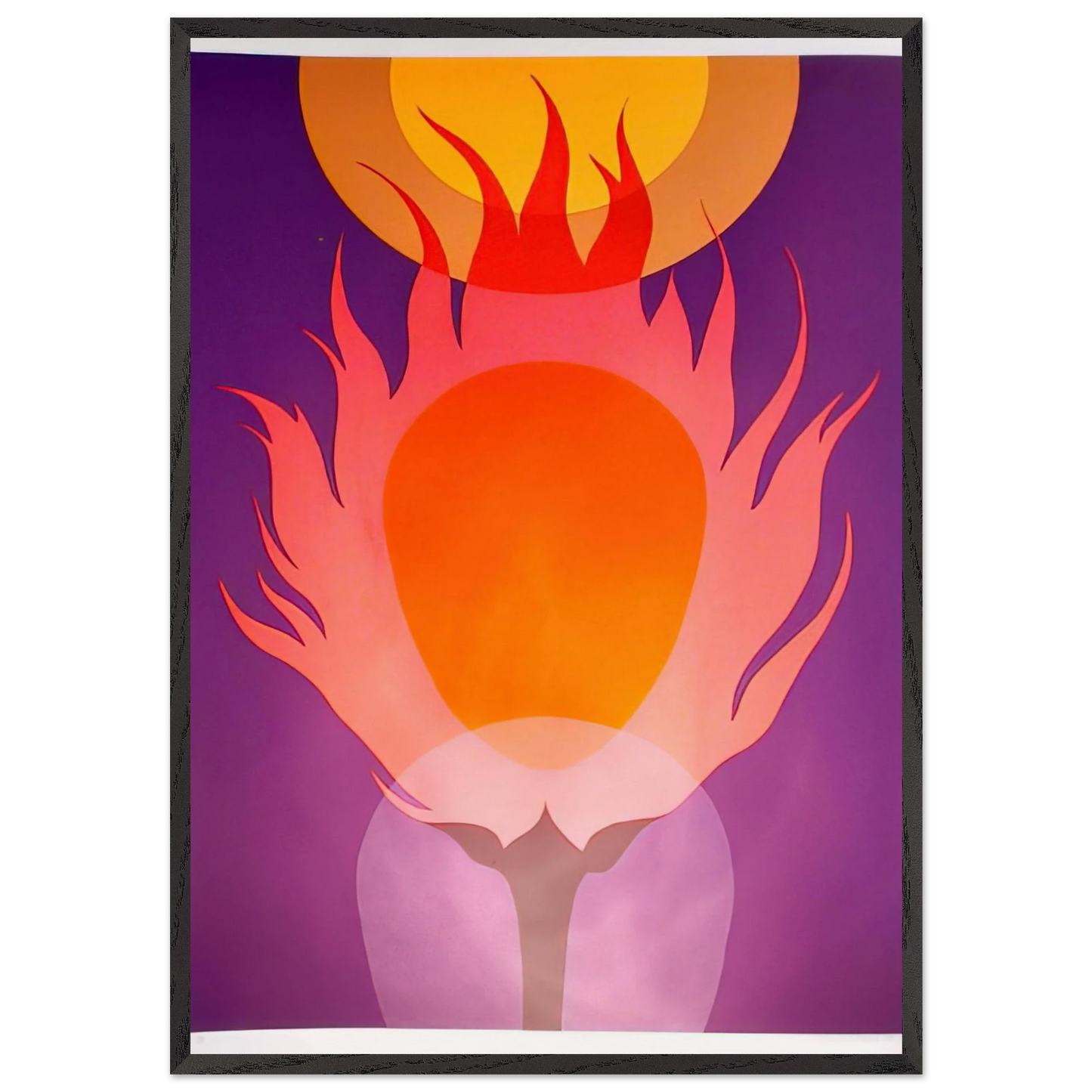
Burning Bush - 1978 - Clarence Holbrook Carter 70x100 cm / 28x40 inches Framed Art Print – Black Wooden Frame
Burning Bush - 1978 - Clarence Holbrook Carter 70x100 cm / 28x40 inches Framed Art Print – Black Wooden Frame
Couldn't load pickup availability
Elevate Your Space with Clarence Holbrook Carter’s 'Burning Bush' (1978)
Experience the metaphysical depth of Clarence Holbrook Carter’s 'Burning Bush' (1978), a masterpiece of late-twentieth-century American Surrealism. Carter, a visionary associated with Magic Realism, utilizes his iconic ovoid forms and precise geometric gradients to reinterpret a profound biblical motif. This museum-quality reproduction captures the ethereal glow and transcendental precision that defined Carter’s later career, offering an atmosphere of quiet contemplation and intellectual rigor to any interior.
The Artistic Vision of Clarence Holbrook Carter
In 1978, Carter was deeply engaged in his 'Eschatological' series, exploring life, death, and the infinite. 'Burning Bush' exemplifies his mastery of light; the central form appears to vibrate against the deep, structured background. His technique involves a meticulous layering of color that bridges the gap between the physical and the spiritual. By choosing this fine art print, you are bringing home a piece of art history that reflects the peak of Carter's stylistic evolution.
Archival Quality and Premium Craftsmanship
RedKalion is dedicated to preserving the integrity of such significant works. This archival-grade art print is rendered on 250 gsm (110 lb) natural white, matte, uncoated paper, ensuring that the subtle shifts in Carter's color palette remain vibrant for generations. The print is housed in a responsibly sourced black wooden frame, crafted from oak and ash. At 20mm (0.79") wide and thick, the frame provides a robust, contemporary profile that surpasses standard retail alternatives.
- Sustainable Materials: Printed on FSC-certified paper to ensure environmental responsibility.
- Lasting Protection: Shielded by high-clarity, shatterproof plexiglass.
- Sophisticated Finish: The matte, non-reflective surface allows the artwork's intricate details to shine under any lighting.
- Seamless Installation: Arrives ready-to-hang with a professional mounting kit included.
Enhance your collection with this archival masterpiece from RedKalion—a testament to the enduring power of American visionary art.
Discover Unlimited Art Possibilities
At RedKalion, you can find virtually any artwork from any artist, available in a wide range of sizes to perfectly match your space.
If you didn’t find what you’re looking for, contact us at support@redkalion.com . We will source any artwork and produce it in any size and format you need, including art prints, posters, canvas, framed pieces, framed canvas, and more.
For dedicated art enthusiasts, we also offer handcrafted replicas of any artwork, carefully painted by highly skilled artists using traditional techniques.
For custom requests, contact us at support@redkalion.com .
What materials are used for the 'Burning Bush' art print?
We use 250 gsm (110 lb) archival, museum-quality paper. It is natural white, matte, and uncoated, ensuring the Clarence Holbrook Carter reproduction remains vibrant without yellowing over time.
Is the framed print ready to hang upon arrival?
Yes. Each framed print includes a professional hanging kit. The 20mm thick black wooden frame is pre-assembled, allowing you to display your artwork immediately.
How is the artwork protected during shipping?
We use shatterproof plexiglass to protect the print surface and ship in secure, reinforced packaging to ensure your fine art print arrives in pristine condition.
What is the significance of the ovoid shape in Carter’s work?
In 1978, Clarence Holbrook Carter used the ovoid (egg) as a symbol of birth, resurrection, and the mysteries of the universe, creating a bridge between realism and spiritual abstraction.
Is the framing sustainable and high-quality?
Absolutely. Our frames are made from FSC-certified oak and ash. The 20mm thickness provides a premium, sturdy feel compared to standard 14mm frames found elsewhere.
Does the print come with a certificate of quality?
While we focus on museum-grade material specs, RedKalion guarantees that all prints use archival-grade inks and sustainable, premium paper for long-term investment value.
What era does 'Burning Bush' belong to?
Painted in 1978, this work belongs to Carter's late period, where he fused American Regionalism roots with a sophisticated, metaphysical form of Surrealism.