RedKalion
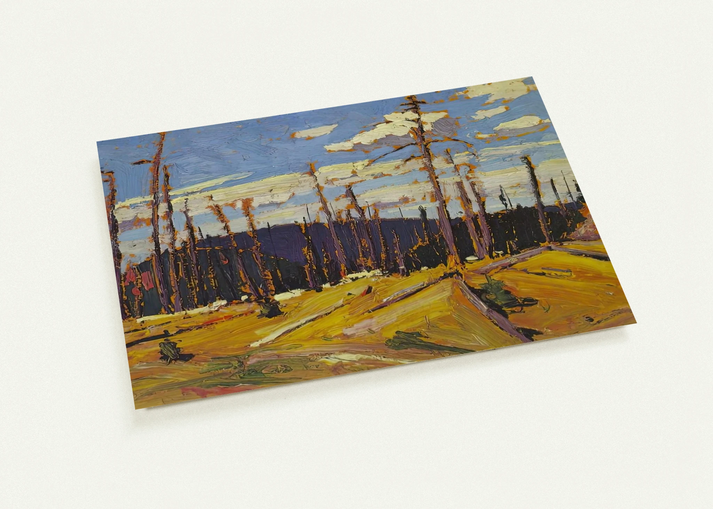
BURNT OVER FOREST 1916 By Tom Thomson Pack of 10 Post Cards | Tom Thomson Post Cards | A6 (10.5 x 14.8 cm) - 4.1 x 5.8 inches
BURNT OVER FOREST 1916 By Tom Thomson Pack of 10 Post Cards | Tom Thomson Post Cards | A6 (10.5 x 14.8 cm) - 4.1 x 5.8 inches
Couldn't load pickup availability
The Stark Resilience of the Canadian Wilderness: Tom Thomson’s Burnt Over Forest (1916)
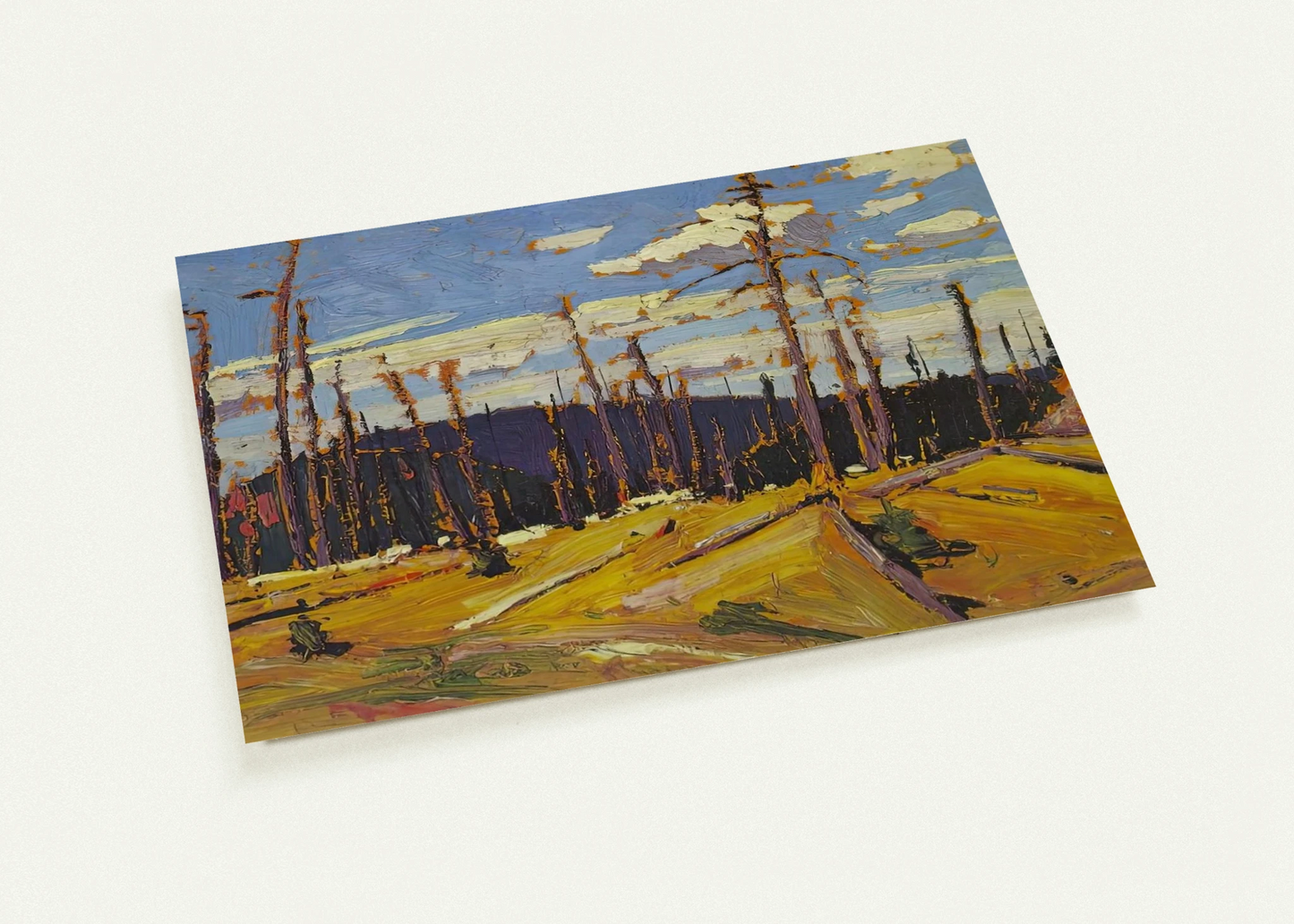
In 1916, Tom Thomson ventured deep into the heart of Algonquin Park to capture the raw, untamed spirit of the Canadian landscape. His masterpiece, Burnt Over Forest, stands as a hauntingly beautiful testament to the cycle of nature—depicting the aftermath of a forest fire with a modernist sensitivity that predated the Group of Seven. This pack of 10 premium postcards allows you to share this iconic piece of art history, translating Thomson’s bold brushwork and evocative color palette into a tactile, museum-quality format.
Uncompromising Print Quality by RedKalion
At RedKalion, we believe that fine art deserves better than standard reproduction. Our Tom Thomson postcards are produced using 12-color fine art printing technology. Unlike typical 4-color inkjet processes, our method ensures deep, nuanced blacks and vibrant, accurate hues that reflect the artist's original intent. Each card features a smooth matte finish, eliminating glare and providing a sophisticated, velvet-like texture that is a pleasure to handle.
Premium Specifications for the Discerning Collector
- Archival-Grade Paper: Printed on 200 gsm (80 lb) FSC-certified paper with a thickness of 0.26 mm (10.3 mils), ensuring durability and a premium feel.
- Eco-Conscious Curation: We utilize environmentally friendly materials, aligning with Thomson's own deep reverence for the natural world.
- Perfectly Proportioned: Sized at A6 (10.5 x 14.8 cm / 4.1 x 5.8 inches), these cards are ideal for framing, gifting, or correspondence.
- Longevity: Our archival inks and matte coating are designed to resist fading, allowing Thomson’s vision to endure for years to come.
Elevate your correspondence or curate a small-scale gallery in your own home with these archival masterpieces. RedKalion remains the definitive source for those who demand the highest standards in art reproduction and historical accuracy.
Discover Unlimited Art Possibilities
At RedKalion, you can find virtually any artwork from any artist, available in a wide range of sizes to perfectly match your space.
If you didn’t find what you’re looking for, contact us at support@redkalion.com . We will source any artwork and produce it in any size and format you need, including art prints, posters, canvas, framed pieces, framed canvas, and more.
For dedicated art enthusiasts, we also offer handcrafted replicas of any artwork, carefully painted by highly skilled artists using traditional techniques.
For custom requests, contact us at support@redkalion.com .
What printing technology is used for these Tom Thomson postcards?
RedKalion utilizes 12-color fine art printing technology, which provides significantly greater color depth and accuracy than standard 4-color processes, ensuring every brushstroke of Burnt Over Forest is captured perfectly.
What is the weight and finish of the paper?
Each postcard is printed on 200 gsm (80 lb) paper with a smooth matte finish. This provides a glare-free, premium feel and a thickness of 0.26 mm for lasting durability.
Are these postcards environmentally friendly?
Yes. We use FSC-certified paper and eco-friendly materials, ensuring that our museum-quality reproductions are as sustainable as they are beautiful.
What are the exact dimensions of the postcards?
These postcards are A6 size, measuring 10.5 x 14.8 cm (4.1 x 5.8 inches), making them perfect for standard mailing or small-scale decorative framing.
How does RedKalion handle shipping and production?
Our postcards are printed on demand to ensure the highest quality control and reduce waste. We offer efficient, reliable shipping for every pack of 10 postcards.
What was the inspiration behind 'Burnt Over Forest'?
Painted in 1916, this work reflects Tom Thomson's fascination with the transformative power of nature in Algonquin Park, finding rhythmic beauty in the charred remains of the forest.
Why is Tom Thomson significant in art history?
Tom Thomson was a Canadian pioneer who blended realism with post-impressionist techniques, directly influencing the formation of the Group of Seven and modernizing landscape painting.