

RedKalion
BURNT OVER FOREST 1916 - Tom Thomson Brushed Aluminum Print - 70x100 cm / 28x40 inches | Tom Thomson Aluminum Print | Tom Thomson Prints
BURNT OVER FOREST 1916 - Tom Thomson Brushed Aluminum Print - 70x100 cm / 28x40 inches | Tom Thomson Aluminum Print | Tom Thomson Prints
Couldn't load pickup availability
Capture the Rugged Spirit of the North with Tom Thomson's Burnt Over Forest (1916)
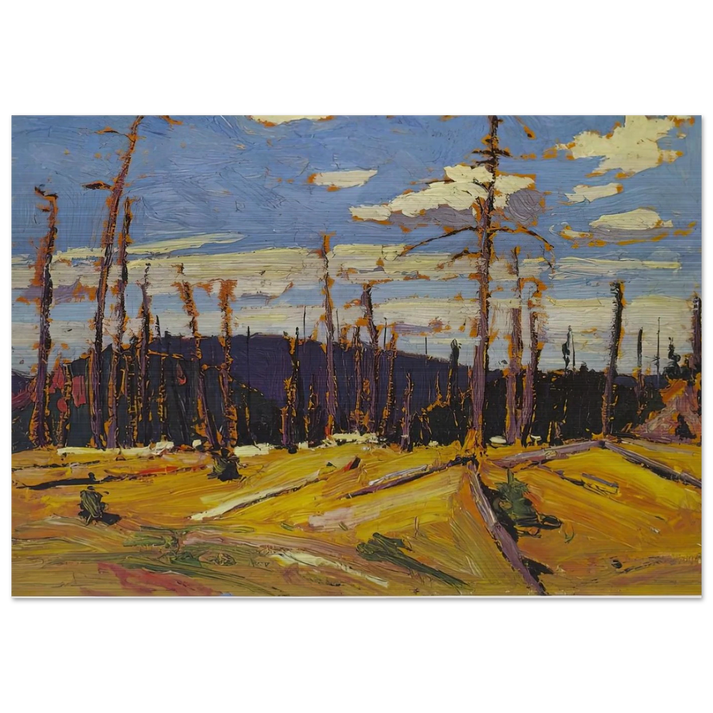
In the annals of Canadian art history, few works resonate with the raw, untamed power of the wilderness like Tom Thomson’s Burnt Over Forest (1916). Painted during a period of intense creative output in Algonquin Park, this masterpiece captures the haunting beauty of a landscape transformed by fire—a cycle of destruction and rebirth that Thomson understood intimately. At RedKalion, we bring this iconic vision into the modern era through a museum-quality reproduction that honors the artist's legacy while utilizing cutting-edge material science.
Technique and Historical Context
Tom Thomson was a master of capturing the 'mood' of the Canadian Shield. In Burnt Over Forest, he moved beyond simple representation to express the stark, skeletal remains of the forest with bold, expressive brushstrokes. This work is a precursor to the movements that would define the Group of Seven. Our fine art print reproduces the nuanced textures and somber palette of the original, ensuring that the emotional weight of the piece is preserved for a new generation of collectors.
The RedKalion Aluminum DIBOND® Experience
To elevate this artwork, we have selected a Brushed silver Aluminum DIBOND® substrate. This choice is intentional; the horizontal grain of the metallic finish interacts with ambient light, mimicking the way light filters through a real forest. The 3mm (0.12") thick rigid base provides a sleek, contemporary profile that is both durable and sophisticated.
- Metallic Finish: Unprinted white areas reveal the brushed silver surface, creating a dynamic, shimmering effect that brings Thomson's sky and charred timber to life.
- Matte and Glare-Free: The direct print technology ensures vivid colors and deep blacks with a matte finish, perfect for spaces with diverse lighting conditions.
- Archival Durability: This is an archival-grade reproduction designed to resist fading and environmental wear, serving as a lasting centerpiece for your home or office.
- Ready to Hang: Each piece arrives with a tailored hanging kit, ensuring a seamless installation process immediately upon arrival.
By choosing a RedKalion reproduction, you are not merely purchasing a print; you are investing in an archival masterpiece that endures. Transform your space with a fusion of 20th-century Canadian genius and 21st-century industrial elegance.


Discover Unlimited Art Possibilities
At RedKalion, you can find virtually any artwork from any artist, available in a wide range of sizes to perfectly match your space.
If you didn’t find what you’re looking for, contact us at support@redkalion.com . We will source any artwork and produce it in any size and format you need, including art prints, posters, canvas, framed pieces, framed canvas, and more.
For dedicated art enthusiasts, we also offer handcrafted replicas of any artwork, carefully painted by highly skilled artists using traditional techniques.
For custom requests, contact us at support@redkalion.com .
What makes the Tom Thomson Aluminum Print unique?
Our Tom Thomson prints utilize brushed silver Aluminum DIBOND®, where the horizontal grain and metallic surface create a dynamic, shimmering effect in unprinted areas, unlike traditional paper prints.
What are the physical specifications of the print?
The artwork is printed on a 3mm (0.12") thick Aluminum DIBOND® panel, providing a rigid, durable, and lightweight base that resists warping over time.
Is the mounting hardware included with the purchase?
Yes, every RedKalion aluminum print includes a high-quality hanging kit, which may vary slightly depending on the fulfillment country to ensure the best local standard.
How does the matte finish handle reflections?
The direct-to-aluminum printing technique results in a matte, glare-free finish, making it an ideal choice for rooms with large windows or heavy artificial lighting.
How do you ensure the archival longevity of the artwork?
We use archival-grade inks and industrial-strength aluminum substrates to ensure your museum-quality reproduction remains vibrant and structurally sound for decades.
What is the historical significance of Burnt Over Forest (1916)?
Painted in Algonquin Park, this work signifies Thomson's obsession with the cycle of nature, capturing the stark, skeletal beauty of a forest post-fire, a hallmark of Canadian Post-Impressionism.
Why is Tom Thomson considered a precursor to the Group of Seven?
Thomson's rugged, expressive style and his focus on the Canadian wilderness directly inspired the Group of Seven's formation, establishing a distinct national identity in landscape art.